From Lament to Liberation: Understanding Job’s Lamentation
“And now am I their song, yea, I am their byword. They abhor me, they flee far from me, and spare not to spit in my face.” — Job 30:9-10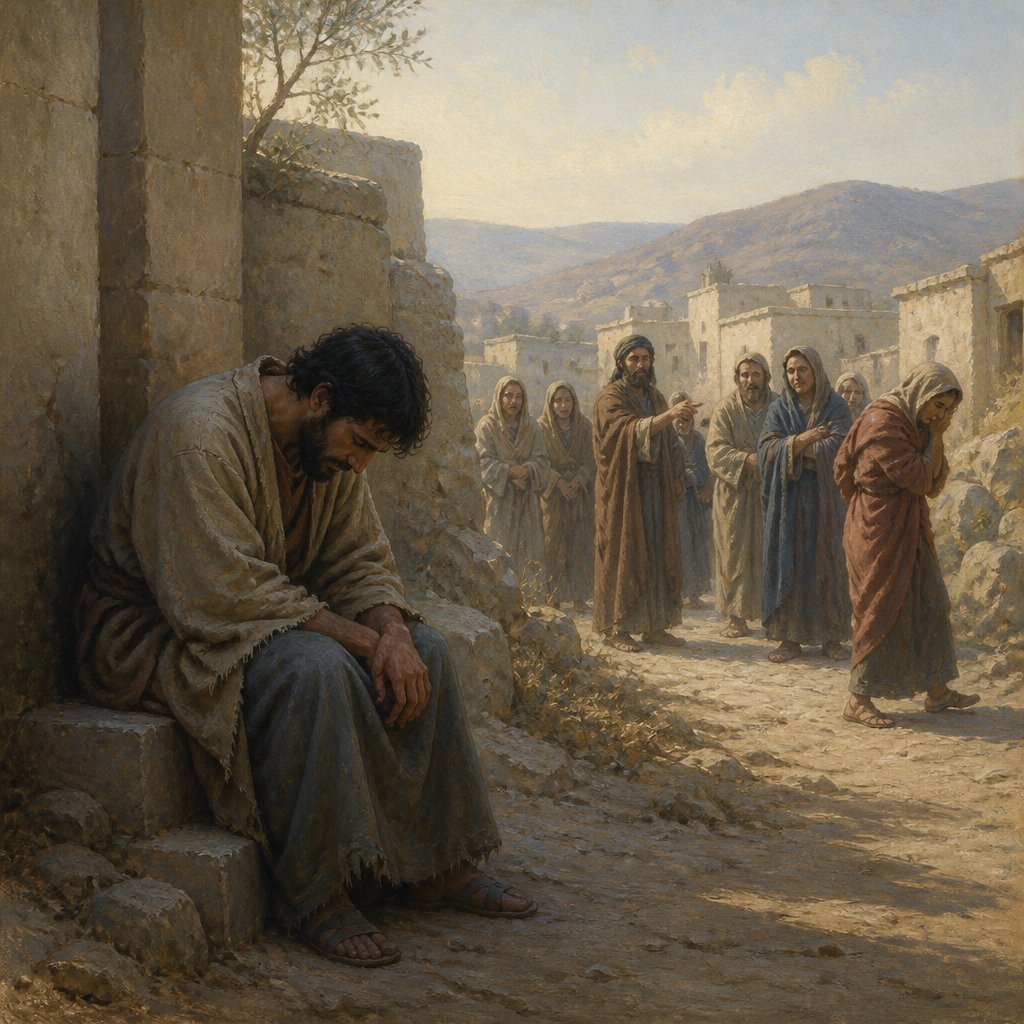
In the journey of faith, we often find ourselves traversing valleys of pain and sorrow that test our very being. The words of Job in Job 30:9-10 resonate with the heart of every believer who has ever felt alienated, ridiculed, or forsaken. In the King James Version (KJV), Job articulates his woeful condition, saying, "And now am I their song, yea, I am their byword. They abhor me, they flee far from me, and spare not to spit in my face."
Job, once a man of great wealth and standing, finds himself in a place of utter desolation and scorn. The glory that once surrounded him has been replaced by disgrace; he has become the subject of ridicule, and the very people who once revered him now use his name as a byword—a term of contempt. This is a brutal transformation. It is crucial to understand that Job's lament is not an isolated incident but a common human experience.
We all face moments when those around us do not understand our struggles, when our integrity is challenged, or when sickness or tragedy transforms our social standing. Job’s lament underscores a profound truth about the human condition: we often find ourselves at the mercy of others’ disdain, particularly in moments of deep suffering. It is painfully ironic that those who once admired Job now disdain him. In this warped world, the innocent suffer while the guilty thrive, and the righteous are mocked.
Yet, how does Job respond to such overwhelming ridicule and scorn? In our modern-day contexts, we might be tempted to react with anger, defensiveness, or bitterness. However, Job's response speaks volumes about his character—and ours. Although Job feels abandoned and misunderstood, he remains steadfast in his belief in God. He does not wallow solely in self-pity but expresses his deep anguish to God. His cries lead us to ponder: is our faith strong enough to withstand being the punchline of others’ jokes?
Verse 10 sets forth a visceral image—"They abhor me, they flee far from me, and spare not to spit in my face." The act of spitting, especially in ancient Near Eastern cultures, was seen as a grave insult. It signified not just disdain, but a complete rejection of the very essence of a person. This rejection, however, is juxtaposed against Job’s unwavering faith and his eventual encounter with God. In his darkest moments, Job continually calls upon the Lord, revealing the true nature of his suffering as a means of drawing closer to God, even in despair.
When we are the subject of scorn, it is important to look beyond our immediate circumstances. We must remember that Jesus Himself faced ridicule and disdain. In Matthew 27:39-40, the people mocked Him, saying, "Thou that destroyest the temple, and buildest it in three days, save thyself. If thou be the Son of God, come down from the cross." If the Savior of the world endured scorn, we too must recognize that our suffering is participation in Christ’s own passion. Our wounds may create an opportunity for grace, both in our lives and in the lives of others.
In our trials, let us strive to see beyond ourselves, to recognize the potential for our suffering to become a testimony of faith. Job's ordeal ultimately leads to restoration, showing us that the path of lament can also be one of liberation. Thus, may we carry the courage of Job in our hearts, embracing our own trials and the pain they can bring, trusting that our shared human experience does not isolate us from divine love and redemption. Let these verses remind us that even when we feel like a song of sorrow, there exists a God who hears our cries, and in Him lies our hope for healing and a future far brighter than we can imagine.
Get our apps


Artwork for Job 30:9-10

Job 30:9-10 - "And now I have become their song; I am a byword to them. They abhor me, they keep aloof from me; they do not hesitate to spit at the sight of me."
"And now I have become their song; I am a byword to them. They abhor me, they keep aloof from me; they do not hesitate to spit at the sight of me." - Job 30:9-10

Job 30:9 - "And now am I their song, yea, I am their byword."

"And now am I their song, yea, I am their byword." - Job 30:9

Job 30:10 - "They abhor me, they flee far from me, and spare not to spit in my face."

Job 9:30 - "If I wash myself with snow water, and make my hands never so clean;"

Job 9:10 - "Which doeth great things past finding out; yea, and wonders without number."
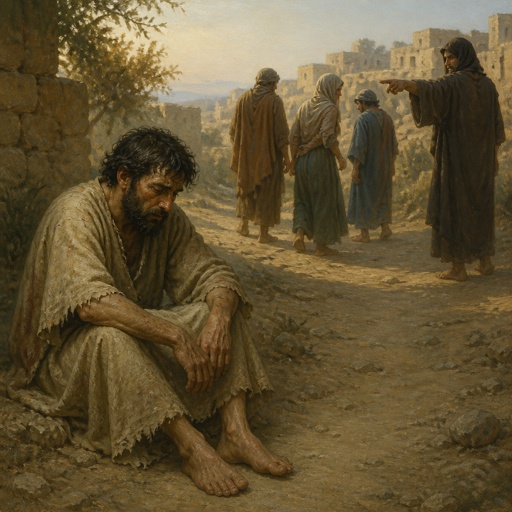
"They abhor me, they flee far from me, and spare not to spit in my face." - Job 30:10

Job 10:9 - "Remember, I beseech thee, that thou hast made me as the clay; and wilt thou bring me into dust again?"

"If I wash myself with snow water, and make my hands never so clean;" - Job 9:30

Job 30:30 - "My skin is black upon me, and my bones are burned with heat."

Job 30:28

Job 30:28

Job 30:28

Job 30:28

Job 30:28

Job 34:30 - "That the hypocrite reign not, lest the people be ensnared."

Job 30:6 - "To dwell in the clifts of the valleys, in caves of the earth, and in the rocks."

Job 9:1 - "Then Job answered and said,"

Job 30:29 - "I am a brother to dragons, and a companion to owls."

Job 38:30 - "The waters are hid as with a stone, and the face of the deep is frozen."

"Which doeth great things past finding out; yea, and wonders without number." - Job 9:10

Job 30:27 - "My bowels boiled, and rested not: the days of affliction prevented me."

Job 30:4 - "Who cut up mallows by the bushes, and juniper roots for their meat."

Job 30:7 - "Among the bushes they brayed; under the nettles they were gathered together."

"My skin is black upon me, and my bones are burned with heat." - Job 30:30

Job 22:30 - "He shall deliver the island of the innocent: and it is delivered by the pureness of thine hands."

Job 30:25 - "Did not I weep for him that was in trouble? was not my soul grieved for the poor?"

Job 6:30 - "Is there iniquity in my tongue? cannot my taste discern perverse things?"

Job 33:30 - "To bring back his soul from the pit, to be enlightened with the light of the living."