Cries of Creation: Listening to the Language of the Environment
“The beasts of the field cry also unto thee: for the rivers of waters are dried up, and the fire hath devoured the pastures of the wilderness.” — Joel 1:20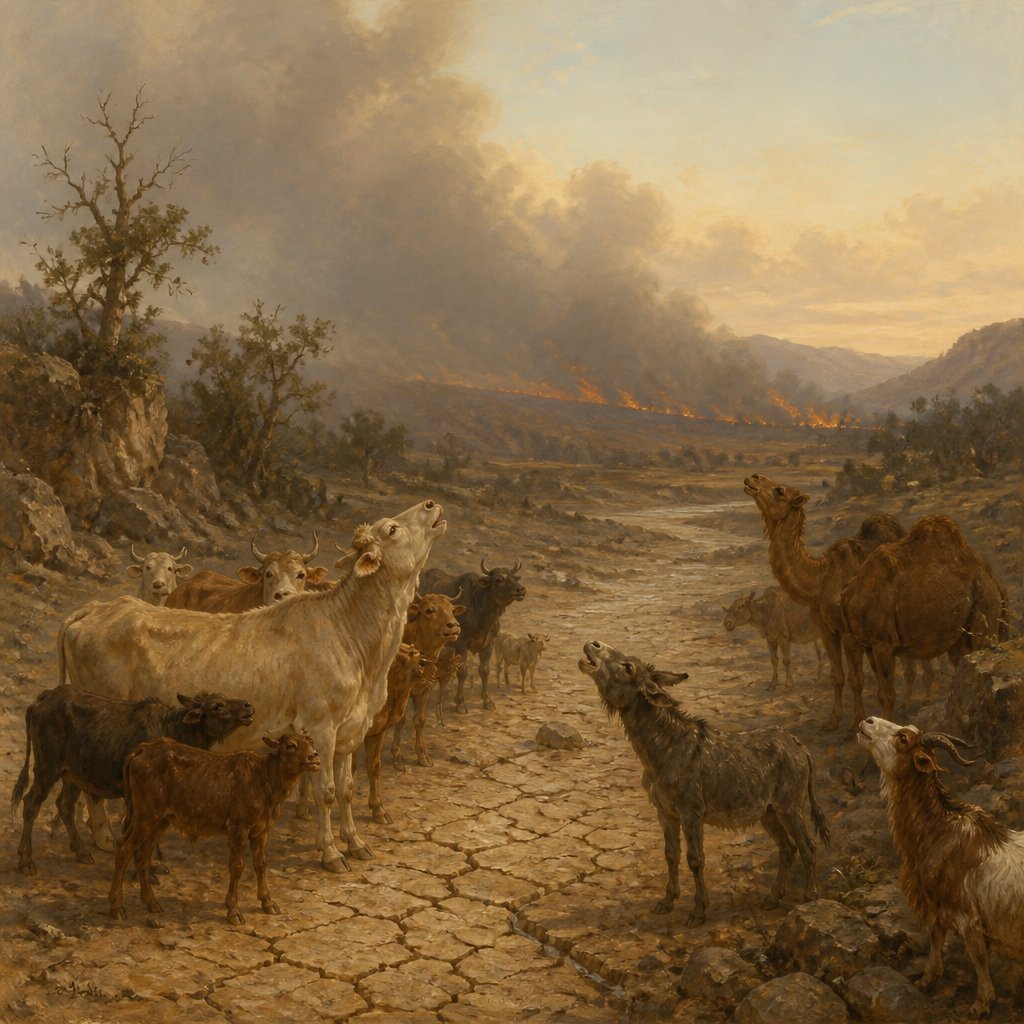
As we meditate on the words of the prophet Joel, particularly Joel 1:20 which states, "The beasts of the field cry also unto thee: for the rivers of waters are dried up, and the fire hath devoured the pastures of the wilderness," we are confronted with a powerful imagery of nature’s plea. This scripture speaks not only to the physical plight of animals and landscapes but also to a deeper spiritual truth about our relationship with creation and, ultimately, with the Creator.
To begin, we need to place Joel's words in context. The Book of Joel addresses a time of immense devastation caused by a locust plague, a consequence of moral and spiritual decay among God's people. The land was laid bare, and every living creature was affected. The beasts of the field, which once wandered freely and grazed abundantly, now find themselves in distress and despair. This scenario serves as a stark reminder not only of judgment but of the interconnectedness of God’s creation.
When we hear the beasts of the field "crying unto" God, it illustrates an elemental cry for help and restoration. In a world where we often overlook the plight of wildlife and nature, it’s vital to remember that all creation reflects the glory of God (Psalm 19:1). The symphony of life, comprising animals, rivers, and fields, resonates with our Creator’s design, and when that harmony is disrupted—whether through human actions or natural calamities—there is a collective cry. Nature is not simply a backdrop to humanity; it is an intricate part of our ecosystem designed to function in unity with us.
Here lies an intriguing notion: in the hallowed pages of Scripture, even animals are depicted as having their own voice, a voice that reaches the ears of God. As believers, this should stir a response within us. What does it mean for us to hear the crying of creation? Are we attuned to the environmental cries around us? From ecosystems threatened by climate change to the plight of endangered species, the groaning of creation is a call for us to take action, to be stewards of the earth rather than dominators.
Moreover, the specifics given in this verse about rivers dried up and fires devouring pastures symbolize loss and destruction. Rivers are often seen as symbols of life and abundance, essential for nourishment and growth. Their drying up indicates a spiritual barrenness in our lives, wherein we may feel emotionally and spiritually parched. Just as the environment suffers due to neglect and abuse, our spiritual lives can flourish or wither based on our relationship with God. The fire represents trials and tribulations that can devastate areas of our lives and of our communities when we stray from God’s paths.
This moment of reflection can lead us to examine our hearts as we navigate our daily lives. Are we contributing to the suffering of creation through negligence, selfish consumption, or indifference? Or are we embodying the care of God in the world, working toward restoration? God is calling us to partnership here, not only in prayer but also in active concern and loving stewardship.
Throughout Scripture, there is a striking promise that God cares for all His creations. Matthew 6:26 reminds us of how even the birds of the air are provided for. And if God lovingly tends to the wild creatures, how much more He desires for us to act in mercy toward all life.
In conclusion, let Joel’s succinct yet profound statement reverberate in our hearts. The beasts of the field cry out as a reflection of the state of God’s creation. As believers, we must respond to that distress, being conduits of God's love and restoration in a world that aches for intervention. Let us, therefore, strive to be more vigilant, compassionate stewards, listening to the cries of both creation and our own souls, ever yearning for the rivers of life that flow from the heart of God.
Get our apps


Artwork for Joel 1:20

Joel 1:20 - "The beasts of the field cry also unto thee: for the rivers of waters are dried up, and the fire hath devoured the pastures of the wilderness."
"The beasts of the field cry also unto thee: for the rivers of waters are dried up, and the fire hath devoured the pastures of the wilderness." - Joel 1:20

Joel 1:2-4, 13-20

1 Chronicles 27:20 - "Of the children of Ephraim, Hoshea the son of Azaziah: of the half tribe of Manasseh, Joel the son of Pedaiah:"

Joel 2:16-20

Joel 1:1 - "The word of the LORD that came to Joel the son of Pethuel."

Joel 3:20 - "But Judah shall dwell for ever, and Jerusalem from generation to generation."
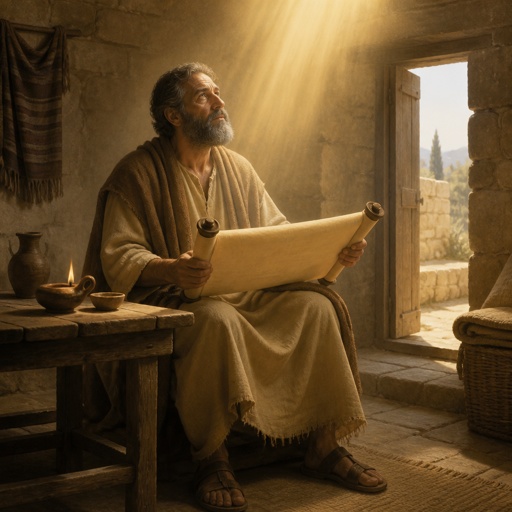
"The word of the LORD that came to Joel the son of Pethuel." - Joel 1:1

"Of the children of Ephraim, Hoshea the son of Azaziah: of the half tribe of Manasseh, Joel the son of Pedaiah:" - 1 Chronicles 27:20

Joel 1 natural disaster
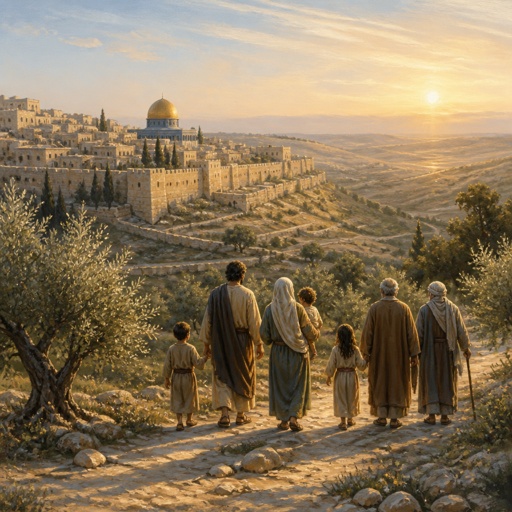
"But Judah shall dwell for ever, and Jerusalem from generation to generation." - Joel 3:20

1 Chronicles 11:38 - "Joel the brother of Nathan, Mibhar the son of Haggeri,"

Joel 1:8 - "¶ Lament like a virgin girded with sackcloth for the husband of her youth."

1 Chronicles 23:8 - "The sons of Laadan; the chief was Jehiel, and Zetham, and Joel, three."

1 Chronicles 5:12 - "Joel the chief, and Shapham the next, and Jaanai, and Shaphat in Bashan."

1 Chronicles 4:35 - "And Joel, and Jehu the son of Josibiah, the son of Seraiah, the son of Asiel,"

1 Chronicles 6:36 - "The son of Elkanah, the son of Joel, the son of Azariah, the son of Zephaniah,"

1 Chronicles 15:7 - "Of the sons of Gershom; Joel the chief, and his brethren an hundred and thirty:"

Joel 1:15 - "Alas for the day! for the day of the LORD is at hand, and as a destruction from the Almighty shall it come."
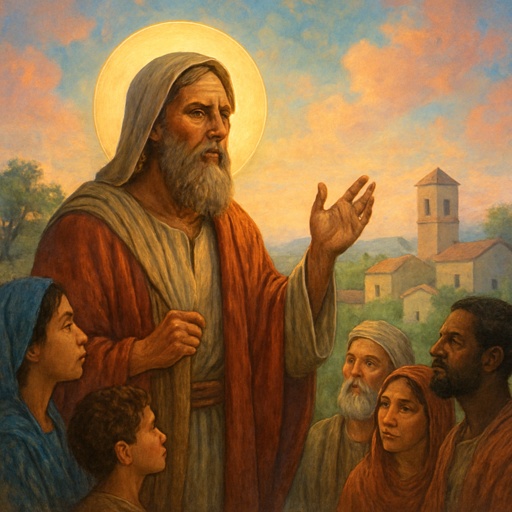
Prophet Joel in a small village surrounded by a small diverse group of listeners. Joel has an aura about his head. The background sky and cloud are seen in soft pastels pinks, yellows, and blues.

Prophet Joel in a small village surrounded by a small diverse group of listeners. Joel has an aura about his head. The background sky and cloud are seen in soft pastels pinks, yellows, and blues.

1 Chronicles 6:33 - "And these are they that waited with their children. Of the sons of the Kohathites: Heman a singer, the son of Joel, the son of Shemuel,"

Joel 1:10 - "The field is wasted, the land mourneth; for the corn is wasted: the new wine is dried up, the oil languisheth."

Joel 1:3 - "Tell ye your children of it, and let your children tell their children, and their children another generation."

1 Chronicles 5:4 - "The sons of Joel; Shemaiah his son, Gog his son, Shimei his son,"

Joel 1:17 - "The seed is rotten under their clods, the garners are laid desolate, the barns are broken down; for the corn is withered."

Joel 3:1 - "For, behold, in those days, and in that time, when I shall bring again the captivity of Judah and Jerusalem,"

Joel 1:16 - "Is not the meat cut off before our eyes, yea, joy and gladness from the house of our God?"

1 Chronicles 15:11 - "And David called for Zadok and Abiathar the priests, and for the Levites, for Uriel, Asaiah, and Joel, Shemaiah, and Eliel, and Amminadab,"

Joel 1:9 - "The meat offering and the drink offering is cut off from the house of the LORD; the priests, the LORD'S ministers, mourn."