The Depths of Grief and the Heights of Faith
“And some of them said, Could not this man, which opened the eyes of the blind, have caused that even this man should not have died?” — John 11:37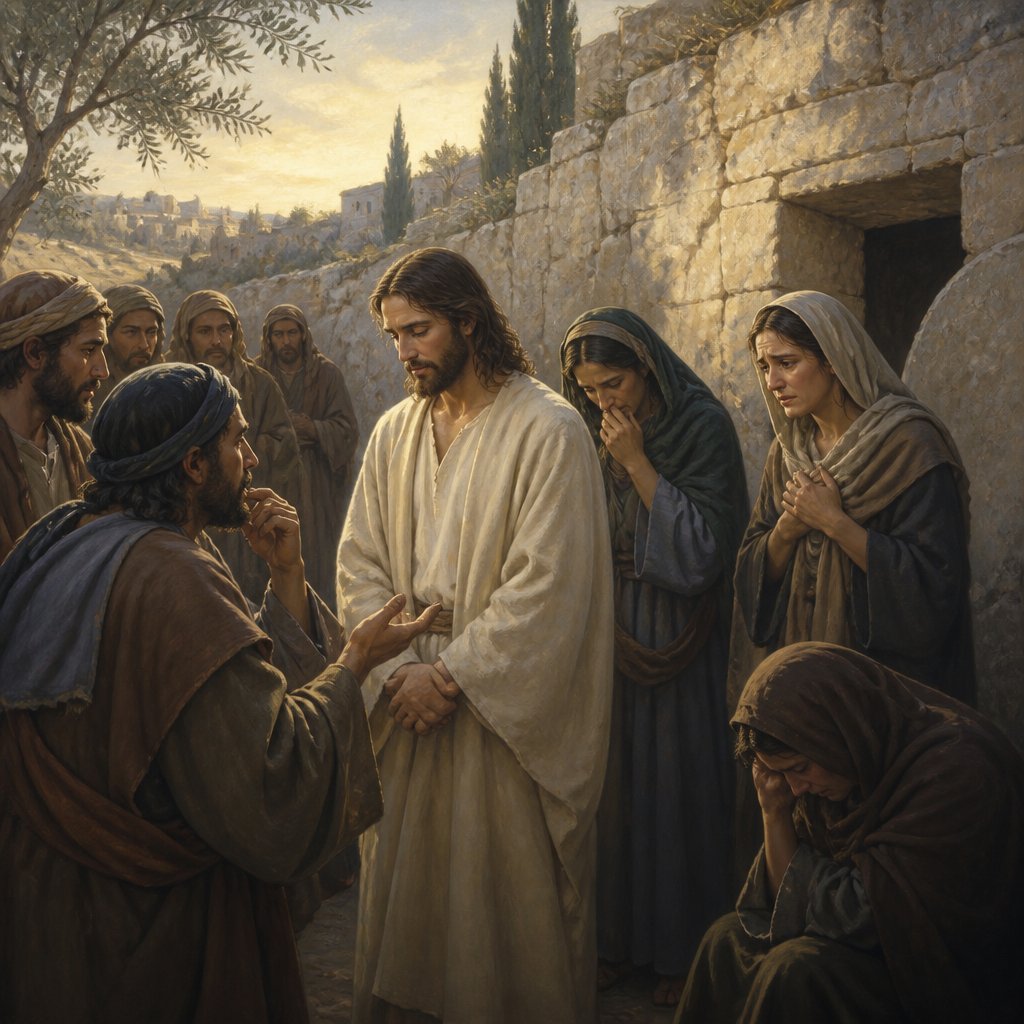
In the Gospel of John, chapter 11, we find the poignant account of the death of Lazarus, a beloved brother and dear friend to Jesus. Verse 37 captures a moment of confusion and disbelief, as witnesses ponder the power of the one who opened the eyes of the blind: "And some of them said, Could not this man, which opened the eyes of the blind, have caused that even this man should not have died?" (KJV). In this inquiry, we discover the raw human emotion of grief interwoven with a sliver of hope that begs the question—why didn’t Jesus intervene before death claimed Lazarus?
This verse resonates deeply with many of us, echoing our own questions in times of sorrow. When facing loss and heartache, we often grapple with the seeming silence of God, the apparent delay in His help. Mary and Martha, Lazarus's sisters, expressed their distress clearly and poignantly. They sent word to Jesus when Lazarus fell sick, confident that He, who possessed the grace to perform miraculous healings, would come in time to save their brother. Yet, He did not arrive until four days after Lazarus's death. This delay stirs a profound mix of emotions—the profound disappointment in the unanswered prayers, the helplessness in the face of death, and the longing for immediate divine intervention.
The inquiry posed in verse 37 reveals the intense love and faith people had in Jesus's power. They witnessed Him restore sight to the blind, yet they could not fathom that the same power could be extended to prevent death itself. This reflects a common human struggle—to reconcile the reality of suffering with the belief in a sovereign and loving God. Emotions can often guide our reasoning when confronted with grief, leading to statements imbued with grief’s bitterness rather than acknowledgment of God’s omnipotence.
However, we must approach this scripture with the understanding that Jesus operates on a divine timetable, not on our own. He knew Lazarus was ill and chose to delay His visit, for a purpose much greater than merely healing. In John 11:4, Jesus states, “This sickness is not unto death, but for the glory of God, that the Son of God might be glorified thereby.” Therein lies a profound lesson for us: sometimes our suffering and the timing of events in our lives may not align with our expectations, yet they are woven into God’s perfect plan.
Jesus did not arrive late. He sought to demonstrate that death is not final. The resurrection of Lazarus stands as a testament to His divine authority over both life and death. This account not only foreshadows His own resurrection but also offers us hope. When we experience loss, we are reminded that those who believe in Christ will see their loved ones again, for He is the Life and the Resurrection.
As we sit in our moments of despair, questioning God and wrestling with doubt, we must commit to placing our faith in His promises. The grieving hearts of Mary and Martha were met by Jesus's compassion and ultimate power. When we cry out in mourning, we must also remember to listen for His response. In our darkest music of sorrow, God may be issuing forth His sweetest notes of comfort and hope, challenging us to deepen our faith.
In this world, where tears and troubles abound, may we remind ourselves of the profound truth unveiled in John 11—a truth that bore itself in the resurrection of Lazarus and the promise of a future resurrection for all who trust in Him. Let us lean into our faith, embracing God’s involvement even amidst our struggles, assured that He is alive and present in our moments of need. As we navigate the complexities of grief, may our hearts ever be anchored to hope, believing that all things, even loss, can ultimately reveal the glory of God.
Get our apps


Artwork for John 11:37

John 11:37 - "And some of them said, Could not this man, which opened the eyes of the blind, have caused that even this man should not have died?"
"And some of them said, Could not this man, which opened the eyes of the blind, have caused that even this man should not have died?" - John 11:37

John 7:37-39

John 7:37-39

John 6:37

john 1:37

john 1:37 come and see

john 1:37 come and see

John 4:37 - "And herein is that saying true, One soweth, and another reapeth."

John 1:37 - "And the two disciples heard him speak, and they followed Jesus."

John 10:37 - "If I do not the works of my Father, believe me not."

Acts 15:37 - "And Barnabas determined to take with them John, whose surname was Mark."

John 19:37 - "And again another scripture saith, They shall look on him whom they pierced."

1 Chronicles 11:37 - "Hezro the Carmelite, Naarai the son of Ezbai,"

Mark 5:37 - "And he suffered no man to follow him, save Peter, and James, and John the brother of James."

John 9:37 - "And Jesus said unto him, Thou hast both seen him, and it is he that talketh with thee."

John 12:37 - "¶ But though he had done so many miracles before them, yet they believed not on him:"

Genesis 37:11 - "And his brethren envied him; but his father observed the saying."

Psalms 37:11 - "But the meek shall inherit the earth; and shall delight themselves in the abundance of peace."

John 6:37 - "All that the Father giveth me shall come to me; and him that cometh to me I will in no wise cast out."

John 8:37 - "I know that ye are Abraham's seed; but ye seek to kill me, because my word hath no place in you."

Exodus 37:11 - "And he overlaid it with pure gold, and made thereunto a crown of gold round about."

"And the two disciples heard him speak, and they followed Jesus." - John 1:37

"If I do not the works of my Father, believe me not." - John 10:37

Job 37:11 - "Also by watering he wearieth the thick cloud: he scattereth his bright cloud:"

"And herein is that saying true, One soweth, and another reapeth." - John 4:37

Leviticus 11:37 - "And if any part of their carcase fall upon any sowing seed which is to be sown, it shall be clean."

Jeremiah 37:11 - "¶ And it came to pass, that when the army of the Chaldeans was broken up from Jerusalem for fear of Pharaoh's army,"

John 7:37 - "In the last day, that great day of the feast, Jesus stood and cried, saying, If any man thirst, let him come unto me, and drink."

Acts 10:37 - "That word, I say, ye know, which was published throughout all Judaea, and began from Galilee, after the baptism which John preached;"