The Prophetic Voice of Caiaphas: A Divine Revelation
“And this spake he not of himself: but being high priest that year, he prophesied that Jesus should die for that nation;” — John 11:51
The story unfolds vividly in John 11:51, where we encounter the high priest Caiaphas during a pivotal moment in Jesus’ ministry. The King James Version tells us: "And this spake he not of himself: but being high priest that year, he prophesied that Jesus should die for that nation." This single verse encapsulates a profound truth about God’s sovereignty and the intricate ways in which He orchestrates events for the fulfillment of His divine purpose.
As we delve into this verse, we must first understand its context. The religious leaders faced a substantial dilemma: the growing influence of Jesus was becoming untenable. His miracles, His teachings, and the people’s adoration posed a direct challenge to their authority. Caiaphas, in a meeting with other Jewish leaders, attempted to address this crisis. In his earthly wisdom, he proposed that it would be better for one man to die than for the entire nation to perish (John 11:50). Little did they know that his words carried profound prophetic significance that transcended his own understanding.
Caiaphas’s declaration, acting in his official capacity as high priest, reveals a critical principle of divine revelation. God can speak through anyone—even those whose hearts may not be aligned with His will. Caiaphas’s intention was self-serving, yet the ultimate message was divinely orchestrated. This illustrates the remarkable truth that God utilizes every possible channel to communicate His plans.
In the Old Testament, God appointed the high priest as the mediator between Himself and the people of Israel. This role was inherently sacred, and through Caiaphas, albeit unknowingly, God declared the ultimate sacrificial act that would soon unfold. Jesus, the Lamb of God, was destined to take on the burden of sin for not just the nation of Israel, but for all humanity. The prophecy spoken through Caiaphas was a foreshadowing of the depths of Christ’s love and the grave sacrifice that was to come.
Caiaphas’s words reveal the paradox of God using imperfect vessels to fulfill His perfect will. This serves as encouragement for believers today—we, too, are imperfect and often struggle with the complexities of our own hearts. Yet, it is precisely in our limitations that God’s grace shines brightest. He can use our circumstances, our struggles, and even our flawed intentions to bring about His divine purposes.
Reflecting on the phrase "but being high priest that year, he prophesied…" leads us to yet another poignant realization. The high priest had a temporary position, yet his prophecy had eternal significance. Christ's atoning sacrifice would not only save a nation but would set the foundation for redemption for all. This moment reminds us that our roles in the kingdom may be transient, but the impact we leave can resonate through generations. It challenges us to consider how we, too, might be a voice of truth and love in our own context, whether we are in leadership roles or not.
As we meditate on this single verse, it beckons us to contemplate the enormity of Jesus’s upcoming sacrifice. It was not just a response to the political pressures of the time, but God’s plan unfolding, revealing His desire for reconciliation and restoration. Jesus’s death was for our nation, and indeed for all nations, opening the door to relationship with the Father.
In closing, let us honor the prophetic words of Caiaphas, understanding that they were a divine revelation of God’s masterful plan for salvation. May we be mindful of the ways God speaks to us today, and may we have the humility to accept that often His voice can be heard in the most unexpected places. Let us respond with gratitude for the sacrificial love of Christ, embracing the call to be His hands and feet in the world, proclaiming the hope we have found in Him.
Get our apps


Artwork for John 11:51

John 11:51 - "And this spake he not of himself: but being high priest that year, he prophesied that Jesus should die for that nation;"

"And this spake he not of himself: but being high priest that year, he prophesied that Jesus should die for that nation;" - John 11:51

John 7:51 - "Doth our law judge any man, before it hear him, and know what he doeth?"

Luke 8:51 - "And when he came into the house, he suffered no man to go in, save Peter, and James, and John, and the father and the mother of the maiden."

John 4:51 - "And as he was now going down, his servants met him, and told him, saying, Thy son liveth."

John 8:51 - "Verily, verily, I say unto you, If a man keep my saying, he shall never see death."

Psalms 51:11 - "Cast me not away from thy presence; and take not thy holy spirit from me."

John 1:51 - "And he saith unto him, Verily, verily, I say unto you, Hereafter ye shall see heaven open, and the angels of God ascending and descending upon the Son of man."

Luke 11:51 - "From the blood of Abel unto the blood of Zacharias, which perished between the altar and the temple: verily I say unto you, It shall be required of this generation."

John 6:51 - "I am the living bread which came down from heaven: if any man eat of this bread, he shall live for ever: and the bread that I will give is my flesh, which I will give for the life of the world."
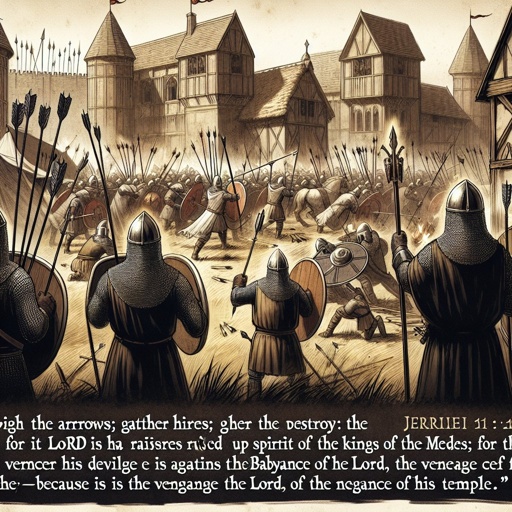
Jeremiah 51:11 - "Make bright the arrows; gather the shields: the LORD hath raised up the spirit of the kings of the Medes: for his device is against Babylon, to destroy it; because it is the vengeance of the LORD, the vengeance of his temple."

John (11:35) Jesus wept.

Isaiah 51:11 - "Therefore the redeemed of the LORD shall return, and come with singing unto Zion; and everlasting joy shall be upon their head: they shall obtain gladness and joy; and sorrow and mourning shall flee away."

John (11:35) Jesus wept.

John (11:35) Jesus wept.

John 11:35

John 15.1-11

John 11:35

"Doth our law judge any man, before it hear him, and know what he doeth?" - John 7:51

John (11:35) Jesus wept.

John (11:35) Jesus wept.

John (11:35) Jesus wept.

John (11:35) Jesus wept.

John (11:35) Jesus wept.

John (11:35) Jesus wept.

John 11:35 - "Jesus wept."

John (11:35) Jesus wept.

John (11:35) Jesus wept.

John (11:35) Jesus wept.

John (11:35) Jesus wept.