The World Gone After Him: A Reflection on John 12:19
“The Pharisees therefore said among themselves, Perceive ye how ye prevail nothing? behold, the world is gone after him.” — John 12:19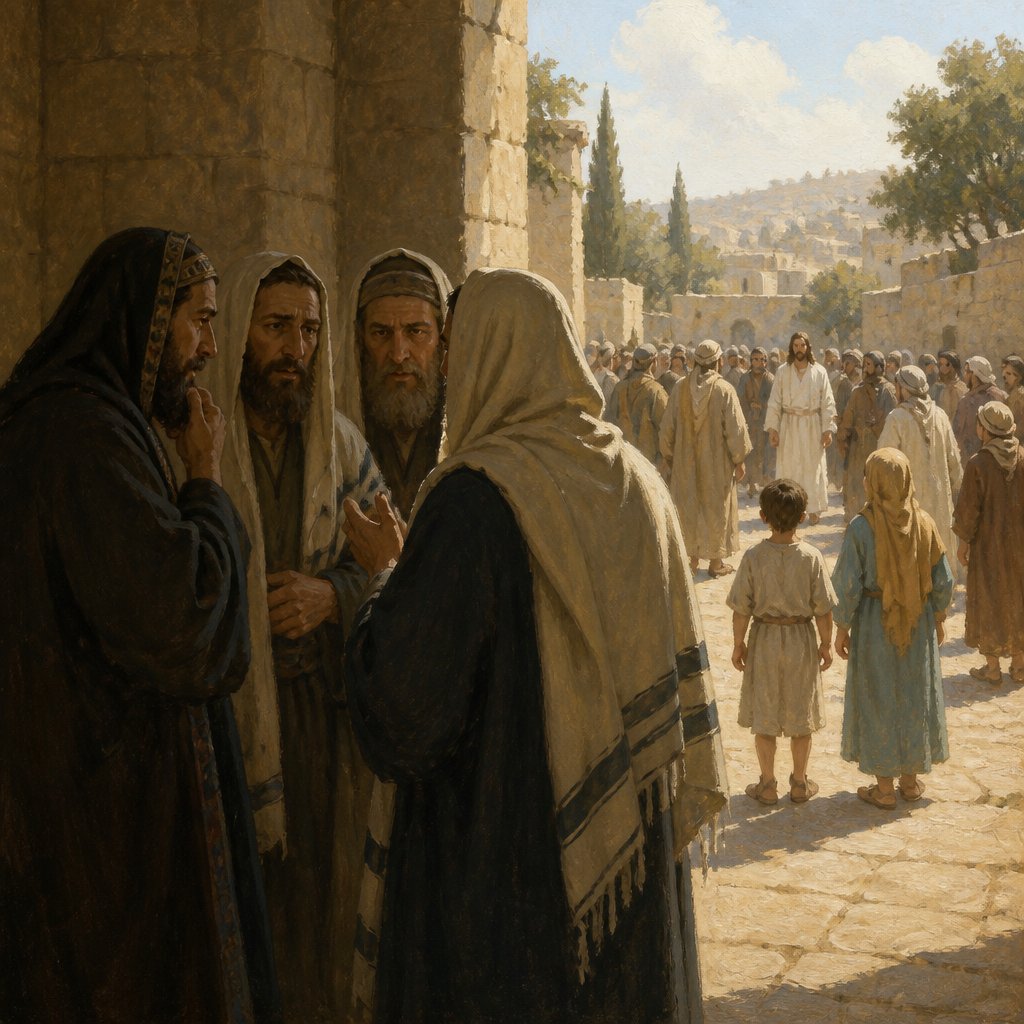
In the rich tapestry of biblical narratives, John 12:19 stands as a profound statement of observation and realization: "The Pharisees therefore said among themselves, Perceive ye how ye prevail nothing? behold, the world is gone after him." This verse encapsulates a pivotal moment in Jesus’ ministry—a moment charged with tension, revelation, and a silent acknowledgment that something significant was unfolding.
The backdrop of this declaration is vital. Just preceding this moment, Jesus had performed the miraculous raising of Lazarus from the dead. This act not only showcased His divine authority but also drew throngs of people to Him, eager to witness His power and teachings. As word spread, excitement grew, and with it, the crowds that followed Him proliferated.
For the Pharisees, the Jewish religious leaders at this time, the impact of Jesus was a source of increasing frustration and fear. They represented the established religious order, bound to tradition, authority, and the law. Yet here stood Jesus, not just challenging their authority but redefining the very essence of faith and relationship with God. As the crowds swelled around Him—waving palm branches and proclaiming Him as the Messiah—the Pharisees were confronted with an insurmountable anxiety.
"Perceive ye how ye prevail nothing?" they lamented amongst themselves. This rhetorical question reveals their desperation. In their attempts to diminish Jesus’ growing influence, they found themselves impotent. The more they tried to silence Him—through criticism, scrutiny, and intimidation—the more the masses were drawn to Him. They recognized a profound truth: human efforts to deny or control the divine cannot succeed when God is at work.
As Christians, we often face a similar conundrum. We may find ourselves in situations where worldly values and systems seem to prevail, where righteousness appears overshadowed by injustice, and where the truth of Christ’s gospel feels under threat. But just as the Pharisees learned, our human limitations do not negate God’s reign. We are called to perspective and to look beyond our immediate circumstances.
The second part of the statement, "behold, the world is gone after him," underscores the power of Christ's magnetic pull on humanity. Here, the world signifies more than just the physical population; it symbolizes a deep spiritual yearning and hunger for truth, love, and hope—qualities that Jesus embodies. This phrase captures the essence of the great commission that follows in the New Testament: to go into all the world and make disciples. The Pharisees recognized that a transformation was taking place.
As believers today, we are part of this transformative journey. The question we must ask ourselves is this: are we truly following the One who invites us to leave behind our doubts, fears, and worldly distractions? Are we embracing the call to leave our comfort zones and follow Him wherever He leads?
Furthermore, we ought to be encouraged to know that the triumph of Jesus does not rest on our own understanding or efforts. It is He who draws the world to Himself, and our role is to be vessels of His love and grace. We can reflect on this truth through our actions and words, allowing our lives to echo that call to others: to see Him, to know His love, and ultimately, to follow Him wholeheartedly.
In conclusion, John 12:19 is both a cautionary tale and a powerful reminder of the reality of God's kingdom. When we feel overwhelmed by the challenges surrounding us, let us remember that it is not about our success or failure but about our faithfulness to the One who reigns supreme. Like the crowds who remained steadfastly drawn after Jesus, may we too be a generation that boldly declares, "I have decided to follow Jesus—no turning back!" Amen.
Get our apps


Artwork for John 12:19

John 12:19 - "The Pharisees therefore said among themselves, Perceive ye how ye prevail nothing? behold, the world is gone after him."
"The Pharisees therefore said among themselves, Perceive ye how ye prevail nothing? behold, the world is gone after him." - John 12:19

John 19:12 - "And from thenceforth Pilate sought to release him: but the Jews cried out, saying, If thou let this man go, thou art not Caesar's friend: whosoever maketh himself a king speaketh against Caesar."

John 19:38

John 19:1

John 19:19 - "¶ And Pilate wrote a title, and put it on the cross. And the writing was, JESUS OF NAZARETH THE KING OF THE JEWS."

John 17.6-19

John 19:1-3

John 19:25-27

John 1:19 - "¶ And this is the record of John, when the Jews sent priests and Levites from Jerusalem to ask him, Who art thou?"

John 19:25-27

John 19:26-27

John 21:15-19

John 6:12

John 8:12

John 12:25

John 8:12

John 8:12

John 8:12

John 12:3

John 8:12

John 10:19 - "¶ There was a division therefore again among the Jews for these sayings."

Genesis 19-12

John 20:11-12

John 19:1 - "Then Pilate therefore took Jesus, and scourged him."

John 19:25-27 with emphasis on Mary

John 12:12 - "¶ On the next day much people that were come to the feast, when they heard that Jesus was coming to Jerusalem,"

John 19:3 - "And said, Hail, King of the Jews! and they smote him with their hands."

John 19:12-13 - "From then on, Pilate tried to release him, but the Jews cried out, "If you let this man go, you are no friend of Caesar. Anyone who claims to be a king opposes Caesar." When Pilate heard this, he brought Jesus out and sat down on the judge's seat at a place known as the Stone Pavement (which in Aramaic is Gabbatha)."

1 John 4:19 - "We love him, because he first loved us."