Across the Brook Cedron: A Journey of Obedience and Surrender
“When Jesus had spoken these words, he went forth with his disciples over the brook Cedron, where was a garden, into the which he entered, and his disciples.” — John 18:1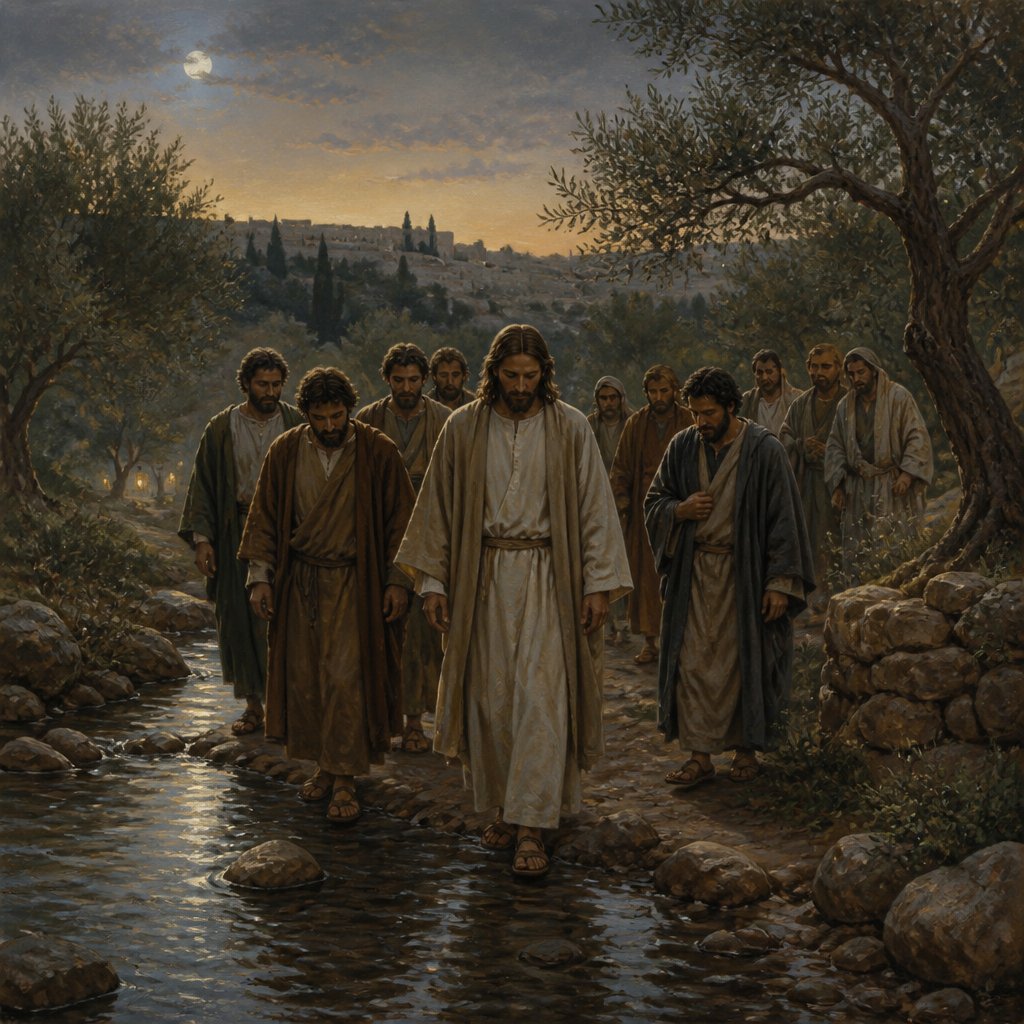
As we meditate on John 18:1—"When Jesus had spoken these words, he went forth with his disciples over the brook Cedron, where was a garden, into the which he entered, and his disciples"—we find ourselves at a pivotal moment in the life of Jesus Christ. This passage encapsulates not only the physical journey of Christ through the valley of Cedron into the Garden of Gethsemane, but also a profound spiritual journey drawn from the essence of obedience and surrender, themes that reverberate throughout the Gospel.
### The Context of the Verse
Jesus had just finished delivering a deep and poignant farewell discourse to His disciples, filled with teachings that would prepare them for the challenges ahead (John 14-17). It was a time of emotional turmoil, both for Him and His dear followers. In these verses, we witness the poignant transition from intimate fellowship to the inevitable confrontation with betrayal and death. The brook Cedron, a place that signifies both separation and the threshold to suffering, becomes a geographical and theological marker in the narrative.
### The Symbolism of the Brook Cedron
The brook Cedron, or Kidron, literally means "darkness," and it serves as a rich symbol of the trials and tribulations that Jesus is facing. As He crosses this brook, we are reminded of the darkness that would soon envelop Him at the hands of those He came to save. It signifies the stark contrast between light and darkness, hope and despair. As we reflect on our own lives, how often do we find ourselves standing at the brink of Cedron—a crossing that challenges our faith, commitments, and sense of security?
### The Garden of Gethsemane
The mention of the garden is equally significant. Gethsemane means "oil press," and it is here that the pressure of sin; indeed the weight of the world’s anguish lays heavily on Jesus. This garden is where Jesus would soon pray in deep anguish, His humanity wrestling with the divine purpose of His impending crucifixion. The peace of the garden juxtaposes the turmoil of the impending conflict, resulting in a spiritual struggle that evokes sympathy and awe.
### The Importance of Companionship
The act of entering the garden with His disciples exemplifies the importance of community in our spiritual journeys. Jesus, though fully aware of the suffering that awaited him, chose to share this moment with those closest to Him. It reminds us that as we navigate our challenges, God gifts us with companions to share in our burdens and joys. The path to surrender does not isolate us but brings us together with others who walk alongside us in faith. We find strength in one another, and we are encouraged to hold onto hope, even when darkness seems to encroach.
### A Call to Surrender
As Jesus steps into the garden, He embodies the ultimate act of surrender—an alignment of His own will with that of the Father. His words in prayer, “Not my will but thine be done,” resonate deeply with the essence of our walk with Christ. In moments where we face our 'Cedron'—the dark brook in our lives—it is crucial that we surrender to God's will rather than relying on our understanding. True obedience comes at a price, often necessitating sacrifices we may not always be willing to make.
### Conclusion
In contemplating John 18:1, we are called to consider the realities of our faith journey. The brook Cedron challenges us to confront our fears and uncertainties. Like Jesus, we are invited to cross over, moving into the spaces where God is calling us, to pray and wrestle with what is before us. As we travel across our own brooks of Cedron, may we find strength in our community, courage in obedience, and peace in surrendering to the divine will of God. This passage reminds us that the path to resurrection passes through the valleys of the darkest moments of our lives. Let us trust this journey, knowing that Jesus leads us from darkness into light.
Get our apps


Artwork for John 18:1

John 18:1 - "When Jesus had spoken these words, he went forth with his disciples over the brook Cedron, where was a garden, into the which he entered, and his disciples."
"When Jesus had spoken these words, he went forth with his disciples over the brook Cedron, where was a garden, into the which he entered, and his disciples." - John 18:1
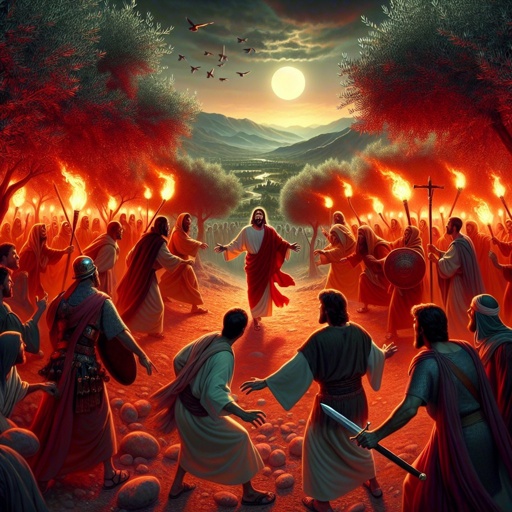
John 18:1-11 - "After saying these things, Jesus crossed the Kidron Valley with his disciples and entered a grove of olive trees. Judas the betrayer knew this place, because Jesus had often gone there with his disciples. The leading priests and Pharisees had given Judas a contingent of Roman soldiers and Temple guards to accompany him. Now with blazing torches, lanterns, and weapons, they arrived at the olive grove. Jesus fully realized all that was going to happen to him, so he stepped forward to meet them. “Who are you looking for?” he asked. “Jesus the Nazarene,” they replied. “I Am he,” Jesus said. (Judas, who betrayed him, was standing with them.) As Jesus said “I Am he,” they all drew back and fell to the ground! Once more he asked them, “Who are you looking for?” And again they replied, “Jesus the Nazarene.” “I told you that I Am he,” Jesus said. “And since I am the one you want, let these others go.” He did this to fulfill his own statement: “I did not lose a single one of those you have given me.” Then Simon Peter drew a sword and slashed off the right ear of Malchus, the high priest’s slave. But Jesus said to Peter, “Put your sword back into its sheath. Shall I not drink from the cup of suffering the Father has given me?”"
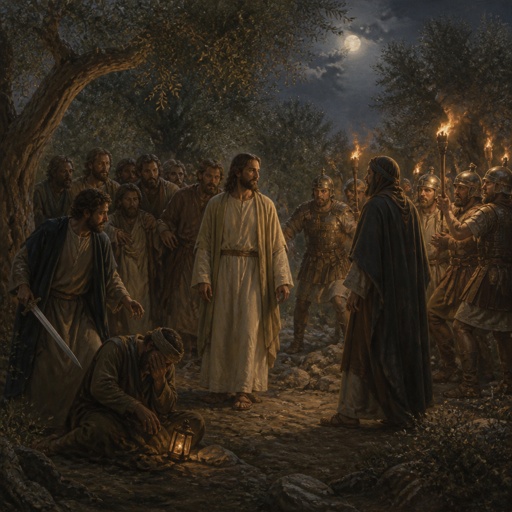
"After saying these things, Jesus crossed the Kidron Valley with his disciples and entered a grove of olive trees. Judas the betrayer knew this place, because Jesus had often gone there with his disciples. The leading priests and Pharisees had given Judas a contingent of Roman soldiers and Temple guards to accompany him. Now with blazing torches, lanterns, and weapons, they arrived at the olive grove. Jesus fully realized all that was going to happen to him, so he stepped forward to meet them. “Who are you looking for?” he asked. “Jesus the Nazarene,” they replied. “I Am he,” Jesus said. (Judas, who betrayed him, was standing with them.) As Jesus said “I Am he,” they all drew back and fell to the ground! Once more he asked them, “Who are you looking for?” And again they replied, “Jesus the Nazarene.” “I told you that I Am he,” Jesus said. “And since I am the one you want, let these others go.” He did this to fulfill his own statement: “I did not lose a single one of those you have given me.” Then Simon Peter drew a sword and slashed off the right ear of Malchus, the high priest’s slave. But Jesus said to Peter, “Put your sword back into its sheath. Shall I not drink from the cup of suffering the Father has given me?”" - John 18:1-11

1 John 5:18

1 John 4:18

1 John 4:18

1 John 3:18 - "My little children, let us not love in word, neither in tongue; but in deed and in truth."
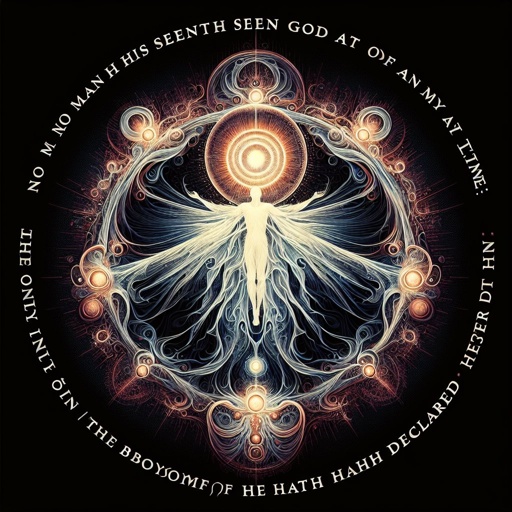
John 1:18 - "No man hath seen God at any time; the only begotten Son, which is in the bosom of the Father, he hath declared him."

1 John 5:18 - "We know that whosoever is born of God sinneth not; but he that is begotten of God keepeth himself, and that wicked one toucheth him not."

1 John 4:18 - "There is no fear in love; but perfect love casteth out fear: because fear hath torment. He that feareth is not made perfect in love."

John 7:17-18

John 7:17-18

John 7:17-18

John 7:17-18

John 18:25

john 18:36

1 John 2:18 - "Little children, it is the last time: and as ye have heard that antichrist shall come, even now are there many antichrists; whereby we know that it is the last time."

"There is no fear in love; but perfect love casteth out fear: because fear hath torment. He that feareth is not made perfect in love." - 1 John 4:18

1 John 3:18-19 - "My little children, let us not love in word, neither in tongue; but in deed and in truth. And hereby we know that we are of the truth, and shall assure our hearts before him."

John 18:27 - "Peter then denied again: and immediately the cock crew."

John 6:18 - "And the sea arose by reason of a great wind that blew."

1 John 4:18-19 - "There is no fear in love; but perfect love casteth out fear: because fear hath torment. He that feareth is not made perfect in love. We love him, because he first loved us."

Mark 2:18 - "And the disciples of John and of the Pharisees used to fast: and they come and say unto him, Why do the disciples of John and of the Pharisees fast, but thy disciples fast not?"
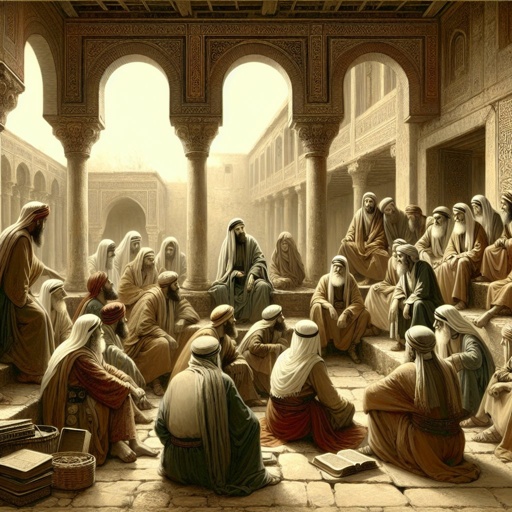
Luke 7:18 - "And the disciples of John shewed him of all these things."

John 18:18 - "And the servants and officers stood there, who had made a fire of coals; for it was cold: and they warmed themselves: and Peter stood with them, and warmed himself."

"My little children, let us not love in word, neither in tongue; but in deed and in truth." - 1 John 3:18

John 18:12 - "Then the band and the captain and officers of the Jews took Jesus, and bound him,"

John 14:18 - "I will not leave you comfortless: I will come to you."

John 18:19 - "¶ The high priest then asked Jesus of his disciples, and of his doctrine."