The Multilingual Cross: A Declaration for All Nations
“This title then read many of the Jews: for the place where Jesus was crucified was nigh to the city: and it was written in Hebrew, and Greek, and Latin.” — John 19:20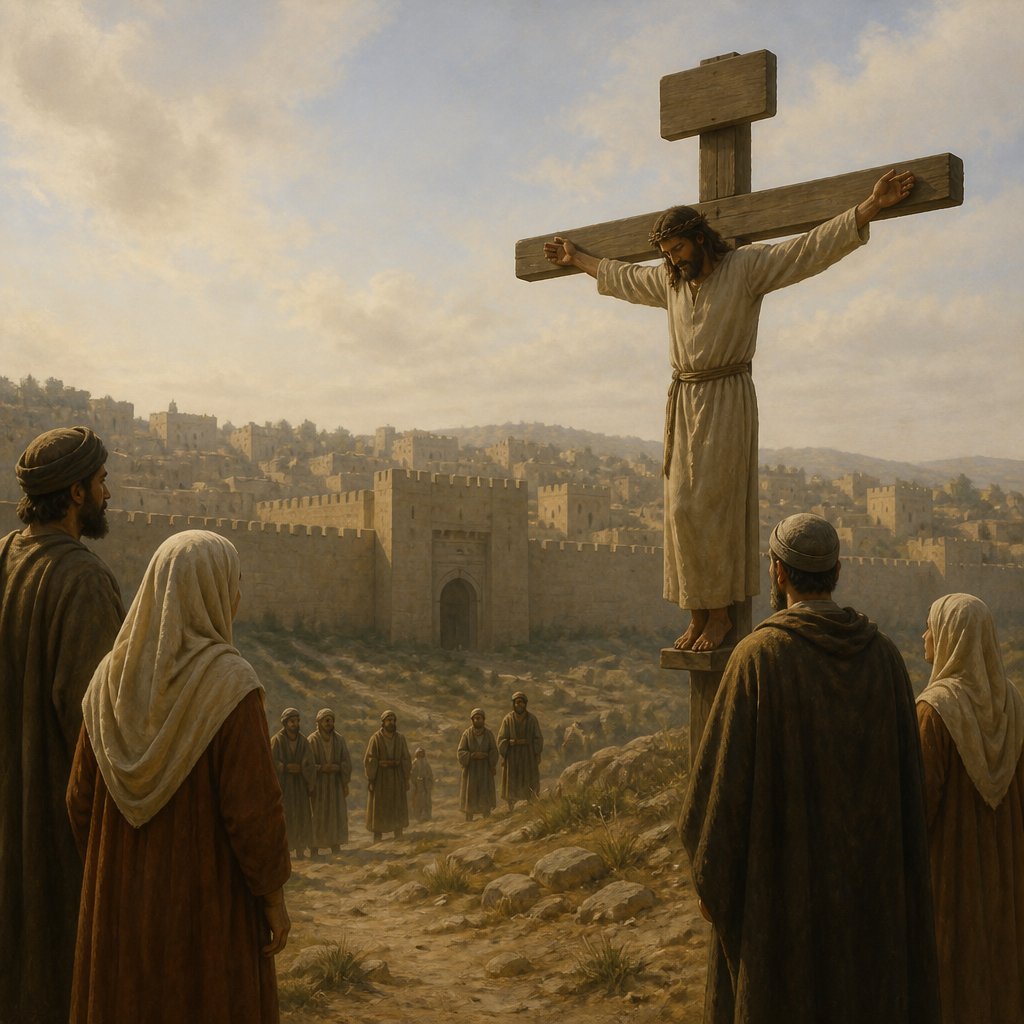
As I reflect on John 19:20, where it says, "This title then read many of the Jews: for the place where Jesus was crucified was nigh to the city: and it was written in Hebrew, and Greek, and Latin," I am overwhelmed with the profound significance of this single verse. Here, we encounter a moment that was both pivotal in human history and emblematic of the universal message that Jesus brought to the world.
The inscription placed above Jesus on the cross read, "Jesus of Nazareth, King of the Jews." It was written in three languages: Hebrew, the language of the Jewish people; Greek, the common language of the region and a bridge to the Gentiles; and Latin, the language of the Roman authority that upheld the crucifixion. This moment serves as a powerful illustration of God's intention to extend His grace beyond any cultural, linguistic, or geographical boundaries.
In the Hebrew language, Jesus embodies the fulfillment of the Old Testament prophecies, revealing God’s promise to His chosen people. It reminds us of a deeply rooted heritage, as Hebrew was the language of the Scriptures. To the Jews reading this inscription, it was a stark reminder that their Messiah stood before them, rejected but resolute. His kingship, announced even in His death, remains unchallenged by the accusations and political machinations surrounding Him.
In Greek, Jesus’ title invites the wider Gentile world to recognize Him. Greek was the lingua franca of the Mediterranean, making it a perfect vehicle for divine truth to spread. When the early Christians began preaching the Gospel, they utilized this same language, spreading the message of Jesus far beyond the Jewish community. It invites us, as modern believers, to consider our role in sharing the Gospel. Are we perhaps called to communicate the good news in the contemporary languages and cultures of our own time, to ensure that Christ’s message is accessible to everyone?
The inclusion of Latin, the language of the Roman Empire, is equally significant. It signifies the dominion of worldly powers—empire, authority, and might—yet Jesus’ declaration as King transcends this earthly power. The inscription boldly proclaims that while earthly rulers may wield authority, the true King of kings stands above all. Every knee shall bow, and every tongue confess that Jesus Christ is Lord.
As we ponder the multilingual inscription, we are reminded of the Pentecost experience in Acts 2, where the Holy Spirit empowered disciples to speak in all languages, leading many to Christ. It serves as a call for unity among the body of Christ, transcending cultural barriers and linguistic differences. In a world that often seeks to divide us along lines of language and culture, the cross stands as a symbol of the unity we find in Christ, inviting all to partake in the saving grace He offers.
In our day-to-day lives, how do we embody this inclusivity? Are there barriers—spoken or unspoken—that hinder us from reaching out to those different from us? Jesus’ crucifixion, painfully executed in public view, was for all of humanity. He endured personal suffering in order that none might be excluded from His grace.
Let us live out this truth, proclaiming the love of Christ in our words and actions, both in our native language and in the languages of our friends, neighbors, and communities. Let us be ambassadors of His kingdom, ensuring that our lives reflect His love, breaking down walls that separate us.
As we meditate on this powerful verse, may it inspire us to share the message of salvation with zeal and compassion, recognizing the power of the cross not just as an act of sacrifice, but as an invitation extended to all people across all nations, echoing the very essence of our faith: that Jesus died for everyone, in every language, in every corner of the world. Amen.
Get our apps


Artwork for John 19:20

John 19:20 - "This title then read many of the Jews: for the place where Jesus was crucified was nigh to the city: and it was written in Hebrew, and Greek, and Latin."
"This title then read many of the Jews: for the place where Jesus was crucified was nigh to the city: and it was written in Hebrew, and Greek, and Latin." - John 19:20

1 John 3:19-20 - "By this we know that we are of the truth, and shall assure our hearts before Him. For if our heart condemns us, God is greater than our heart, and knows all things."

John 20:19-20 - "On the evening of that first day of the week, when the disciples were together, with the doors locked for fear of the Jewish leaders, Jesus came and stood among them and said, “Peace be with you!” After he said this, he showed them his hands and side. The disciples were overjoyed when they saw the Lord."

John 20:19 - "¶ Then the same day at evening, being the first day of the week, when the doors were shut where the disciples were assembled for fear of the Jews, came Jesus and stood in the midst, and saith unto them, Peace be unto you."

John 3:19-20 - "And this is the condemnation, that light is come into the world, and men loved darkness rather than light, because their deeds were evil. For every one that doeth evil hateth the light, neither cometh to the light, lest his deeds should be reproved."

John 19:38

John 19:1

John 20:21

John 20:14

John 20:27

John 20:27

John 19:19 - "¶ And Pilate wrote a title, and put it on the cross. And the writing was, JESUS OF NAZARETH THE KING OF THE JEWS."

John 17.6-19

John 19:1-3

John 19:25-27

John 20:11-12

John 20:11-13

Genesis 19-20

Genesis 20-19

John 20:30-31

John 1:19 - "¶ And this is the record of John, when the Jews sent priests and Levites from Jerusalem to ask him, Who art thou?"

John 19:25-27

John 19:26-27

John 21:15-19

Luke 20:4 - "The baptism of John, was it from heaven, or of men?"

Joshua 19:20 - "And Rabbith, and Kishion, and Abez,"

Exodus 27:19-20

Wisdom 8:19-20

Matthew 28:19-20