The Brokenness of Crucifixion: A Reflection on John 19:32
“Then came the soldiers, and brake the legs of the first, and of the other which was crucified with him.” — John 19:32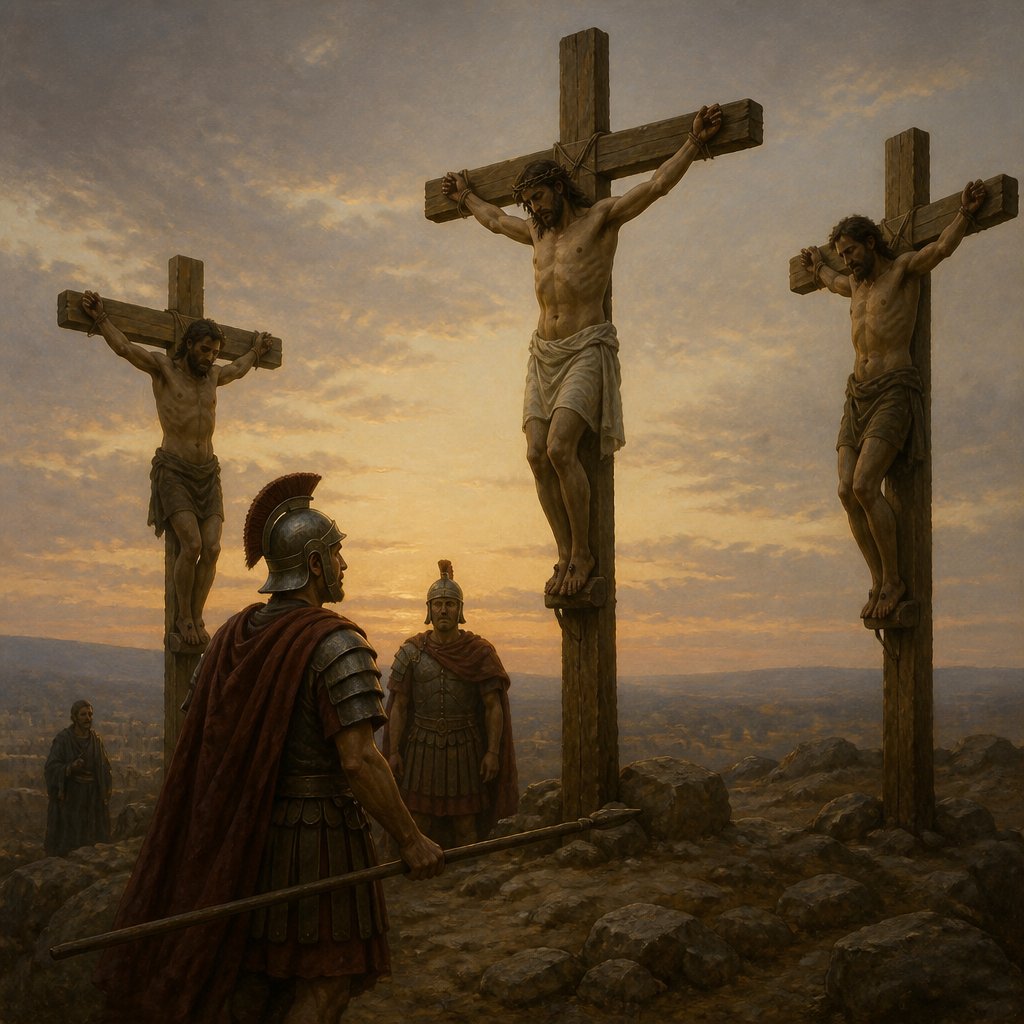
As we come to John 19:32, we encounter a scene saturated with sorrow and suffering. The verse reads, "Then came the soldiers, and brake the legs of the first, and of the other which was crucified with him" (John 19:32, KJV). This moment—during the crucifixion of our Lord Jesus Christ—is not merely a historical detail; it enters the realm of deep theological significance and profound personal reflection.
Crucifixion was one of the most agonizing forms of execution known in the ancient world, and its brutality can sometimes cloud our understanding of the events that unfolded. The act of breaking the legs of the other two crucified alongside Jesus demonstrates the methodical cruelty of Roman soldiers, whose duty it was to ensure swift death for those sentenced to death. By breaking the legs, they hastened their victims’ demise, preventing them from pushing up to breathe. Ultimately, it was a mechanism of oppression that reflected the brutalities of human sin. Yet within this tragedy lies a tapestry of divine purpose and revelation.
In this moment, we see a stark contrast between humanity's cruelty and God's redemptive work. The soldiers were simply carrying out their orders, unaware that they were part of a divine plan more profound than their understanding or intention. This tendency to enact violence is rooted deeply in the human heart, reflecting our brokenness and the innate desire to assert power over guilt and shame. As they broke the legs of the criminals, they were unwittingly facilitating God's ultimate act of love—Jesus taking upon Himself the weight of our sin and death.
Moreover, the act of crucifixion itself speaks volumes about God's relationship with humanity. Humiliation, ostracization, and suffering were absorbed completely by Jesus. Despite being blasphemed and beaten, He remained silent, not for His own sake, but for ours. Each of us carries the weight of sin and disgrace, yet Jesus took it upon Himself, as Isaiah 53 reminds us. The imagery of brokenness in this moment—both of the leg bones being shattered, and the body of Christ being broken for us—serves as a powerful reminder of the cost of our redemption. The body of the Savior was torn apart to mend the fracture between us and God.
Consequently, this verse can lead us to introspect. What does it mean for us when we witness violence and cruelty in the world today? Are we complicit soldiers breaking the legs of others, or are we followers of Christ, who calls us to love even in suffering? In a world that often treats people as expendable, how can we embody the love of Christ in our response? The brokenness of the world invites us not to despair but to hope. We are called to rise above the greed, jealousy, hatred, and fear that continue the cycle of violence.
As we reflect on this verse, let us remember that Jesus endured this suffering and humiliation willingly. Out of His brokenness flows grace and healing. In our lives, we may feel broken or insignificant. The world might treat us as disposable; however, Jesus knows our pain because He too experienced profound suffering. His response to brokenness was one of love, mercy, and redemption, extending forgiveness even when He bore our sins on the cross.
In conclusion, the act of breaking the legs of the two criminals alongside Jesus reminds us of the power of redemption hidden within pain and suffering. In God's economy, brokenness leads to wholeness. As we contemplate John 19:32, let us embrace our brokenness, for it is in acknowledging our frailty that we invite God's restorative touch. Take heart in the Savior who endured the cross—who became broken, that through His wounds, we might find healing and eternal life. May we live in a manner worthy of that sacrifice, allowing the power of the cross to shape our hearts into vessels of love and hope in a fractured world.
Get our apps


Artwork for John 19:32

John 19:32 - "Then came the soldiers, and brake the legs of the first, and of the other which was crucified with him." respectful, symbolic bible verse art
"Then came the soldiers, and brake the legs of the first, and of the other which was crucified with him." - John 19:32

Genesis 19-32

John 1:32 - "And John bare record, saying, I saw the Spirit descending from heaven like a dove, and it abode upon him."

John 8:32 - "And ye shall know the truth, and the truth shall make you free."

John 4:32 - "But he said unto them, I have meat to eat that ye know not of."

John 19:38

John 19:1

John 9:32 - "Since the world began was it not heard that any man opened the eyes of one that was born blind."

John 12:32 - "And I, if I be lifted up from the earth, will draw all men unto me."

John 19:19 - "¶ And Pilate wrote a title, and put it on the cross. And the writing was, JESUS OF NAZARETH THE KING OF THE JEWS."

John 3:32 - "And what he hath seen and heard, that he testifieth; and no man receiveth his testimony."

John 17.6-19

John 5:32 - "¶ There is another that beareth witness of me; and I know that the witness which he witnesseth of me is true."

John 19:1-3

John 19:25-27

Joshua 19:32 - "¶ The sixth lot came out to the children of Naphtali, even for the children of Naphtali according to their families."

Isaiah 32:19 - "When it shall hail, coming down on the forest; and the city shall be low in a low place."

Luke 19:32 - "And they that were sent went their way, and found even as he had said unto them."

Mark 11:32 - "But if we shall say, Of men; they feared the people: for all men counted John, that he was a prophet indeed."

John 13:32 - "If God be glorified in him, God shall also glorify him in himself, and shall straightway glorify him."

John 18:32 - "That the saying of Jesus might be fulfilled, which he spake, signifying what death he should die."

Job 32:19 - "Behold, my belly is as wine which hath no vent; it is ready to burst like new bottles."

John 1:19 - "¶ And this is the record of John, when the Jews sent priests and Levites from Jerusalem to ask him, Who art thou?"

John 7:32 - "¶ The Pharisees heard that the people murmured such things concerning him; and the Pharisees and the chief priests sent officers to take him."

John 19:25-27

John 19:26-27

John 21:15-19

Deuteronomy 32:19 - "And when the LORD saw it, he abhorred them, because of the provoking of his sons, and of his daughters."

John 10:19 - "¶ There was a division therefore again among the Jews for these sayings."