A Gardener's Grace: Finding Hope in the Unexpected
"But Mary stood without at the sepulchre weeping: and as she wept, she stooped down, and looked into the sepulchre, And seeth two angels in white sitting, the one at the head, and the other at the feet, where the body of Jesus had lain. And they say unto her, Woman, why weepest thou? She saith unto them, Because they have taken away my Lord, and I know not where they have laid him. And when she had thus said, she turned herself back, and saw Jesus standing, and knew not that it was Jesus. Jesus saith unto her, Woman, why weepest thou? whom seekest thou? She, supposing him to be the gardener, saith unto him, Sir, if thou have borne him hence, tell me where thou hast laid him, and I will take him away. Jesus saith unto her, Mary. She turned herself, and saith unto him, Rabboni; which is to say, Master. Jesus saith unto her, Touch me not; for I am not yet ascended to my Father: but go to my brethren, and say unto them, I ascend unto my Father, and your Father; and to my God, and your God. Mary Magdalene came and told the disciples that she had seen the Lord, and that he had spoken these things unto her." - John 20:11-18
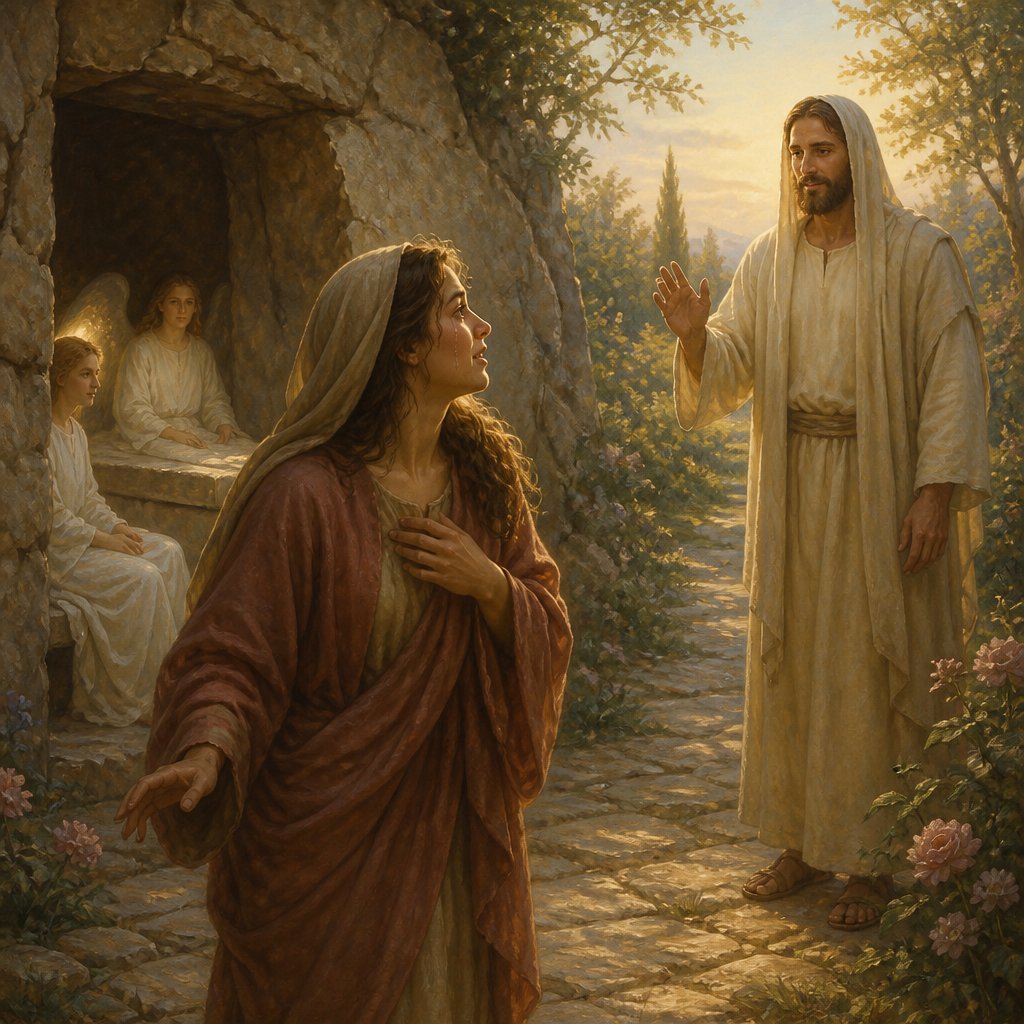
In John 20:11-18, we encounter a beautiful and transformative moment that marks a profound turning point in the Gospel narrative. Mary Magdalene, devastated by the loss of her Lord, stands weeping outside the tomb. This scene unfolds in a way that captures the depths of human sorrow and the heights of divine grace.
The scripture begins, "But Mary stood without at the sepulchre weeping: and as she wept, she stooped down, and looked into the sepulchre" (John 20:11 KJV). This opening paints a vivid image of despair. Mary is not just any follower; she is a woman who has endured much. Her life was steeped in darkness before she encountered Jesus, who cast out seven demons from her (Luke 8:2). Now, the man who transformed her life is gone, and the tomb is empty. Her weeping signifies more than grief for a lost friend—it encapsulates the loss of hope, of purpose, and the future she envisioned with Him.
But in her mourning, her search for answers, and her stooping down to look into the sepulchre, we see a posture of humility and yearning. The act of looking into the tomb represents a heart desperate to find Jesus, even in the loneliest of places. It is here that two angels in white appear, sitting where Jesus had lain, and they ask her, "Woman, why weepest thou?" (John 20:13 KJV). Their presence amidst Mary's sorrow signals an important truth: that even in our deepest pain, God sends messengers of hope to remind us that we are not alone.
Mary's response, steeped in her grief, is heart-wrenching: "Because they have taken away my Lord, and I know not where they have laid him" (John 20:13 KJV). She reveals the depth of her love and longing for Jesus; He was not just a teacher or a miracle worker to her—He was her Lord. We, too, often find ourselves in similar moments of despair, feeling as if life has stripped us of what matters most. It is in these moments of vulnerability that Jesus appears, though often in ways we do not expect.
As she turns away from the angels, she encounters Jesus but does not recognize Him. "Jesus saith unto her, Woman, why weepest thou? whom seekest thou?" (John 20:15 KJV). How poignant is it that Jesus meets us in our sorrow? The way He addresses her—"Woman"—is a gentle reminder that He sees and acknowledges her grief. Yet, she mistakes Him for the gardener. In her moment of anguish, she cannot perceive the divine reality standing before her. It captures the essence of how our pain can cloud our eyes, blinding us to the very presence of the One we seek.
But then comes the turning point. In personal intimacy and recognition, Jesus says, "Mary" (John 20:16 KJV). In that single utterance, everything changes. The weight of despair crumbles; her heart leaps with recognition, and instinctively she responds, "Rabboni; which is to say, Master" (John 20:16 KJV). This shift from sorrow to joy epitomizes the resurrection's power. Mary embodies our desire for recognition and assurance—Jesus knows her name and her pain.
Jesus instructs her, "Touch me not; for I am not yet ascended to my Father" (John 20:17 KJV). Here, He establishes a boundary yet invites her to go forth with a mission: to inform His disciples of His resurrection—"I ascend unto my Father, and your Father; and to my God, and your God" (John 20:17 KJV). The relationship is no longer merely that of teacher and disciple; it has transformed into family—intimacy woven through the resurrection.
Mary Magdalene becomes the first evangelist, proclaiming the good news: "I have seen the Lord" (John 20:18 KJV). Her life, marked by mourning, now serves a greater purpose in bearing witness to the resurrection. This is the essence of hope—the transformative encounter with Jesus turns our brokenness into purpose. In our darkest moments, we may find, just as Mary did, that the Gardener shows up in unexpected ways to till the soil of our hearts, bringing forth new life and joy.
Let us embrace the truth: even in our sorrow, we are seen, known, and loved by the risen Christ.
Want to reflect more on John 20:11-18?
Continue your spiritual journey with Bible Chat — an AI-powered tool for exploring God's Word through conversation. Ask questions, discover connections, and deepen your understanding.
Get Our Apps


John 20:11-18 Artwork

John 20:11-18 - "But Mary stood without at the sepulchre weeping: and as she wept, she stooped down, and looked into the sepulchre, And seeth two angels in white sitting, the one at the head, and the other at the feet, where the body of Jesus had lain. And they say unto her, Woman, why weepest thou? She saith unto them, Because they have taken away my Lord, and I know not where they have laid him. And when she had thus said, she turned herself back, and saw Jesus standing, and knew not that it was Jesus. Jesus saith unto her, Woman, why weepest thou? whom seekest thou? She, supposing him to be the gardener, saith unto him, Sir, if thou have borne him hence, tell me where thou hast laid him, and I will take him away. Jesus saith unto her, Mary. She turned herself, and saith unto him, Rabboni; which is to say, Master. Jesus saith unto her, Touch me not; for I am not yet ascended to my Father: but go to my brethren, and say unto them, I ascend unto my Father, and your Father; and to my God, and your God. Mary Magdalene came and told the disciples that she had seen the Lord, and that he had spoken these things unto her."
"But Mary stood without at the sepulchre weeping: and as she wept, she stooped down, and looked into the sepulchre, And seeth two angels in white sitting, the one at the head, and the other at the feet, where the body of Jesus had lain. And they say unto her, Woman, why weepest thou? She saith unto them, Because they have taken away my Lord, and I know not where they have laid him. And when she had thus said, she turned herself back, and saw Jesus standing, and knew not that it was Jesus. Jesus saith unto her, Woman, why weepest thou? whom seekest thou? She, supposing him to be the gardener, saith unto him, Sir, if thou have borne him hence, tell me where thou hast laid him, and I will take him away. Jesus saith unto her, Mary. She turned herself, and saith unto him, Rabboni; which is to say, Master. Jesus saith unto her, Touch me not; for I am not yet ascended to my Father: but go to my brethren, and say unto them, I ascend unto my Father, and your Father; and to my God, and your God. Mary Magdalene came and told the disciples that she had seen the Lord, and that he had spoken these things unto her." - John 20:11-18

John 20:11-12

John 20:11-13

John 20:11 - "¶ But Mary stood without at the sepulchre weeping: and as she wept, she stooped down, and looked into the sepulchre,"

John 11:18 - "Now Bethany was nigh unto Jerusalem, about fifteen furlongs off:"

Matthew 11:18 - "For John came neither eating nor drinking, and they say, He hath a devil."

John 20:18 - "Mary Magdalene came and told the disciples that she had seen the Lord, and that he had spoken these things unto her."

John 11:20 - "Then Martha, as soon as she heard that Jesus was coming, went and met him: but Mary sat still in the house."

Acts 20:11
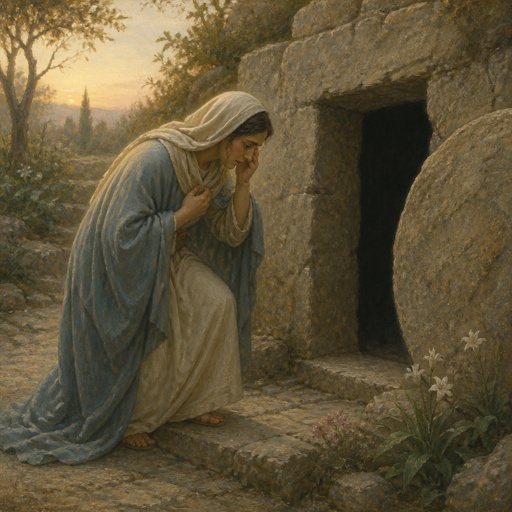
"¶ But Mary stood without at the sepulchre weeping: and as she wept, she stooped down, and looked into the sepulchre," - John 20:11

John 18:20 - "Jesus answered him, I spake openly to the world; I ever taught in the synagogue, and in the temple, whither the Jews always resort; and in secret have I said nothing."

John 18:11 - "Then said Jesus unto Peter, Put up thy sword into the sheath: the cup which my Father hath given me, shall I not drink it?"

Matthew 11:18 For John came neither eating nor drinking, and they say, ‘He has a demon.’
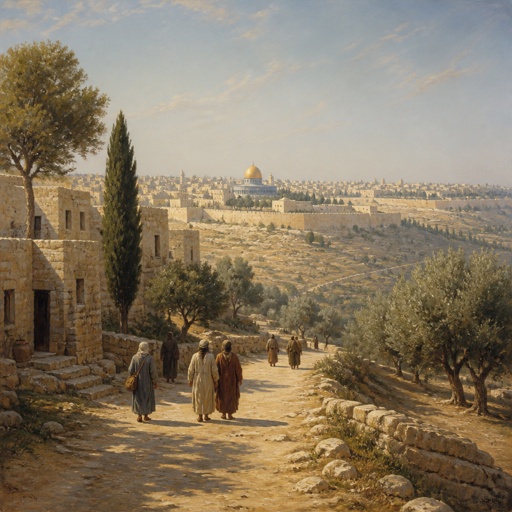
"Now Bethany was nigh unto Jerusalem, about fifteen furlongs off:" - John 11:18

John 11:20 Then Martha, as soon as she heard that Jesus was coming, went and met Him, but Mary was sitting in the house.

John 11:20 Then Martha, as soon as she heard that Jesus was coming, went and met Him, but Mary was sitting in the house.

"For John came neither eating nor drinking, and they say, He hath a devil." - Matthew 11:18
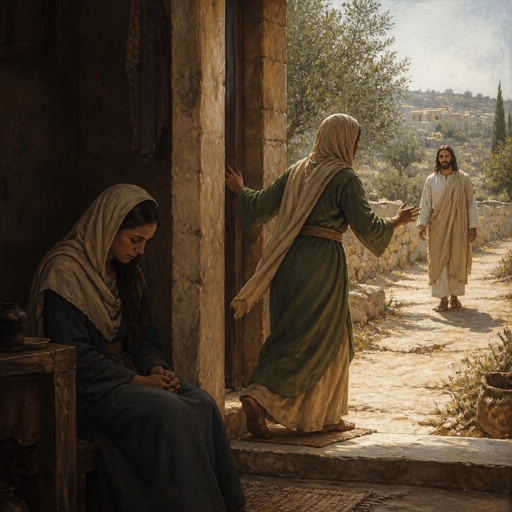
"Then Martha, as soon as she heard that Jesus was coming, went and met him: but Mary sat still in the house." - John 11:20

John 7:17-18

John 7:17-18

John 20;18
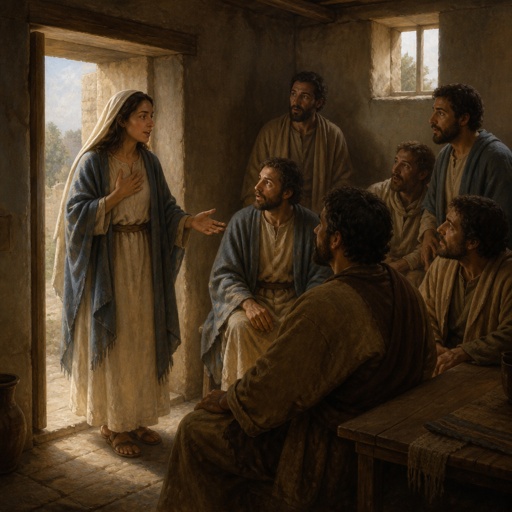
"Mary Magdalene came and told the disciples that she had seen the Lord, and that he had spoken these things unto her." - John 20:18

John 20:21

John 7:17-18

John 7:17-18

John 18:25

john 18:36

John 20:14

John 20:27