The Divine Blueprint: Rebuilding the Temple in Three Days
“Then said the Jews, Forty and six years was this temple in building, and wilt thou rear it up in three days?” — John 2:20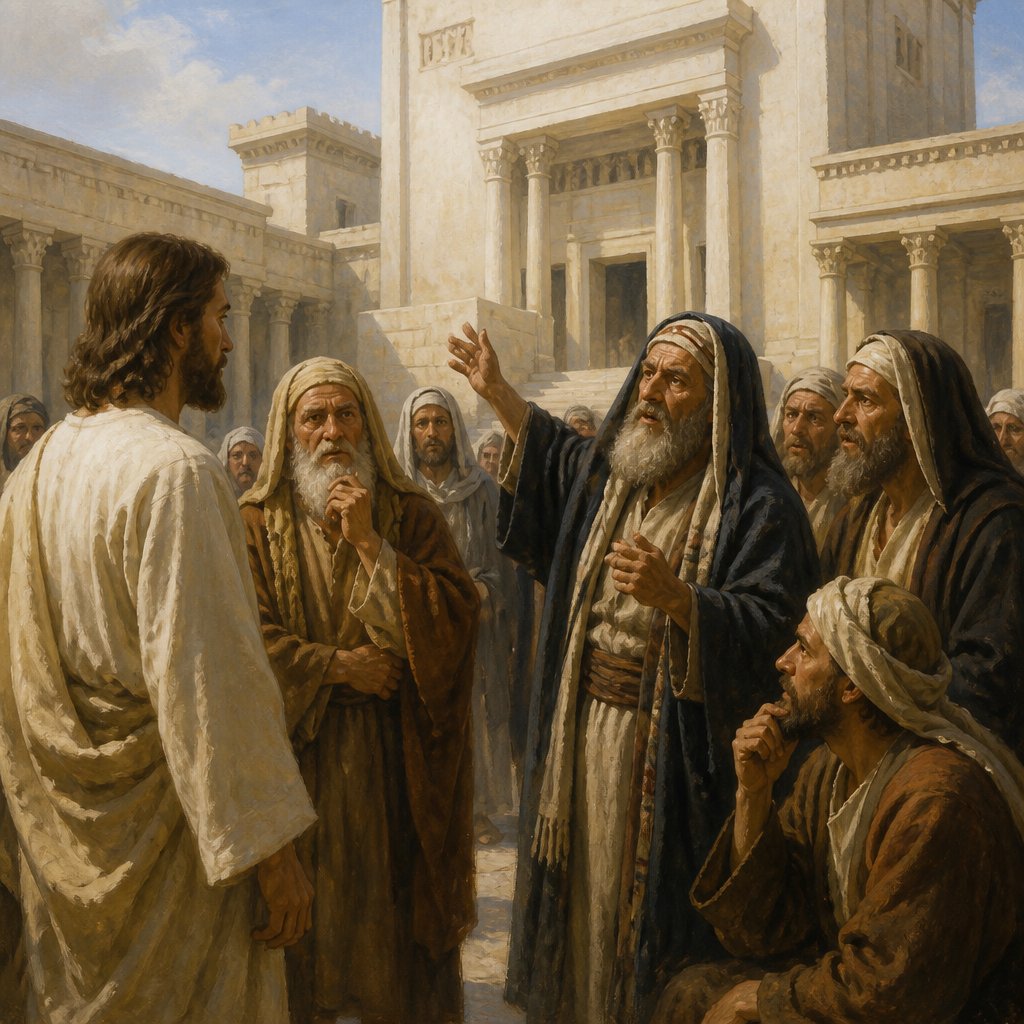
In the Gospel of John, chapter 2 and verse 20, we encounter a profound moment that reflects not only the misunderstanding of the religious leaders of Jesus' time but also the depth of Jesus' mission. The verse reads, "Then said the Jews, Forty and six years was this temple in building, and wilt thou rear it up in three days?" This statement serves as a poignant reminder of the clash between earthly expectations and heavenly realities.
To appreciate the significance of this verse, we must first understand the context in which it was spoken. The Jews were referring to Herod's Temple, a monumental feat of architecture and religion that had taken decades to construct. To them, the temple was more than a building; it was the center of their worship, a sacred space that represented their covenant with God. They had invested years, resources, and lives into the physical structure. Thus, the shock and skepticism in their voices echo a common human sentiment: we measure value in terms of time, effort, and tangible outcomes.
When Jesus responds to their inquiry about the temple’s destruction and reconstruction, He speaks of a different kind of temple — a temple of His body (John 2:21). The Jews were talking about bricks and stone, while Jesus was revealing the greater truth of His own resurrection. The irony is striking: what they saw as an impossibility in mere days was a divine reality that Jesus would accomplish after His resurrection. Herein lies the heart of our devotion today: the distinction between what we see and what God is accomplishing.
Often, we find ourselves trapped in the mindset of the Jews, measuring the success of our lives or ministries by the external and the visible. We look at our circumstances, our trials, and the seemingly impossible tasks ahead of us, much like the Jews looked at the temple they had built. We ask God for monumental changes or miraculous results, and when He speaks of shorter timelines or different outcomes, we find ourselves wary, even doubtful. But in doing so, we limit the work of God to our earthly perceptions.
God is not confined by our perception of time or expectation. In Isaiah 55:8-9 (KJV), we find a profound reminder: "For my thoughts are not your thoughts, neither are your ways my ways, saith the Lord. For as the heavens are higher than the earth, so are my ways higher than your ways, and my thoughts than your thoughts." This calls us to a posture of faith that believes in the sequential unfolding of God’s plans, which often defy human logic.
As we contemplate the implications of John 2:20, we should consider the greater temple Jesus refers to: the temple of His body that was crucified, buried, and risen. His resurrection completed a work that no earthly construction could ever achieve. He became the reconciler of humanity to God, the very bridge that connects us to the Father. In this light, our understanding of 'building' shifts from physical structures to the spiritual edifice that God is creating within us.
In our spiritual walk, we are reminded that God is continually at work, constructing His temple in our hearts through the work of the Holy Spirit. Ephesians 2:19-22 (KJV) tells us that we are "built upon the foundation of the apostles and prophets, Jesus Christ himself being the chief corner stone." As living stones, we are part of a far greater spiritual structure than any physical temple. Therefore, when we encounter challenges or when we face obstacles that feel insurmountable, we can take solace in the fact that the Lord is working to fulfill His divine plan, often beyond our full comprehension.
So as we meditate on this verse, let us remember to trust in the timing and purposes of God, acknowledging that what may appear like folly to us is His meticulous plan unfolding. Let us also celebrate that in Christ, we are partakers of an eternal legacy that transcends any earthly temple or construct. May we open our hearts to His workings, knowing that in His time, He can rebuild, restore, and revitalize us in ways we could scarcely imagine.
Get our apps


Artwork for John 2:20

1 John 2:20 - "But ye have an unction from the Holy One, and ye know all things."

John 2:20 - "Then said the Jews, Forty and six years was this temple in building, and wilt thou rear it up in three days?"
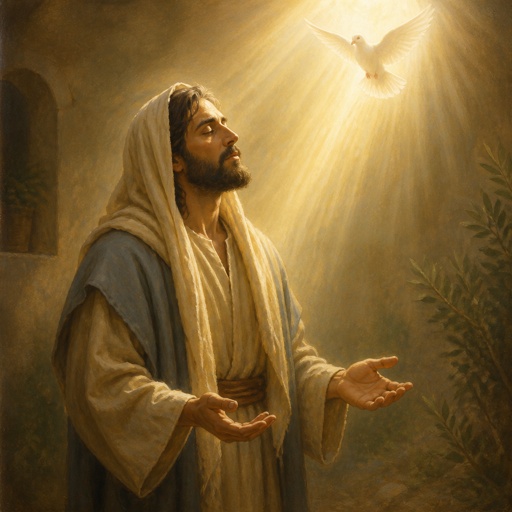
"But ye have an unction from the Holy One, and ye know all things." - 1 John 2:20
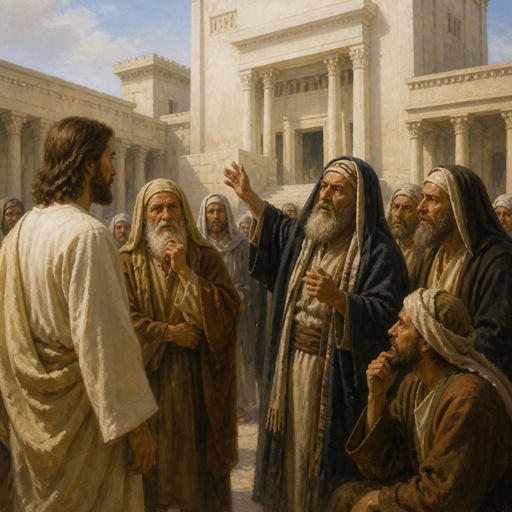
"Then said the Jews, Forty and six years was this temple in building, and wilt thou rear it up in three days?" - John 2:20

John 20:21

John 20:27

John 20:14

John 20:27

John 20:11-12

John 20:11-13

John 20:30-31

John 20:2 - "Then she runneth, and cometh to Simon Peter, and to the other disciple, whom Jesus loved, and saith unto them, They have taken away the Lord out of the sepulchre, and we know not where they have laid him."

Luke 20:4 - "The baptism of John, was it from heaven, or of men?"

John 6:20 - "But he saith unto them, It is I; be not afraid."

John 1:20 - "And he confessed, and denied not; but confessed, I am not the Christ."

John 20:10 - "Then the disciples went away again unto their own home."

John 20:20 - "And when he had so said, he shewed unto them his hands and his side. Then were the disciples glad, when they saw the Lord."

John 20:3 - "Peter therefore went forth, and that other disciple, and came to the sepulchre."

John 20:9 - "For as yet they knew not the scripture, that he must rise again from the dead."

John 12:20 - "¶ And there were certain Greeks among them that came up to worship at the feast:"

Luke 3:20 - "Added yet this above all, that he shut up John in prison."

John 20:24 - "¶ But Thomas, one of the twelve, called Didymus, was not with them when Jesus came."

John 20:28 - "And Thomas answered and said unto him, My Lord and my God."

Luke 20:6 - "But and if we say, Of men; all the people will stone us: for they be persuaded that John was a prophet."

John 20:5 - "And he stooping down, and looking in, saw the linen clothes lying; yet went he not in."

John 20:7 - "And the napkin, that was about his head, not lying with the linen clothes, but wrapped together in a place by itself."

John 10:20 - "And many of them said, He hath a devil, and is mad; why hear ye him?"

John 20:8 - "Then went in also that other disciple, which came first to the sepulchre, and he saw, and believed."

John 20:6 - "Then cometh Simon Peter following him, and went into the sepulchre, and seeth the linen clothes lie,"
"The baptism of John, was it from heaven, or of men?" - Luke 20:4