The Grace Beyond Our Failures
“For thou hast had five husbands; and he whom thou now hast is not thy husband: in that saidst thou truly.” — John 4:18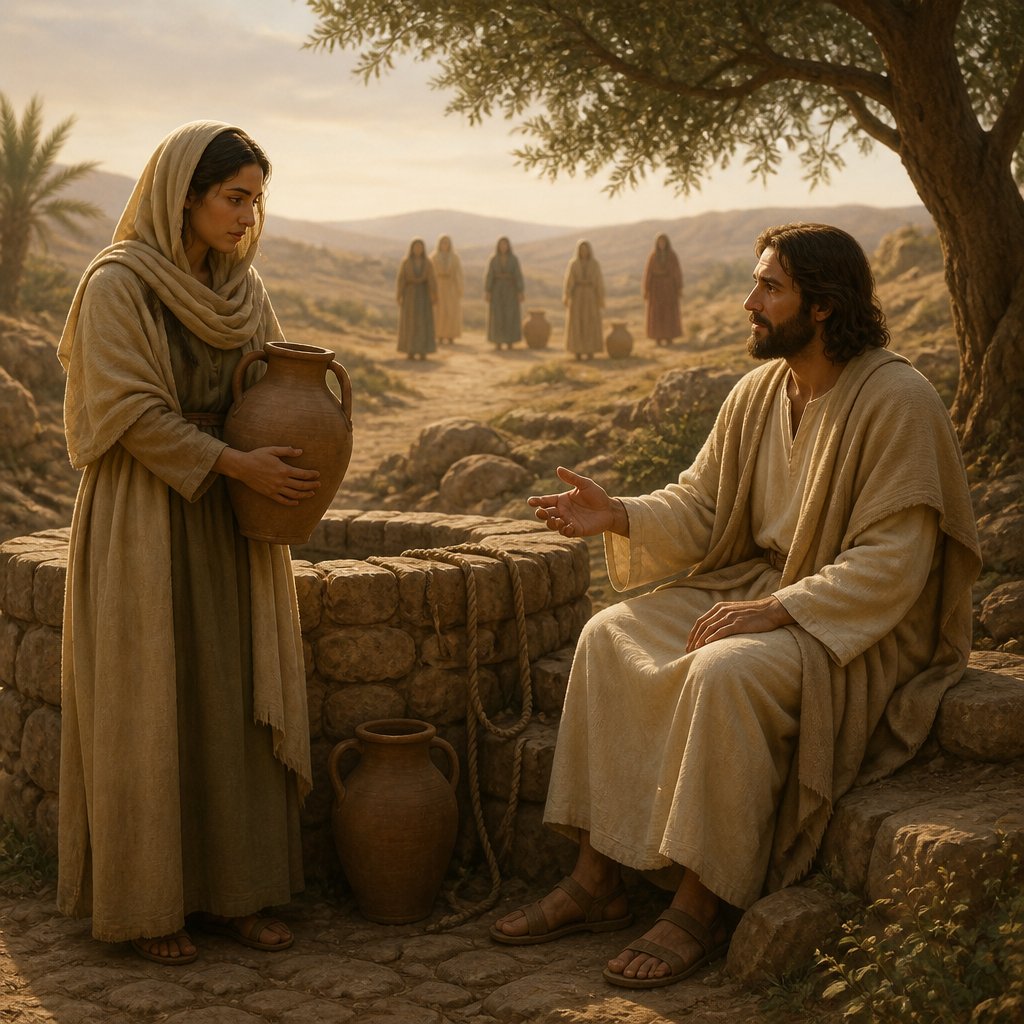
In John 4:18, we come across a striking declaration made by Jesus to the Samaritan woman at the well: "For thou hast had five husbands; and he whom thou now hast is not thy husband: in that saidst thou truly." This verse might seem harsh at first glance, revealing difficult truths about this woman’s life. Yet, what lies beneath this revelation is a profound message about grace, truth, and healing.
The woman at the well is often regarded as a parable of brokenness and failure. She had multiple relationships, none of which led to lasting commitment or fulfillment. In her encounter with Jesus, we see how He confronts her with the reality of her past; this is not Jesus condemning her but revealing the truth that leads to freedom. This confrontation is key to understanding the gospel: we cannot experience the fullness of grace without first facing the truth of our situation.
Throughout Scripture, we observe that God often meets people in the very midst of their failures. Consider the story of David, a man after God’s own heart, who fell into sin and deception. Yet, it was in his brokenness that he wrote Psalm 51, pleading for mercy and redemption. The same grace extends to the woman at the well, and it extends to us today. Jesus’ knowledge of her past did not deter Him from offering her living water; rather, it was the very reason He engaged with her.
This passage also emphasizes the importance of truth. In society today, the notion of self-identity is often tied to past hurts and broken relationships. Many of us carry titles and baggage that do not reflect our true worth. Yet, Jesus encourages us to confront the reality of our lives through His lens of grace. He speaks to the woman’s unfulfilled thirst—a thirst for love, acceptance, and wholeness. In Jesus’ acknowledgment of her past, He sets the groundwork for transformation.
When He tells her about her five husbands, He is not merely highlighting her mistakes but challenging her to recognize the void that such pursuits have failed to fill. This deep-seated desire for connection drives many to search in desperate ways. How often do we seek validation and satisfaction in relationships or possessions, only to find ourselves still longing for something more?
At the heart of this encounter is an invitation to experience true fulfillment. Jesus, in revealing her truth, provides a pathway to healing. He does not leave her in despair but shows her that her past does not define her future. This is the beautiful message of the gospel: there is hope beyond our failures.
Furthermore, consider the implications of receiving this kind of grace. After her encounter with Jesus, the woman becomes a witness, leading her entire community to seek Him. When we embrace the reality of our past, acknowledging our mistakes and failures, we create authenticity in our spiritual walk. Our stories become testimonies of God’s redemptive work, inspiring others who may find themselves in similar positions of brokenness.
In conclusion, John 4:18 serves as a powerful reminder of the grace that meets us at our most vulnerable places. Jesus sees us, flaws and all, and He calls us into relationship—not defined by our past but renewed by His love. As we grapple with our own truths, remember that God is always willing to meet us at the well, offering us living water that satisfies our deepest longings. Let us not shrink back from admitting our failures, for it is there that His grace can shine brightest.
Get our apps


Artwork for John 4:18

1 John 4:18

1 John 4:18

John 4:18 - "For thou hast had five husbands; and he whom thou now hast is not thy husband: in that saidst thou truly."

1 John 4:18 - "There is no fear in love; but perfect love casteth out fear: because fear hath torment. He that feareth is not made perfect in love."

"There is no fear in love; but perfect love casteth out fear: because fear hath torment. He that feareth is not made perfect in love." - 1 John 4:18

1 John 4:18-19 - "There is no fear in love; but perfect love casteth out fear: because fear hath torment. He that feareth is not made perfect in love. We love him, because he first loved us."
"For thou hast had five husbands; and he whom thou now hast is not thy husband: in that saidst thou truly." - John 4:18

"There is no fear in love; but perfect love casteth out fear: because fear hath torment. He that feareth is not made perfect in love." - 1 John 4:18

"There is no fear in love; but perfect love casteth out fear: because fear hath torment. He that feareth is not made perfect in love." - 1 John 4:18

"There is no fear in love; but perfect love casteth out fear: because fear hath torment. He that feareth is not made perfect in love. We love him, because he first loved us." - 1 John 4:18-19

John 18:4 - "Jesus therefore, knowing all things that should come upon him, went forth, and said unto them, Whom seek ye?"

John 7:17-18

John 7:17-18

John 7:17-18

John 7:17-18

John 18:25

john 18:36

1 John 5:18

John 4:4 - "And he must needs go through Samaria."

John 18:27 - "Peter then denied again: and immediately the cock crew."

John 6:18 - "And the sea arose by reason of a great wind that blew."

Mark 2:18 - "And the disciples of John and of the Pharisees used to fast: and they come and say unto him, Why do the disciples of John and of the Pharisees fast, but thy disciples fast not?"

Luke 7:18 - "And the disciples of John shewed him of all these things."

John 18:18 - "And the servants and officers stood there, who had made a fire of coals; for it was cold: and they warmed themselves: and Peter stood with them, and warmed himself."

John 4:16

John 3:4

John 4:16

John 4:16

John 4:16

John 4:16