From Death to Life: Embracing the Promise of Everlasting Life
"Verily, verily, I say unto you, He that heareth my word, and believeth on him that sent me, hath everlasting life, and shall not come into condemnation; but is passed from death unto life." - John 5:24

**Introduction**
In John 5:24, we find one of the most profound statements made by our Lord Jesus Christ regarding the experience of faith: “Verily, verily, I say unto you, He that heareth my word, and believeth on him that sent me, hath everlasting life, and shall not come into condemnation; but is passed from death unto life.” Here, Jesus offers a dual reassurance: the assurance of eternal life and the promise of protection from judgment. This verse speaks not only of a future hope but also about a present transformation.
**Understanding the Framework of the Promise**
To fully appreciate the weight of this verse, we must dissect its components. The phrase “verily, verily” (or “truly, truly”) underscores the importance of what Jesus is about to say. It serves as an emphatic introduction, inviting us into a deeper understanding of spiritual truths. Jesus claims authority when He speaks, emphasizing that what follows is of utmost importance for our spiritual journey.
First, we notice the condition set by the Savior: “He that heareth my word, and believeth on him that sent me.” Hearing is not a passive act; it requires attentiveness and an active response. In a world filled with noise and distractions, the call to hear Jesus’ words is an urgent one. We are encouraged to tune our hearts and minds to His voice amidst the cacophony of life.
Believing in “him that sent me,” referring to God the Father, links our faith to a greater narrative. Our belief is not merely about accepting facts but involves trust in the character and the promises of God. It invites a relationship—a profound, life-altering connection with the Creator of the universe. In a sense, faith becomes a bridge through which grace flows from the Father to us.
**The Gift of Everlasting Life**
Then comes the promise: “hath everlasting life.” This assurance is both immediate and eternal. The word “hath” denotes possession in the present tense—eternal life is ours now, not just in the afterlife. This eternal life is a quality of existence that begins here on Earth as we enter into a relationship with God through Christ. It invades our present reality, offering joy, purpose, and hope that transcends our circumstances.
Consider for a moment the gravity of ‘everlasting life.’ It signifies not just unending existence but an existence filled with the richness of God’s presence. It protects us from the pervasive existential dread that grips humanity, particularly in times of uncertainty and trial. Instead of being a distant dream, everlasting life infuses our everyday lives with meaning and belonging.
**Protection From Condemnation**
The verse also states, “and shall not come into condemnation.” This promise directly counters the fear of judgment that plagues many hearts. In a world where actions often define worth and morality leads to feelings of condemnation, Christ offers a liberating truth. Through Him, our sins are forgiven, and we are deemed righteous—not by our merit, but through faith in Christ.
In God’s economy, we are no longer labeled as guilty but are instead celebrated as His beloved children. We stand acceptable before the Throne, justified by faith. This profound truth grants us peace and security, offering freedom from the weight of shame and guilt that can sometimes accompany our human experience.
**The Transition from Death to Life**
Finally, “but is passed from death unto life” encapsulates our journey of transformation. As believers, we move from spiritual death—separation from God—into vitality and communion with Him. This transition is not merely a alteration in our status but a radical transformation of our being. We no longer identify with death or despair; instead, we embody the hope and the vibrancy of life in Christ.
**Conclusion**
John 5:24 is not just a promise to be cherished; it is a call to action. It invites us to actively hear, believe, and experience the life God has for us. As we meditate on this scripture, let us embrace the reality of everlasting life, resting in the assurance that we are no longer condemned, but free and alive in Christ. May we live out our days with the understanding that we have transitioned from death into a wondrous, fulfilling life that starts now and echoes into eternity.
Want to reflect more on John 5:24?
Continue your spiritual journey with Bible Chat — an AI-powered tool for exploring God's Word through conversation. Ask questions, discover connections, and deepen your understanding.
Get Our Apps


John 5:24 Artwork

John 5:24 - "Verily, verily, I say unto you, He that heareth my word, and believeth on him that sent me, hath everlasting life, and shall not come into condemnation; but is passed from death unto life."

"Verily, verily, I say unto you, He that heareth my word, and believeth on him that sent me, hath everlasting life, and shall not come into condemnation; but is passed from death unto life." - John 5:24

John 3:24 - "For John was not yet cast into prison."

"For John was not yet cast into prison." - John 3:24

John 1:24 - "And they which were sent were of the Pharisees."

John 7:24 - "Judge not according to the appearance, but judge righteous judgment."

Genesis 24:5

John 15:5

John 5:2

John 15:5

Galatians 5:24

John 5:33 - "Ye sent unto John, and he bare witness unto the truth."

John 5:5 - "And a certain man was there, which had an infirmity thirty and eight years."

John 20:24 - "¶ But Thomas, one of the twelve, called Didymus, was not with them when Jesus came."

John 4:24 - "God is a Spirit: and they that worship him must worship him in spirit and in truth."

Luke 7:24 - "¶ And when the messengers of John were departed, he began to speak unto the people concerning John, What went ye out into the wilderness for to see? A reed shaken with the wind?"

John 5:28

John 5:28

John 5:28

1 John 5:5 - "Who is he that overcometh the world, but he that believeth that Jesus is the Son of God?"

John 18:24 - "Now Annas had sent him bound unto Caiaphas the high priest."
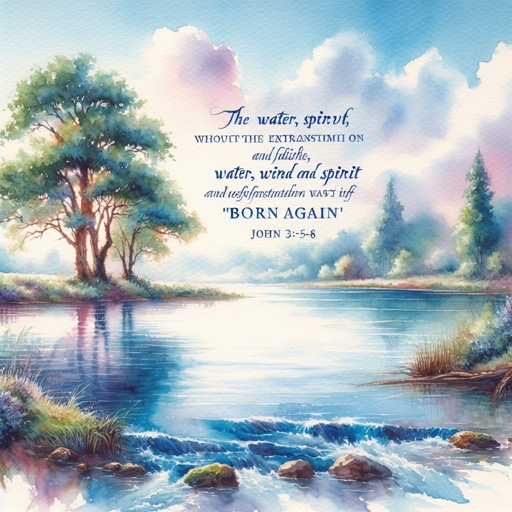
John 3:5-8

John 1:1-5

John 1:1-5

John 3:5-8

John 2:24 - "But Jesus did not commit himself unto them, because he knew all men,"

John 21:24 - "This is the disciple which testifieth of these things, and wrote these things: and we know that his testimony is true."

1 John 5:18

John 3:5-8
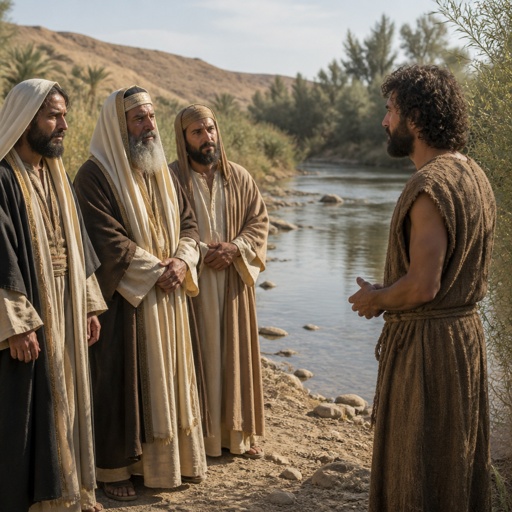
"And they which were sent were of the Pharisees." - John 1:24