The Quest for Signs: Understanding True Belief
“They said therefore unto him, What sign shewest thou then, that we may see, and believe thee? what dost thou work?” — John 6:30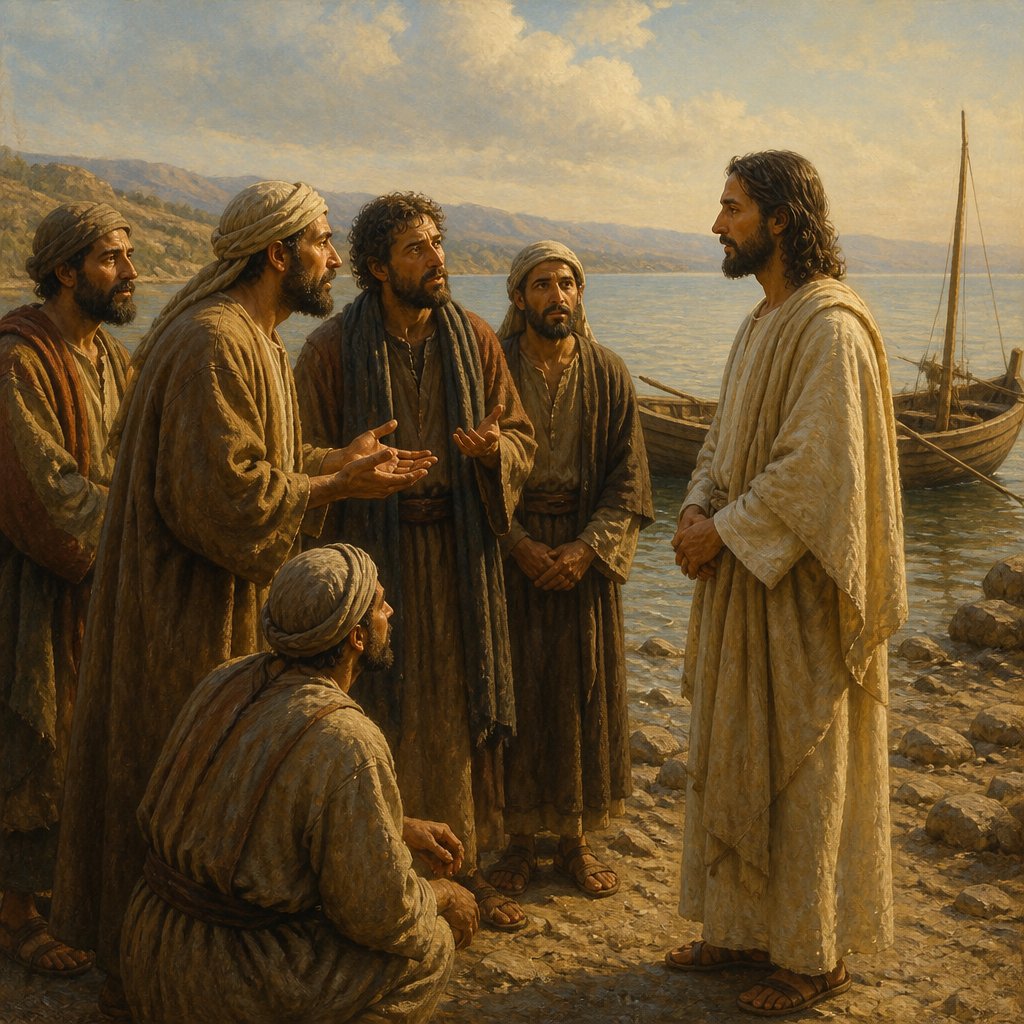
In the Gospel of John, Chapter 6, verse 30, we encounter a poignant moment where the crowd engages with Jesus, asking, "What sign shewest thou then, that we may see, and believe thee? what dost thou work?" This brief conversation encapsulates a vital spiritual truth about faith and the human longing for tangible evidence.
The context leading up to this verse reveals the multitude's recent experience with the miraculous feeding of the 5,000. Just prior, Jesus demonstrated His divine authority and compassion by transforming a meager offering of five loaves of bread and two small fish into a feast that satisfied thousands. Their hunger was miraculously met, but instead of fully recognizing the significance of the miracle, they turned their attention to seeking signs.
This verse reflects a common human inclination: to demand more than what God has already provided. The crowd’s question hints at a testing of Jesus’ authenticity and authority. They were not content with the miracle before them; they sought further signs to validate their faith. It’s important for us to reflect on this. Are we, too, prone to seek additional evidence of God’s presence in our lives? Are we often pushing for signs instead of recognizing how God has already revealed Himself?
The phrase "What sign shewest thou then?" suggests a desire for more visible feats, reminiscent of how the Israelites, after witnessing numerous wonders in Egypt, still doubted God at the slightest challenge. In our walk of faith, it’s easy to fall into the trap of demanding proof from God, seeking miraculous signs to validate our belief. Yet, the truth is that genuine faith often exists not in the abundance of signs, but in the quiet assurance of God’s character and His promises.
When we seek continual proofs, we inadvertently cast doubt on what we have already experienced. Think about the times in your life when God has shown up in significant ways. Have you ever found yourself in a situation where God delivered you from hardship, answered your prayers, or provided guidance at just the right moment? Those past experiences are the foundational signs we should cling to—a testament to His faithfulness.
Plus, the quest for signs can distract us from pursuing a deeper relationship with God. Instead of seeking to know Him more, we can become fixated on our request for spectacles and marvels. Jesus, recognizing the shallow nature of their inquiry, challenges us to move beyond mere signs to profound faith that rests in trust and relationship.
Additionally, this verse emphasizes the need for belief to extend beyond the supernatural. Jesus later clarifies through His words in John 6:35, where He declares, “I am the bread of life: he that cometh to me shall never hunger; and he that believeth on me shall never thirst.” This statement invites us to recognize that faith in Him transcends physical miracles and points toward spiritual sustenance that satisfies our deepest needs. Here, belief is less about spectacle and more about the acceptance of Christ as the sustainer and provider of life.
When tempted to turn to God for signs rather than seeking Him for who He truly is, we should remember to pause and reflect on His character and past faithfulness. It’s in the quiet assurance of His love and power that we find hope, peace, and strength. Our faith should be anchored not in the pursuit of miracles but in the relational knowledge of Jesus Christ.
In your prayer life today, consider thanking God for the signs He has already shown you through His Word, through creation, and in your personal experiences. Instead of asking for further demonstrations, lean into the richness of your relationship with Him. Let your belief be rooted in trust and love, for He desires that you believe not just because of signs but because of who He is.
Get our apps


Artwork for John 6:30
John 6:30 - "They said therefore unto him, What sign shewest thou then, that we may see, and believe thee? what dost thou work?"
‘What sign will you show us that we should believe in you?’ (Jn 6:30)
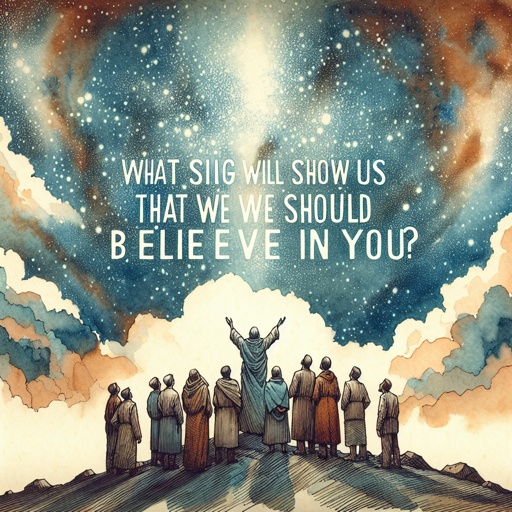
They said to him, ‘What sign will you show us that we should believe in you?’ (Jn 6:30)
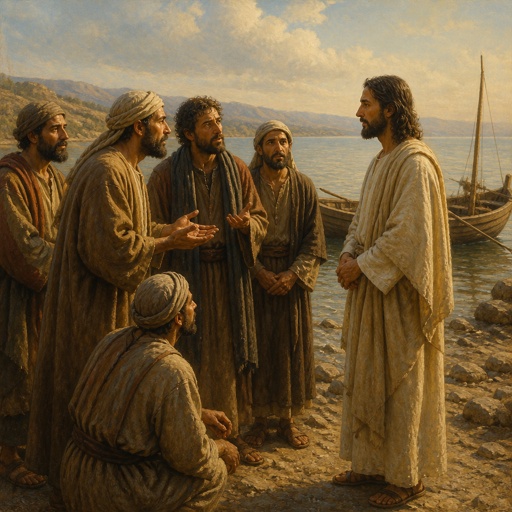
"They said therefore unto him, What sign shewest thou then, that we may see, and believe thee? what dost thou work?" - John 6:30

John 14:30

John 10:30

John 10:30

John 3:30

John 20:30-31

John 10:30 - "I and my Father are one."

John 4:30 - "Then they went out of the city, and came unto him."

John 3:30 - "He must increase, but I must decrease."

John 8:30 - "As he spake these words, many believed on him."

Mark 11:30 - "The baptism of John, was it from heaven, or of men? answer me."

Matthew 6:30

John 13:30 - "He then having received the sop went immediately out: and it was night."

luke 6:30

"I and my Father are one." - John 10:30

John 12:30 - "Jesus answered and said, This voice came not because of me, but for your sakes."

John 11:30 - "Now Jesus was not yet come into the town, but was in that place where Martha met him."

"I and my Father are one." - John 10:30
John 1:6 - "¶ There was a man sent from God, whose name was John."

John 6:63

John 6:63

John 14:30 - "Hereafter I will not talk much with you: for the prince of this world cometh, and hath nothing in me."

John 6:63

John 6:63

John 20:30 - "¶ And many other signs truly did Jesus in the presence of his disciples, which are not written in this book:"

John 7:30 - "Then they sought to take him: but no man laid hands on him, because his hour was not yet come."

Job 30:6 - "To dwell in the clifts of the valleys, in caves of the earth, and in the rocks."