The Master’s Touch: Understanding Healing Through the Dust
“When he had thus spoken, he spat on the ground, and made clay of the spittle, and he anointed the eyes of the blind man with the clay,” — John 9:6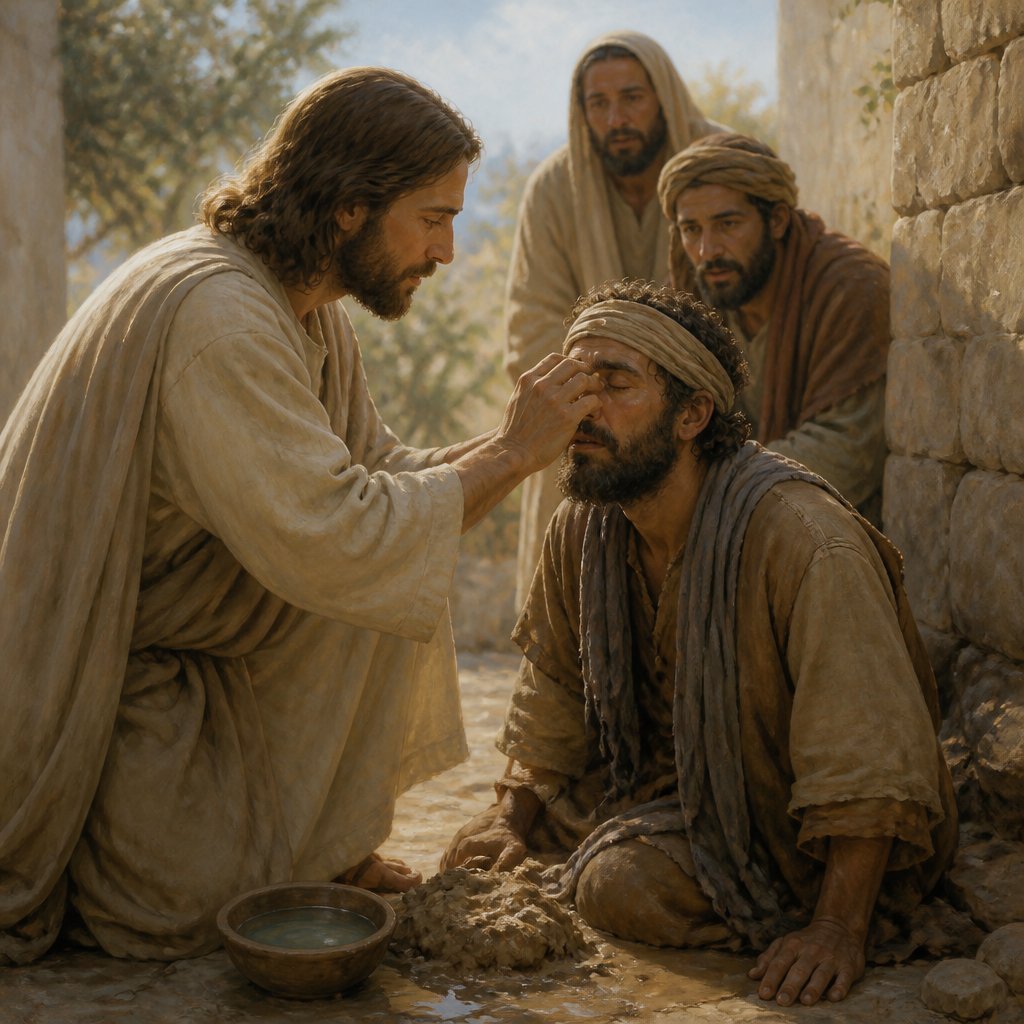
In the Gospel of John, we encounter a powerful scene that not only illustrates a miraculous healing but also reveals deeper truths about our identity, restoration, and the nature of faith. John 9:6 states, "When he had thus spoken, he spat on the ground, and made clay of the spittle, and he anointed the eyes of the blind man with the clay." This verse invites us to delve into the significance of Jesus’ action and the implications it carries for our lives today.
At first glance, the sight of Jesus spitting on the ground and creating clay may seem unusual or even undignified. However, in biblical context, this act serves as a profound reminder of our origin and God’s creative power. In Genesis 2:7, we read, "And the LORD God formed man of the dust of the ground, and breathed into his nostrils the breath of life; and man became a living soul." Clay, fashioned from the dust of the earth, symbolizes not just physical creation, but also the intimate engagement of God with humanity. Just as He formed Adam from dust, here He uses that same element to restore sight to a man who had been blind from birth.
In a world that often celebrates independence and self-sufficiency, Jesus’ method of healing turns our understanding upside down. The blind man did not seek out Jesus, nor did he ask for healing. In fact, he may not have even known who Jesus was. This demonstrates that our healing and restoration can come not from our own attempts or understanding, but from the power and initiative of Jesus. It emphasizes the fact that we are often unaware of our need until He intervenes. How often do we allow pride or disbelief to dictate our understanding of God’s work in our lives?
Moreover, this miracle reminds us that God often uses the simplest of means to achieve profound outcomes. With just dirt and saliva, Jesus demonstrated that His ability to heal was not limited by the methods we might expect. Sometimes, we place restrictions on God based on our perceptions of what we deem significant or sufficient. We have to remember that His ways are higher than our ways (Isaiah 55:8-9). When we surrender to His approach, we open our hearts to receive blessings and healings in ways we never imagined.
The act of anointing the eyes of the blind man with clay further highlights a crucial aspect of faith. This blind man did not receive his sight immediately; he had to obey Jesus’ command to wash in the pool of Siloam. This step of obedience was critical in completing the healing process (John 9:7, "And said unto him, Go, wash in the pool of Siloam."). The man’s willingness to follow Jesus’ instructions and take that step of faith speaks volumes about the relationship between obedience and healing. Are there areas in our lives where we have heard God’s instructions but hesitated to act? His calling often requires us to move beyond our comfort zone, to step into faith even when clarity is lacking.
Lastly, the healing of the blind man invites us into a broader discussion about spiritual blindness. Many of us may not be physically blind, yet we can often walk in spiritual darkness. This story encourages introspection to ask ourselves: What blindness do we carry? Are we seeing the full picture of God in our lives? Like the clay made with spittle, may our brokenness be touched and transformed by Christ.
As we reflect on John 9:6, let us embrace the humility of our creation from dust, align ourselves with God’s methods of healing, and step forward in faith, trusting Jesus to transform our lives. Allow the Master’s touch to open our eyes, both physically and spiritually, guiding us to a fuller understanding of His magnificent grace.
Get our apps


Artwork for John 9:6

John 9:6 - "When he had thus spoken, he spat on the ground, and made clay of the spittle, and he anointed the eyes of the blind man with the clay,"
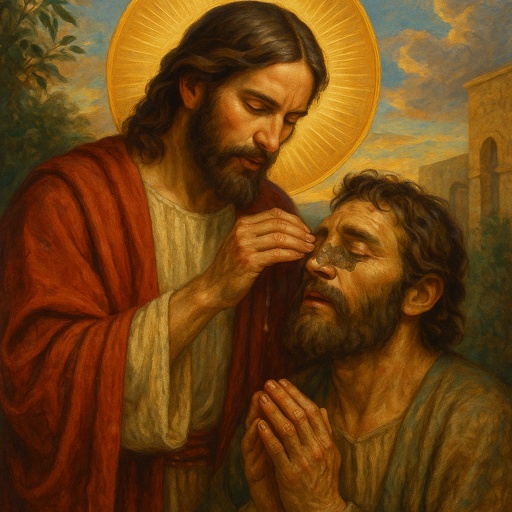
"When he had thus spoken, he spat on the ground, and made clay of the spittle, and he anointed the eyes of the blind man with the clay," - John 9:6

John 9:6-7 - "After saying this, he spit on the ground, made some mud with the saliva, and put it on the man’s eyes. "Go," he told him, "wash in the Pool of Siloam" (this word means "Sent"). So the man went and washed, and came home seeing."
"When he had thus spoken, he spat on the ground, and made clay of the spittle, and he anointed the eyes of the blind man with the clay," - John 9:6
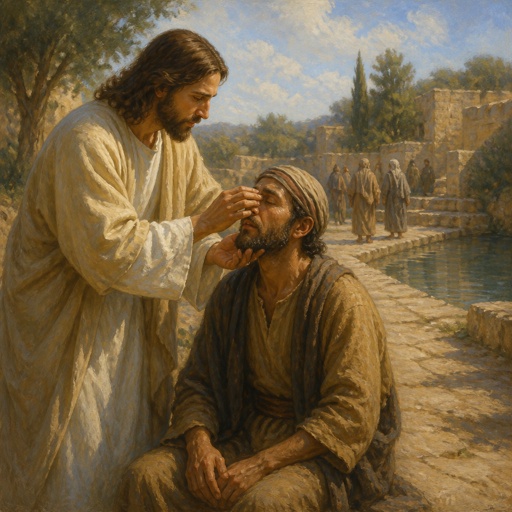
"After saying this, he spit on the ground, made some mud with the saliva, and put it on the man’s eyes. "Go," he told him, "wash in the Pool of Siloam" (this word means "Sent"). So the man went and washed, and came home seeing." - John 9:6-7

John 6:8-9

John 6:9 - "There is a lad here, which hath five barley loaves, and two small fishes: but what are they among so many?"

John 1:6 - "¶ There was a man sent from God, whose name was John."

John 6:63

John 6:63

John 6:63

John 6:63

john 21:9
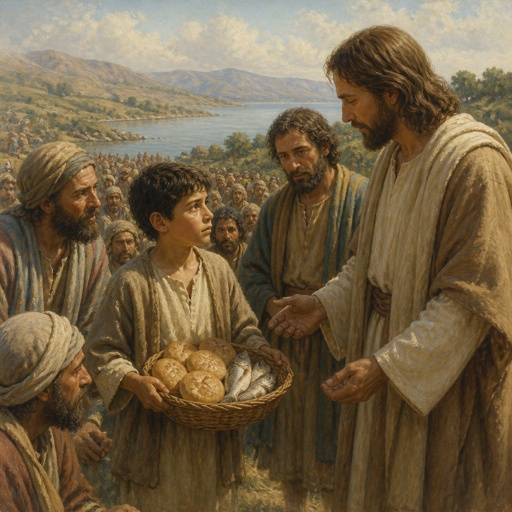
"There is a lad here, which hath five barley loaves, and two small fishes: but what are they among so many?" - John 6:9

John 9:10

John 10:9

John 10:9

John 10:9

John 6:12

John 6:40

John 21:6

John 14:6

John 6:16

John 21:6

John 6:37

John 21:6

John 21:6

John 6:40

John 9:1-3

John 13:4-9