The Hidden Blessings of the Unseen Places
“And Zanoah, and En-gannim, Tappuah, and Enam,” — Joshua 15:34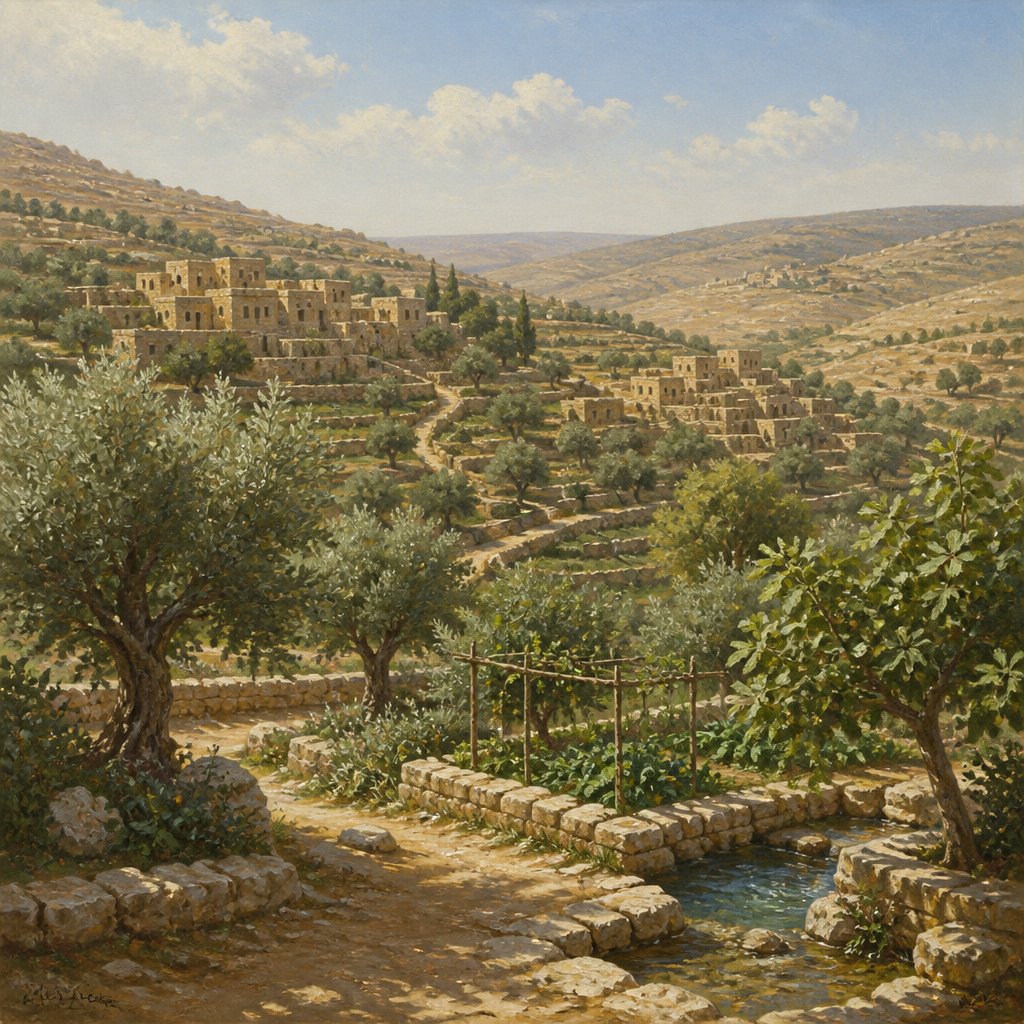
The detailed account of land allotments in the Book of Joshua might seem dry to the casual reader, but within these chapters lies a wealth of spiritual truths waiting to be uncovered. One verse that embodies this is Joshua 15:34, which states, "And Zanoah, and En-gannim, Tappuah, and Enam." At first glance, one might skim over these names as mere locations on a map, but these places and their significance offer profound lessons for believers today.
When we approach scriptures like Joshua 15:34, it's essential to consider the context of how the Israelites were allotted land. After decades of wandering in the wilderness, God's people were finally receiving their promises. They were entering the land flowing with milk and honey, each tribe being given a specific territory. In this setting, the mention of these cities serves as a reminder of God’s faithfulness in fulfilling His promises.
Each name represents a piece of the inheritance that God had set apart for His people. Zanoah, for instance, signifies a place of rest. In our spiritual journey, we often seek refuge and security in God’s promises. How often do we find ourselves wandering in our own spiritual wilderness, filled with doubt and fear? Like the Israelites, we must remember that God has designated places of rest for us. Just as He led the Israelites into a physical land, He invites us into spiritual peace and security through our relationship with Him.
En-gannim, meaning ‘the spring of gardens,’ symbolizes spiritual vitality. It reminds us that our walk with God should be filled with life and abundance, nourished by His Spirit. When we cultivate our relationship with God, we find that our lives can be fruitful and flourishing, like a garden nourished by a clear, flowing spring.
Tappuah translates to ‘a place of apples’ – a symbol of sweetness and joy. In our relationship with Christ, we are reminded that joy is a fruit of the Spirit (Galatians 5:22). Despite life’s trials, we can cultivate a spirit of joy that comes not from our external circumstances but from our identity in Christ. Just as apples bring sweet nourishment, our joy serves as strength in the Lord. We should seek to inhale the fragrance of joy in our daily lives, reflecting on God’s goodness.
Enam translates to ‘a fountain,’ which is indicative of sustaining life and refreshment. As believers, Christ is our living water (John 4:14). It’s crucial that we continually drink from Him, allowing His words to refresh and rejuvenate us. In seeking Him, we find the ability to weather the storms of life. This is urgent in a world that threatens to deplete us emotionally and spiritually.
Moreover, the mentioning of these cities represents something greater: that God knows each of us personally and intimately. Our lives are often filled with the mundane and the unnoticed, much like a chapter filled with geographical names. Yet, even in those seemingly insignificant details, God sees and knows our stories.
Thus, as we reflect upon Joshua 15:34, may we be reminded of the treasures nestled in the words of scripture. The locations that may first seem irrelevant carry tales of faith, promise, joy, and sustenance. These words call to us—inviting us to rest in His presence, to drink from His fountain of life, to cultivate joy, and to know that in the greater narrative, we have been called to an inheritance far richer than any earthly allotment.
As we meditate on these places, let us seek to discover the hidden blessings and the call to deeper faith in our own lives, just as God provided for the Israelites, continuously providing for us in His abundant love and grace.
Get our apps


Artwork for Joshua 15:34

Joshua 15:34 - "And Zanoah, and En-gannim, Tappuah, and Enam,"

"And Zanoah, and En-gannim, Tappuah, and Enam," - Joshua 15:34

Joshua 10:34 - "¶ And from Lachish Joshua passed unto Eglon, and all Israel with him; and they encamped against it, and fought against it:"

Joshua 4:15 - "And the LORD spake unto Joshua, saying,"

Joshua 10:15 - "¶ And Joshua returned, and all Israel with him, unto the camp to Gilgal."

Joshua 8:34 - "And afterward he read all the words of the law, the blessings and cursings, according to all that is written in the book of the law."

Joshua 24:15

Joshua 8:15 - "And Joshua and all Israel made as if they were beaten before them, and fled by the way of the wilderness."

Joshua 24:15

Joshua 24:15

Joshua 22:34 - "And the children of Reuben and the children of Gad called the altar Ed: for it shall be a witness between us that the LORD is God."

Numbers 34:17 - "These are the names of the men which shall divide the land unto you: Eleazar the priest, and Joshua the son of Nun."

"And the LORD spake unto Joshua, saying," - Joshua 4:15

Joshua 15:29 - "Baalah, and Iim, and Azem,"

Joshua 15:42 - "Libnah, and Ether, and Ashan,"

Joshua 15:50 - "And Anab, and Eshtemoh, and Anim,"

Joshua 15:30 - "And Eltolad, and Chesil, and Hormah,"

Joshua 15:40 - "And Cabbon, and Lahmam, and Kithlish,"

Joshua 15:23 - "And Kedesh, and Hazor, and Ithnan,"

Joshua 15:22 - "And Kinah, and Dimonah, and Adadah,"

Joshua 11:15 - "¶ As the LORD commanded Moses his servant, so did Moses command Joshua, and so did Joshua; he left nothing undone of all that the LORD commanded Moses."

Joshua 5:15 - "And the captain of the LORD'S host said unto Joshua, Loose thy shoe from off thy foot; for the place whereon thou standest is holy. And Joshua did so."

Joshua 15:39 - "Lachish, and Bozkath, and Eglon,"

Joshua 15:31 - "And Ziklag, and Madmannah, and Sansannah,"

Joshua 15:43 - "And Jiphtah, and Ashnah, and Nezib,"

Joshua 15:26 - "Amam, and Shema, and Moladah,"

Joshua 15:38 - "And Dilean, and Mizpeh, and Joktheel,"

Joshua 15:24 - "Ziph, and Telem, and Bealoth,"

Joshua 15:56 - "And Jezreel, and Jokdeam, and Zanoah,"

Joshua 15:52 - "Arab, and Dumah, and Eshean,"