Confronting the Jebusites: Lessons in Spiritual Warfare and Coexistence
“As for the Jebusites the inhabitants of Jerusalem, the children of Judah could not drive them out: but the Jebusites dwell with the children of Judah at Jerusalem unto this day.” — Joshua 15:63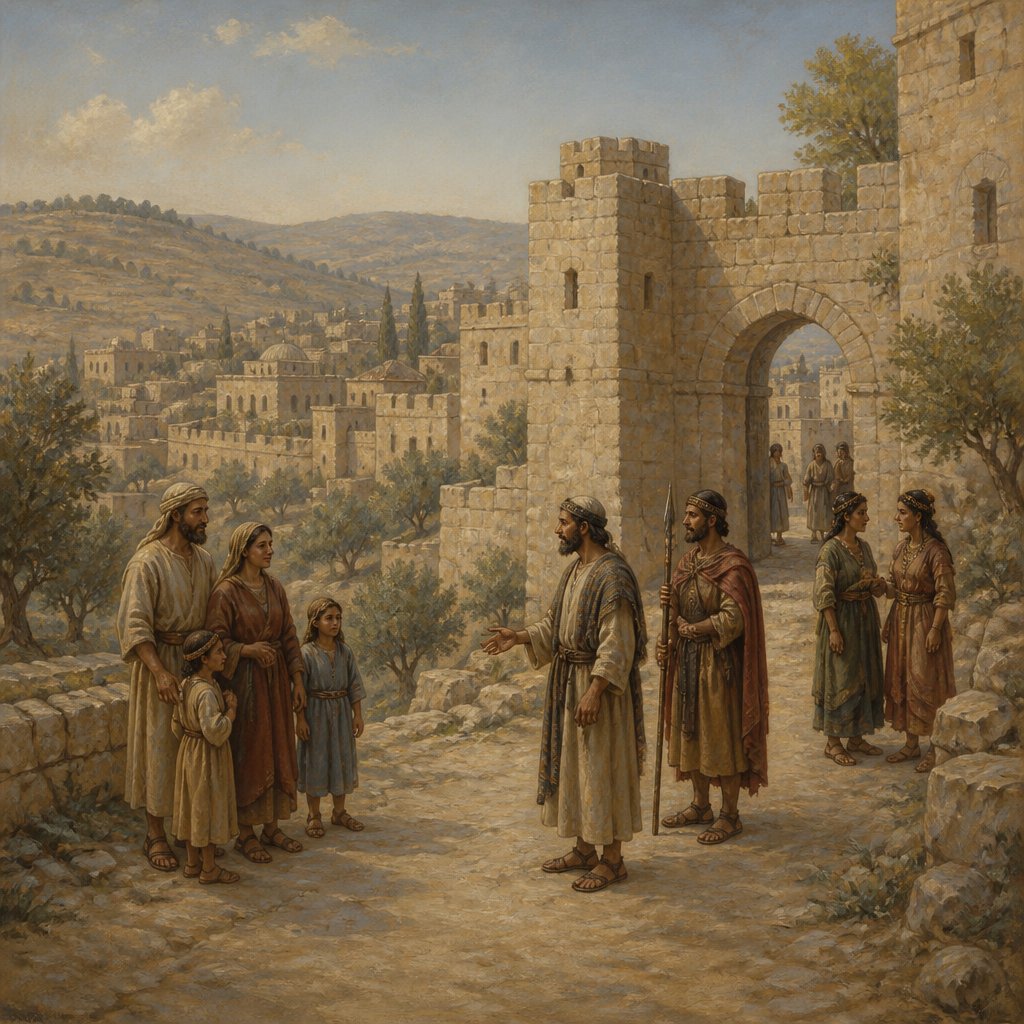
*Joshua 15:63* states, "As for the Jebusites the inhabitants of Jerusalem, the children of Judah could not drive them out: but the Jebusites dwell with the children of Judah at Jerusalem unto this day." This verse, while seemingly simple, encapsulates profound lessons about spiritual warfare, the complexities of life, and the necessity for Christians to confront, conquer, or coexist with the challenges and adversities that arise in their journey of faith.
The Jebusites, as one of the ancient enemy tribes of Israel, symbolize the deeply entrenched issues and persistent struggles that believers often face. The city of Jerusalem, profoundly significant in biblical history, represents the heart of spiritual life for the Jewish people and later for Christians. Despite the calling of God upon the children of Judah to claim this territory, they faced abject failure in fully driving out the Jebusites. This situation lends itself to reflection on our personal and spiritual lives, helping us to understand why certain strongholds persist even in the presence of God’s promises.
The narrative reveals that the struggle was not merely a matter of military might, but rather, a battle of faith, strategy, and reliance upon divine assistance. Faith does not always manifest in tangible victories. There are times when we remain in situations that challenge our belief, causing us to wonder about the power of God’s promises. It evokes our own life experiences, where we might feel stuck in sin, struggling with persistent doubts, or battling inner turmoil that seems unconquerable. The inability to drive out the Jebusites serves as a sobering reminder that not all battles are fought and won instantly, and some journey on towards healing and redemption takes longer than anticipated.
One noteworthy aspect of the children of Judah's persistence is the reality of coexistence. "But the Jebusites dwell with the children of Judah at Jerusalem unto this day,” depicts a scenario where believers must learn to live alongside challenges that may never be completely eradicated. How do we exist in a world and within our hearts where cohabitation with sin, temptation, and conflict is a reality?
Firstly, we must embrace humility and acknowledge our limitations. The children of Judah allowed the Jebusites to reside among them, which reveals an aspect of acceptance—an understanding that while God calls us to deep change and transformation, our progress may be incremental. It reflects on how God’s grace operates even amidst our imperfections. We often strive for a complete eradication of our struggles, yet God may be more concerned about our growth through them. Just as they had to live with the Jebusites, we too, in our spiritual journeys, may need to learn to cohabitate with our weaknesses, finding strength in Christ who transforms our inadequacies into testimonies of His grace.
Moreover, this verse invites us to consider the importance of community. The inclusion of the Jebusites signifies that every struggle we face doesn’t just pertain to the individual, but we’re in this together. Our experiences, both in victory and defeat, strengthen the church body. The children of Judah learned to thrive even amidst their struggles—a reminder that our collective stories can cultivate resilience and faith within our communities.
Lastly, the coexistence of the Jebusites teaches tolerance and patience. In our own lives, we can sometimes force outcomes in our spiritual journeys, only to find frustration. However, God may be asking us to show love, compassion, and understanding—attributes that are foundational to Christian character. The presence of the Jebusites pushed the children of Judah toward a deeper reliance on God, and likewise, the persistent challenges we face compel us to seek a greater dependability on Christ in every facet of our lives.
In conclusion, *Joshua 15:63* challenges us to reflect on the Jebusites in our own lives. Are there areas where we feel we cannot gain full victory? Are we willing to transform the way we view our struggles, seeing them as opportunities to draw closer to Christ and to one another? As we learn to confront adversity with faith, grace, and humility, we can find peace in the presence of our Jebusites, knowing that our journey, marked by both victories and coexistence, is a part of His greater narrative for our lives.
Get our apps


Artwork for Joshua 15:63

Joshua 15:63 - "¶ As for the Jebusites the inhabitants of Jerusalem, the children of Judah could not drive them out: but the Jebusites dwell with the children of Judah at Jerusalem unto this day."
"¶ As for the Jebusites the inhabitants of Jerusalem, the children of Judah could not drive them out: but the Jebusites dwell with the children of Judah at Jerusalem unto this day." - Joshua 15:63

Joshua 4:15 - "And the LORD spake unto Joshua, saying,"

Joshua 10:15 - "¶ And Joshua returned, and all Israel with him, unto the camp to Gilgal."

Isaiah 63:15 - "¶ Look down from heaven, and behold from the habitation of thy holiness and of thy glory: where is thy zeal and thy strength, the sounding of thy bowels and of thy mercies toward me? are they restrained?"

Joshua 24:15

Joshua 8:15 - "And Joshua and all Israel made as if they were beaten before them, and fled by the way of the wilderness."

Joshua 24:15

Joshua 24:15

"And the LORD spake unto Joshua, saying," - Joshua 4:15

Joshua 15:29 - "Baalah, and Iim, and Azem,"

Joshua 15:42 - "Libnah, and Ether, and Ashan,"

Joshua 15:50 - "And Anab, and Eshtemoh, and Anim,"

Joshua 15:30 - "And Eltolad, and Chesil, and Hormah,"

Joshua 15:40 - "And Cabbon, and Lahmam, and Kithlish,"

Joshua 15:23 - "And Kedesh, and Hazor, and Ithnan,"

Joshua 15:22 - "And Kinah, and Dimonah, and Adadah,"

Joshua 11:15 - "¶ As the LORD commanded Moses his servant, so did Moses command Joshua, and so did Joshua; he left nothing undone of all that the LORD commanded Moses."

Joshua 5:15 - "And the captain of the LORD'S host said unto Joshua, Loose thy shoe from off thy foot; for the place whereon thou standest is holy. And Joshua did so."

Joshua 15:31 - "And Ziklag, and Madmannah, and Sansannah,"

Joshua 15:38 - "And Dilean, and Mizpeh, and Joktheel,"

Joshua 15:26 - "Amam, and Shema, and Moladah,"

Joshua 15:43 - "And Jiphtah, and Ashnah, and Nezib,"

Joshua 15:39 - "Lachish, and Bozkath, and Eglon,"

Joshua 15:24 - "Ziph, and Telem, and Bealoth,"

Joshua 15:56 - "And Jezreel, and Jokdeam, and Zanoah,"

Joshua 15:52 - "Arab, and Dumah, and Eshean,"

joshua 10:1-15

Joshua 15:15 - "And he went up thence to the inhabitants of Debir: and the name of Debir before was Kirjath-sepher."

Joshua 9:15 - "And Joshua made peace with them, and made a league with them, to let them live: and the princes of the congregation sware unto them."