Inheritance and Boundaries: Embracing God's Promises
“The border went out from Tappuah westward unto the river Kanah; and the goings out thereof were at the sea. This is the inheritance of the tribe of the children of Ephraim by their families.” — Joshua 16:8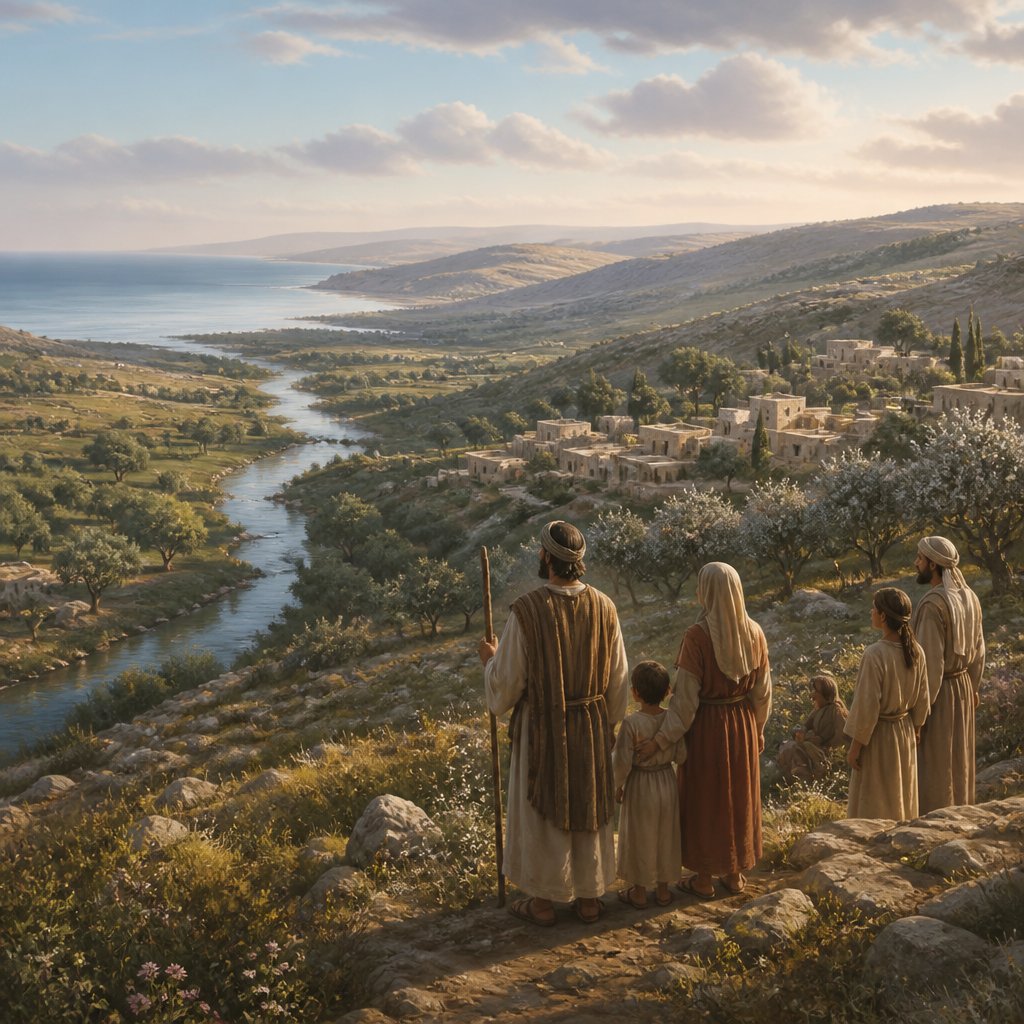
As we delve into Joshua 16:8, we encounter intriguing imagery encapsulated in the journey of the tribe of Ephraim. The verse reads, "The border went out from Tappuah westward unto the river Kanah; and the goings out thereof were at the sea. This is the inheritance of the tribe of the children of Ephraim by their families." Here, we can glean profound truths about inheritance, identity, and divine boundaries.
The first element we encounter is the concept of inheritance. In ancient Israel, land was a significant aspect of identity and blessing. Tribes and families were given specific parcels that would define their cultural and spiritual identity for generations. The mention of Tappuah symbolizes a starting point—a promise given to the descendants of Joseph, which emphasized the continuity of God’s covenant. This promise was not just about physical land, but about belonging, purpose, and God's presence among His people.
Inheritance in the biblical sense transcends material possessions; it speaks to the spiritual legacy that comes with being God's chosen people. Paul, in Romans 8:17, reminds us, "And if children, then heirs; heirs of God, and joint-heirs with Christ." Just as the tribe of Ephraim inherited their land, so too do we as believers inherit promises far greater than physical territory—we inherit the very kingdom of God through our relationship with Jesus Christ.
Next, we observe the significance of boundaries in this passage. The borders outlined from Tappuah to the river Kanah show us that God is a God of order. He establishes clear guidelines and demarcations for His people. In a world where chaos often reigns, understanding that God sets boundaries for us can bring us comfort and clarity. This is not to limit us, but to provide a framework within which we can thrive. God knows our strengths, weaknesses, and the tribulations we may face. He gives us His boundaries not to constrict us but to keep us safe and to help us flourish within His divine will.
The border from Tappuah to the sea might also remind us of the journey toward our inheritance. Just as the children of Ephraim had to navigate their journey, we too often find ourselves in a process of discovering and claiming our own inheritance. This journey can be marked by trials, detours, and unforeseen obstacles, yet it is crucial to remember that each challenge molds us and leads us closer to God's intentions for our lives.
Reflecting on the journey of Ephraim sheds light on how we can approach our own inheritance. The river Kanah serves as a metaphor for crossing into the promises of God. It invites us to consider—what is the 'river' we must cross in our lives? Perhaps it represents fears, doubts, or other barriers that impede us from experiencing the fullness of what God has for us. Trusting God's directions will enable us to face our fears head-on, recognizing that He has already set a course for our victory.
Finally, the mention of the sea as the boundary's endpoint is significant. Water often symbolizes both chaos and an abundance of life and promise in the Bible. To reach the sea indicates the culmination of effort and the arrival at a place of freedom and new beginnings. Here, we see that God's inheritance is not only about what is left behind but also the vast expanse of opportunities that await us.
In conclusion, Joshua 16:8 encourages us to reflect on our spiritual inheritance through Christ. It reminds us that God has lovingly set boundaries, provided direction, and paved the way for us to triumph over life's challenges. Let us embrace the fullness of our inheritance, knowing that as children of God, we are called to live within His borders and claim the abundance that He has graciously provided. May we see our journey as one of continual growth and loving purpose, as we walk toward the shore of His promises.
Get our apps


Artwork for Joshua 16:8

Joshua 16:8 - "The border went out from Tappuah westward unto the river Kanah; and the goings out thereof were at the sea. This is the inheritance of the tribe of the children of Ephraim by their families."
"The border went out from Tappuah westward unto the river Kanah; and the goings out thereof were at the sea. This is the inheritance of the tribe of the children of Ephraim by their families." - Joshua 16:8

Joshua 8:16 - "And all the people that were in Ai were called together to pursue after them: and they pursued after Joshua, and were drawn away from the city."

"And all the people that were in Ai were called together to pursue after them: and they pursued after Joshua, and were drawn away from the city." - Joshua 8:16

Joshua 8:23 - "And the king of Ai they took alive, and brought him to Joshua."

Joshua 3:16

Joshua 7:16 - "¶ So Joshua rose up early in the morning, and brought Israel by their tribes; and the tribe of Judah was taken:"

Joshua 9:8 - "And they said unto Joshua, We are thy servants. And Joshua said unto them, Who are ye? and from whence come ye?"

Joshua 8:30 - "¶ Then Joshua built an altar unto the LORD God of Israel in mount Ebal,"

Joshua 8:28 - "And Joshua burnt Ai, and made it an heap for ever, even a desolation unto this day."

Joshua 1:12-16

Joshua 1:12-16

Joshua 1:16 (KJVA) 16 And they answered Joshua, saying, All that thou commandest us we will do, and whithersoever thou sendest us, we will go.

Joshua 8:15 - "And Joshua and all Israel made as if they were beaten before them, and fled by the way of the wilderness."

Joshua 1:8

Joshua 1:16 - "¶ And they answered Joshua, saying, All that thou commandest us we will do, and whithersoever thou sendest us, we will go."

Joshua 8:9 - "¶ Joshua therefore sent them forth: and they went to lie in ambush, and abode between Beth-el and Ai, on the west side of Ai: but Joshua lodged that night among the people."

Joshua 8:3 - "¶ So Joshua arose, and all the people of war, to go up against Ai: and Joshua chose out thirty thousand mighty men of valour, and sent them away by night."

Joshua 4:1-8

Joshua 6:16 - "And it came to pass at the seventh time, when the priests blew with the trumpets, Joshua said unto the people, Shout; for the LORD hath given you the city."

Joshua And The Walls Of Jericho 16:9

Joshua 4:1-8

Joshua 11:16 - "So Joshua took all that land, the hills, and all the south country, and all the land of Goshen, and the valley, and the plain, and the mountain of Israel, and the valley of the same;"

Joshua 8:10 - "And Joshua rose up early in the morning, and numbered the people, and went up, he and the elders of Israel, before the people to Ai."

Joshua 8:18 - "And the LORD said unto Joshua, Stretch out the spear that is in thy hand toward Ai; for I will give it into thine hand. And Joshua stretched out the spear that he had in his hand toward the city."

"And the king of Ai they took alive, and brought him to Joshua." - Joshua 8:23

Joshua 19:16 - "This is the inheritance of the children of Zebulun according to their families, these cities with their villages."

Joshua 12:16 - "The king of Makkedah, one; the king of Beth-el, one;"

Joshua 16:4 - "So the children of Joseph, Manasseh and Ephraim, took their inheritance."

Joshua 10:16 - "But these five kings fled, and hid themselves in a cave at Makkedah."