Dividing the Promised Land: A Legacy of Faith
“These are the inheritances, which Eleazar the priest, and Joshua the son of Nun, and the heads of the fathers of the tribes of the children of Israel, divided for an inheritance by lot in Shiloh before the LORD, at the door of the tabernacle of the congregation. So they made an end of dividing the country.” — Joshua 19:51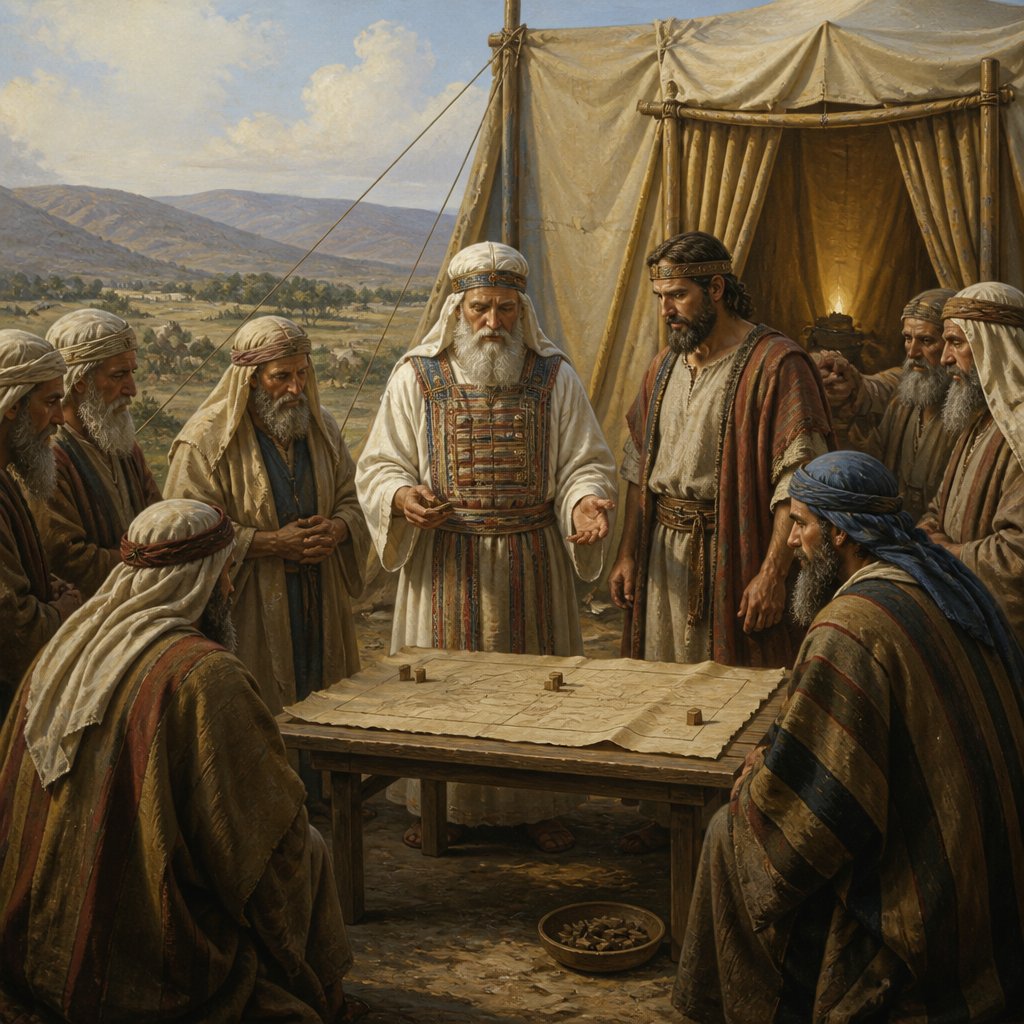
In the book of Joshua, specifically Joshua 19:51, we find a pivotal moment in the history of Israel, encapsulated in the verse that states: "These are the inheritances, which Eleazar the priest, and Joshua the son of Nun, and the heads of the fathers of the tribes of the children of Israel, divided for an inheritance by lot in Shiloh before the LORD, at the door of the tabernacle of the congregation. So they made an end of dividing the country."
This verse represents a significant milestone in the fulfillment of God's promises to His people. After generations of wandering in the wilderness, Israel was now in a position to claim their inheritance—the land promised by God to their forefathers. This act of dividing the land signifies more than just territorial allocation; it embodies the careful and divinely guided process through which God provides for His people.
As we unpack this moment, we must first appreciate the leadership roles of Eleazar, Joshua, and the tribal leaders. Each of them was called to serve in a manner that reflects divine order and unity. Eleazar, as a priest, represents spiritual guidance and intercession, reminding us that every endeavor, especially those pertaining to our inheritances and futures, should be steeped in prayer and reliance on God’s will. Joshua, the military leader and successor to Moses, exemplifies courage and obedience. He fully trusts the Lord throughout the entire process of conquering Canaan. Together, these leaders signify how God’s work is done through obedient servants who are empowered by the Holy Spirit.
The phrase "before the LORD" anchors the entire passage. The land division was not merely an administrative task; it was a sacred act done in reverence to God. It reminds us that all decisions affecting our lives, our paths, and our futures should be presented before God. How often do we make important decisions without seeking His face? The leaders' willingness to submit the lot before God reflects their acknowledgment that He is the true owner of all things and capable of guiding them to places where they should dwell.
Next, we consider the method by which the land was apportioned—by lot. The casting of lots was an ancient practice used to determine God’s will, suggesting that while human planning may guide us, it ultimately fades in comparison to divine direction. Proverbs 16:33 tells us, "The lot is cast into the lap; but the whole disposing thereof is of the LORD." With this, we can understand that while we may strive to make plans and set our course, it is God who ultimately decides our fate, and His decisions are rooted in love and wisdom. He sees the end from the beginning, and rest assured, our paths are under His divine providence.
Moreover, this dividing of the land indicates a completion—a culmination of a long journey marked by trials and triumphs. The phrase "So they made an end of dividing the country" signifies that God’s promises are always fulfilled. Every inch of land given to the tribes was a testament to God’s faithfulness. Similarly, in our lives, we too should recognize that God brings us into seasons of fulfillment where we can enjoy the fruits of our labors and promises.
In what areas of life do we need to see a completion? Are there long-held promises of God that we are anxiously awaiting? Just as the Israelites experienced the joy of inheritance, we can also find hope in the provisions God has made for us. Remember that inheritance is not just a tangible reward; it also encompasses spiritual blessings, wisdom, and peace.
As we reflect on Joshua 19:51, let us not forget that our journey continues. Just as the Israelites settled in their newly divided land, we too must find our rest and contentment in what God has prepared for us. Let us seek Him earnestly, honor His guidance, and cherish the inheritance He has laid out for us in both our spiritual and earthly lives.
Get our apps


Artwork for Joshua 19:51
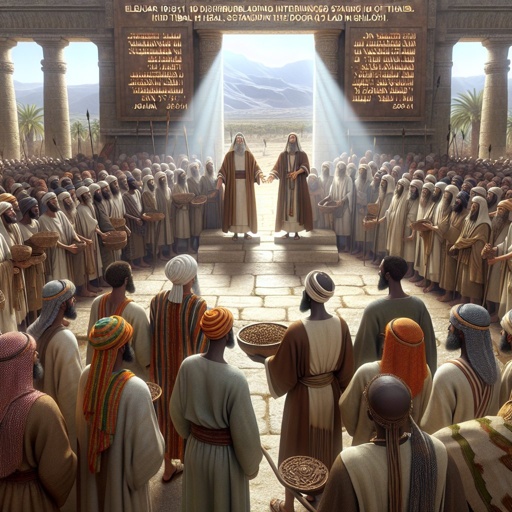
Joshua 19:51 - "These are the inheritances, which Eleazar the priest, and Joshua the son of Nun, and the heads of the fathers of the tribes of the children of Israel, divided for an inheritance by lot in Shiloh before the LORD, at the door of the tabernacle of the congregation. So they made an end of dividing the country."
"These are the inheritances, which Eleazar the priest, and Joshua the son of Nun, and the heads of the fathers of the tribes of the children of Israel, divided for an inheritance by lot in Shiloh before the LORD, at the door of the tabernacle of the congregation. So they made an end of dividing the country." - Joshua 19:51

Joshua 15:51 - "And Goshen, and Holon, and Giloh; eleven cities with their villages:"
"And Goshen, and Holon, and Giloh; eleven cities with their villages:" - Joshua 15:51

Joshua 19:19 - "And Haphraim, and Shion, and Anaharath,"

"And Haphraim, and Shion, and Anaharath," - Joshua 19:19

Jeremiah 51:19 - "The portion of Jacob is not like them; for he is the former of all things: and Israel is the rod of his inheritance: the LORD of hosts is his name."

Joshua 19:4 - "And Eltolad, and Bethul, and Hormah,"

Joshua 19:42 - "And Shaalabbin, and Ajalon, and Jethlah,"

Joshua 19:44 - "And Eltekeh, and Gibbethon, and Baalath,"

Joshua 19:43 - "And Elon, and Thimnathah, and Ekron,"

Joshua 19:36 - "And Adamah, and Ramah, and Hazor,"

Joshua 19:20 - "And Rabbith, and Kishion, and Abez,"

Psalms 51:19 - "Then shalt thou be pleased with the sacrifices of righteousness, with burnt offering and whole burnt offering: then shall they offer bullocks upon thine altar."

Joshua 19:37 - "And Kedesh, and Edrei, and En-hazor,"

Joshua 19:3 - "And Hazar-shual, and Balah, and Azem,"

Isaiah 51:19 - "These two things are come unto thee; who shall be sorry for thee? desolation, and destruction, and the famine, and the sword: by whom shall I comfort thee?"

Joshua 19:5 - "And Ziklag, and Beth-marcaboth, and Hazar-susah,"

Joshua 19:45 - "And Jehud, and Bene-berak, and Gath-rimmon,"

Joshua 19:25 - "And their border was Helkath, and Hali, and Beten, and Achshaph,"

Joshua 19:18 - "And their border was toward Jezreel, and Chesulloth, and Shunem,"

Joshua 19:49 - "¶ When they had made an end of dividing the land for inheritance by their coasts, the children of Israel gave an inheritance to Joshua the son of Nun among them:"

Joshua 19:41 - "And the coast of their inheritance was Zorah, and Eshtaol, and Ir-shemesh,"

Joshua 19:2 - "And they had in their inheritance Beer-sheba, or Sheba, and Moladah,"

Joshua 12:19 - "The king of Madon, one; the king of Hazor, one;"

Joshua 19:46 - "And Me-jarkon, and Rakkon, with the border before Japho."

Joshua 19:6 - "And Beth-lebaoth, and Sharuhen; thirteen cities and their villages:"

Joshua 13:19 - "And Kirjathaim, and Sibmah, and Zareth-shahar in the mount of the valley,"

Joshua 19:35 - "And the fenced cities are Ziddim, Zer, and Hammath, Rakkath, and Chinnereth,"

"And Shaalabbin, and Ajalon, and Jethlah," - Joshua 19:42