Sanctuary of Grace: Finding Refuge in God’s Cities
“And when he that doth flee unto one of those cities shall stand at the entering of the gate of the city, and shall declare his cause in the ears of the elders of that city, they shall take him into the city unto them, and give him a place, that he may dwell among them.” — Joshua 20:4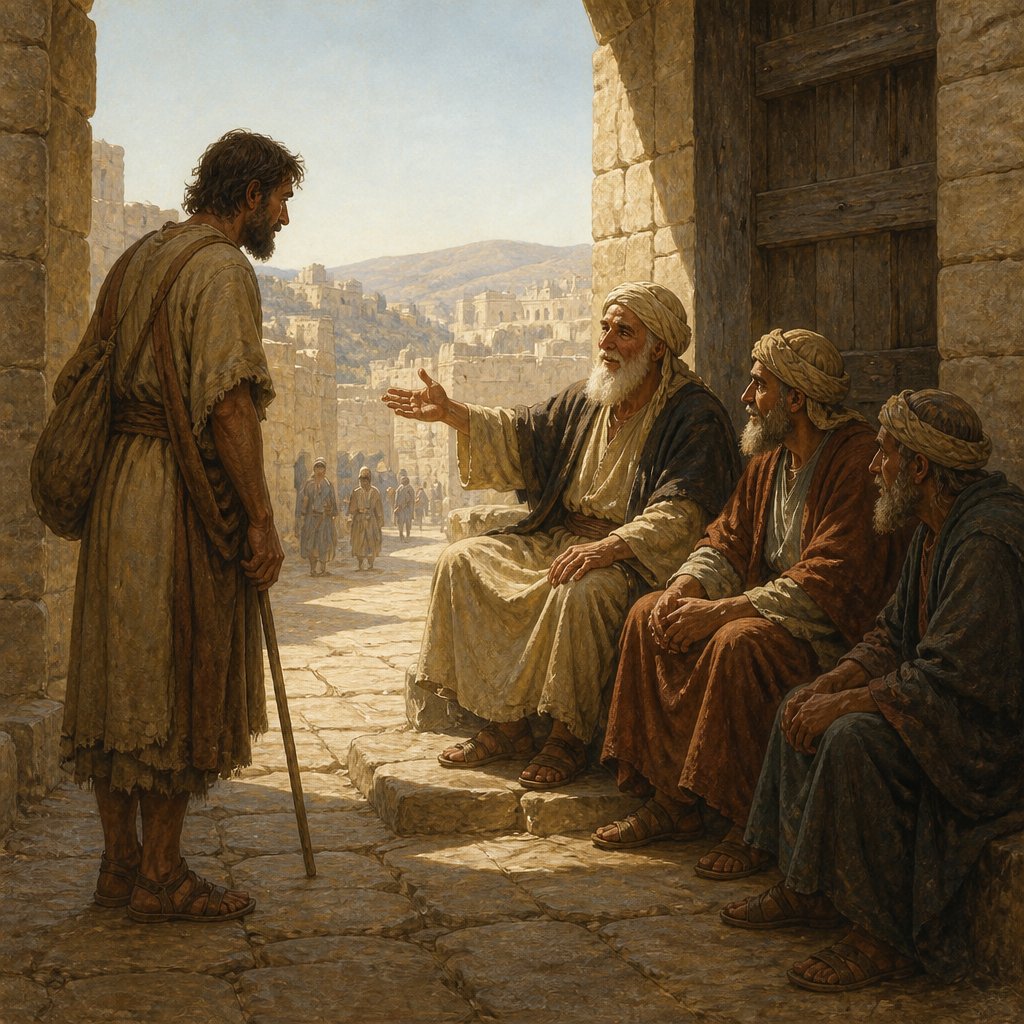
In Joshua 20:4, we find a powerful testament to both God’s justice and His mercy. The verse states, "And when he that doth flee unto one of those cities shall stand at the entering of the gate of the city, and shall declare his cause in the ears of the elders of that city, they shall take him into the city unto them, and give him a place, that he may dwell among them." In this passage, God establishes cities of refuge for individuals who have accidentally harmed others. The context of this scripture reveals God’s heart for restoration, safety, and community in the face of human error and sin.
Let’s unpack the scene: a man, perhaps a hunter or a builder, finds himself in an unfortunate circumstance where tragedy strikes due to an accident. The repercussions are severe—his life is now at stake, and he must flee to a city of refuge. These cities were specifically designated locations where someone could seek asylum from the avenger of blood, which in ancient Israel was the family member seeking justice for the killing of their kin.
**Fleeing to Safety**
First, let’s consider the act of fleeing. This moment portrays a critical response to unsafe circumstances. In our spiritual lives, we often find ourselves pursuing refuge from guilt, sin, or emotional turmoil. The cities of refuge symbolize God’s grace and mercy, offering us places to run when we are overwhelmed by the consequences of our actions. God does not abandon us to our mistakes but instead provides a sanctuary. When we seek Him in our moments of desperation, we, too, are welcomed into His grace. Thus, the question arises: are we willing to flee to Him when life’s accidents and tragedies occur?
**The Gate and the Elders**
The verse further illustrates that the individual stands at the gate of the city, declaring his cause before the elders. The act of standing at the gate suggests a position of humility and earnestness. In our relationship with God, we must acknowledge our transgressions and be willing to present our case before Him. This declaration represents a sincere confession of our faults. The elders, as figures of authority and wisdom, symbolize the church or community that upholds God’s standards of justice and mercy. When we come to God, confessing our sins and our need for help, we are met not with condemnation but with the grace that invites us in. As it is written in 1 John 1:9, "If we confess our sins, he is faithful and just to forgive us our sins, and to cleanse us from all unrighteousness."
**Community and Belonging**
Once the individual is accepted by the elders, he is given a place to dwell among the people, a profound representation of community and belonging. Within the context of the city of refuge, the individual who sought sanctuary becomes accepted into the fold. In God’s kingdom, no one is turned away. The heart of this scripture reveals that even those who find themselves in dire circumstances due to their own mistakes are still granted a place among God’s people.
Far too often, we shy away from approaching God or His church due to feelings of shame or unworthiness. However, just as the accidental murderer finds a refuge, we too can confidently approach our Heavenly Father. Philippians 3:20 reminds us that "our conversation is in heaven; from whence also we look for the Saviour, the Lord Jesus Christ." Here, we see a glimpse into the inclusive community that God desires for all His creation.
**Conclusion**
In conclusion, Joshua 20:4 serves as a profound reminder of the grace, justice, and community that God offers to those in need of refuge. The cities of refuge were more than just physical places; they were symbolic of God’s holistic care for every part of our lives. Today, may we embrace the call to flee to Him, confess our burdens, and accept the unconditional love that provides us a sanctuary of grace. Let us encourage one another to create communities where all feel safe to declare their cause and find a place to dwell among the people of God.
Get our apps


Artwork for Joshua 20:4

Joshua 20:4 - "And when he that doth flee unto one of those cities shall stand at the entering of the gate of the city, and shall declare his cause in the ears of the elders of that city, they shall take him into the city unto them, and give him a place, that he may dwell among them."
"And when he that doth flee unto one of those cities shall stand at the entering of the gate of the city, and shall declare his cause in the ears of the elders of that city, they shall take him into the city unto them, and give him a place, that he may dwell among them." - Joshua 20:4

Joshua 4:20 - "And those twelve stones, which they took out of Jordan, did Joshua pitch in Gilgal."

"And those twelve stones, which they took out of Jordan, did Joshua pitch in Gilgal." - Joshua 4:20

Joshua 20:1 - "The LORD also spake unto Joshua, saying,"

Joshua 6:20

Joshua 6:20

Joshua 4:15 - "And the LORD spake unto Joshua, saying,"

Joshua 19:20 - "And Rabbith, and Kishion, and Abez,"

Joshua 4:4 - "Then Joshua called the twelve men, whom he had prepared of the children of Israel, out of every tribe a man:"

"The LORD also spake unto Joshua, saying," - Joshua 20:1

Joshua 7:20 - "And Achan answered Joshua, and said, Indeed I have sinned against the LORD God of Israel, and thus and thus have I done:"

Joshua 13:20 - "And Beth-peor, and Ashdoth-pisgah, and Beth-jeshimoth,"

Joshua 15:20 - "This is the inheritance of the tribe of the children of Judah according to their families."

Joshua 4:17 - "Joshua therefore commanded the priests, saying, Come ye up out of Jordan."

Joshua 12:20 - "The king of Shimron-meron, one; the king of Achshaph, one;"

Joshua 3:4

"And Rabbith, and Kishion, and Abez," - Joshua 19:20

Joshua 3:4

"And the LORD spake unto Joshua, saying," - Joshua 4:15

Joshua 19:4 - "And Eltolad, and Bethul, and Hormah,"

Joshua 4:1-8

Joshua 4:1 - "And it came to pass, when all the people were clean passed over Jordan, that the LORD spake unto Joshua, saying,"

Joshua 4:14 - "¶ On that day the LORD magnified Joshua in the sight of all Israel; and they feared him, as they feared Moses, all the days of his life."

Joshua 4:1-8

Joshua 10:20 - "And it came to pass, when Joshua and the children of Israel had made an end of slaying them with a very great slaughter, till they were consumed, that the rest which remained of them entered into fenced cities."

Joshua 10:4 - "Come up unto me, and help me, that we may smite Gibeon: for it hath made peace with Joshua and with the children of Israel."

Joshua 4:10 - "¶ For the priests which bare the ark stood in the midst of Jordan, until every thing was finished that the LORD commanded Joshua to speak unto the people, according to all that Moses commanded Joshua: and the people hasted and passed over."

Joshua 4:9 - "And Joshua set up twelve stones in the midst of Jordan, in the place where the feet of the priests which bare the ark of the covenant stood: and they are there unto this day."

"Then Joshua called the twelve men, whom he had prepared of the children of Israel, out of every tribe a man:" - Joshua 4:4