Refuge and Redemption: The City of Safety
“And he shall dwell in that city, until he stand before the congregation for judgment, and until the death of the high priest that shall be in those days: then shall the slayer return, and come unto his own city, and unto his own house, unto the city from whence he fled.” — Joshua 20:6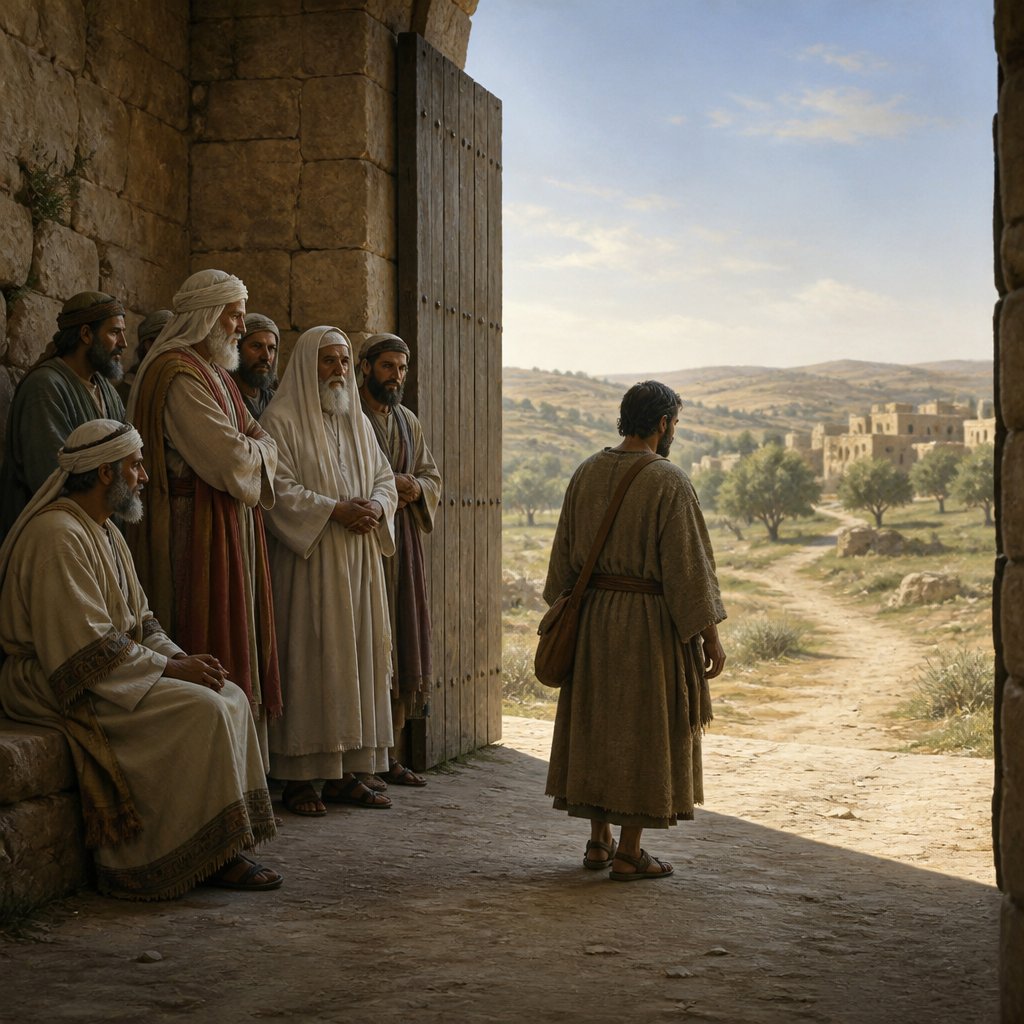
The concept of refuge is deeply embedded in the heart of God’s redemptive plan as articulated through scriptural narratives. The verse in Joshua 20:6 reads, "And he shall dwell in that city, until he stand before the congregation for judgment, and until the death of the high priest that shall be in those days: then shall the slayer return, and come unto his own city, and unto his own house, unto the city from whence he fled." This passage immerses us in the ancient practice of cities of refuge established by God for those who inadvertently committed manslaughter.
To understand the significance of this verse, we must first explore the context. God, in His infinite wisdom, provided these cities as sanctuaries, places where individuals could flee to find protection from the avenger of blood after unwittingly causing harm. The cities of refuge represented more than mere physical safety; they embodied God’s mercy and justice, striking an essential balance that underpinned His covenant with the Israelites.
The phrase "until he stand before the congregation for judgment" encourages deep reflection on the process of atonement and reconciliation. The individual seeking refuge was not allowed to return home until they had undergone a form of responsibility, appearing before the congregation to receive judgment, which reinforces the value of accountability in community life. This communal aspect of justice—where the congregation plays a role in determining the fate of the slayer—illustrates that none of us truly live in isolation; our actions influence and affect those around us.
Moreover, the temporal limit imposed—"until the death of the high priest that shall be in those days"—adds a profound theological layer. The high priest, a mediator chosen by God, symbolized the grace that allows for redemption; his death pronounces freedom for the inadvertent offender. In a sense, the high priest functioned as a type of Christ within the Old Testament, who is our true High Priest. Through the death and resurrection of Christ, we find ultimate refuge. His sacrifice has paved the way for all humanity to approach the Father without fear of condemnation. The provisions of grace and protection offered through Christ echo the essence of the cities of refuge: safety, hope, and the promise of new beginnings.
Much like the one who flees to the city of refuge, we often find ourselves in situations where we have caused unintended harm—perhaps through our words, attitudes, or actions. In those moments, we are invited to take refuge in Christ, the ultimate sanctuary. He ensures that even when we err, we are given the opportunity for restoration, whereby our past is not a prison but a stepping stone towards healing and wholeness. The act of dwelling in the city until judgment was passed serves as a metaphor for our journey with Christ, where we are called to remain in His presence, allowing His Spirit to transform us as we await the redemption that comes through our faith.
The juxtaposition of returning "unto his own city, and unto his own house" connects the themes of belonging, identity, and home. For the one fleeing, returning brings closure and a restoration of relationship with their community. For believers, coming back to the Lord means returning to our identity in Him, reaffirming that we are no longer defined by our mistakes, but as beloved children of God. Each time we confess our sins and seek His face, we echo the journey of the slayer—finding our place in the community of faith, welcomed back into fellowship, and restored to purpose.
In conclusion, Joshua 20:6 serves as a powerful reminder of God’s grace, the importance of accountability, and the opportunity for redemption. As we reflect on this scripture, let us be encouraged to seek refuge in Christ, understanding that His sacrifice grants us access to grace, so we may navigate life’s challenges and restore the fractured relationships around us. In God’s economy, there's always a way back home.
Get our apps


Artwork for Joshua 20:6

Joshua 20:6 - "And he shall dwell in that city, until he stand before the congregation for judgment, and until the death of the high priest that shall be in those days: then shall the slayer return, and come unto his own city, and unto his own house, unto the city from whence he fled."
"And he shall dwell in that city, until he stand before the congregation for judgment, and until the death of the high priest that shall be in those days: then shall the slayer return, and come unto his own city, and unto his own house, unto the city from whence he fled." - Joshua 20:6

Joshua 6:20

Joshua 6:20

Joshua 6:20 – "When the trumpets sounded, the army shouted, and at the sound of the trumpet, when the men gave a loud shout, the wall collapsed."

Joshua 20:1 - "The LORD also spake unto Joshua, saying,"

Joshua 4:20 - "And those twelve stones, which they took out of Jordan, did Joshua pitch in Gilgal."

Joshua 19:20 - "And Rabbith, and Kishion, and Abez,"

Joshua 6

"The LORD also spake unto Joshua, saying," - Joshua 20:1

Joshua 6:12 - "¶ And Joshua rose early in the morning, and the priests took up the ark of the LORD."

Joshua 6:27 - "So the LORD was with Joshua; and his fame was noised throughout all the country."

Joshua 22:6 - "So Joshua blessed them, and sent them away: and they went unto their tents."

Joshua 7:20 - "And Achan answered Joshua, and said, Indeed I have sinned against the LORD God of Israel, and thus and thus have I done:"

Joshua 13:20 - "And Beth-peor, and Ashdoth-pisgah, and Beth-jeshimoth,"

Joshua 15:20 - "This is the inheritance of the tribe of the children of Judah according to their families."

Joshua 6:6 - "¶ And Joshua the son of Nun called the priests, and said unto them, Take up the ark of the covenant, and let seven priests bear seven trumpets of rams' horns before the ark of the LORD."

Joshua 6:20 - "So the people shouted when the priests blew with the trumpets: and it came to pass, when the people heard the sound of the trumpet, and the people shouted with a great shout, that the wall fell down flat, so that the people went up into the city, every man straight before him, and they took the city."

Joshua 12:20 - "The king of Shimron-meron, one; the king of Achshaph, one;"

"And Rabbith, and Kishion, and Abez," - Joshua 19:20

Joshua 6:17-25

Joshua 6:2 - "And the LORD said unto Joshua, See, I have given into thine hand Jericho, and the king thereof, and the mighty men of valour."

Joshua 10:20 - "And it came to pass, when Joshua and the children of Israel had made an end of slaying them with a very great slaughter, till they were consumed, that the rest which remained of them entered into fenced cities."

Joshua 6:25 - "And Joshua saved Rahab the harlot alive, and her father's household, and all that she had; and she dwelleth in Israel even unto this day; because she hid the messengers, which Joshua sent to spy out Jericho."

Joshua 6:27 - "So the LORD was with Joshua; and his fame was noised throughout all the country."

Joshua 6:16 - "And it came to pass at the seventh time, when the priests blew with the trumpets, Joshua said unto the people, Shout; for the LORD hath given you the city."

Joshua 6:27 - "So the LORD was with Joshua; and his fame was noised throughout all the country."

Joshua 6:27 - "So the LORD was with Joshua; and his fame was noised throughout all the country."

"And those twelve stones, which they took out of Jordan, did Joshua pitch in Gilgal." - Joshua 4:20

Zechariah 3:6 - "And the angel of the LORD protested unto Joshua, saying,"