Cities of Grace: The Inheritance of the Priestly Line
“All the cities of the children of Aaron, the priests, were thirteen cities with their suburbs.” — Joshua 21:19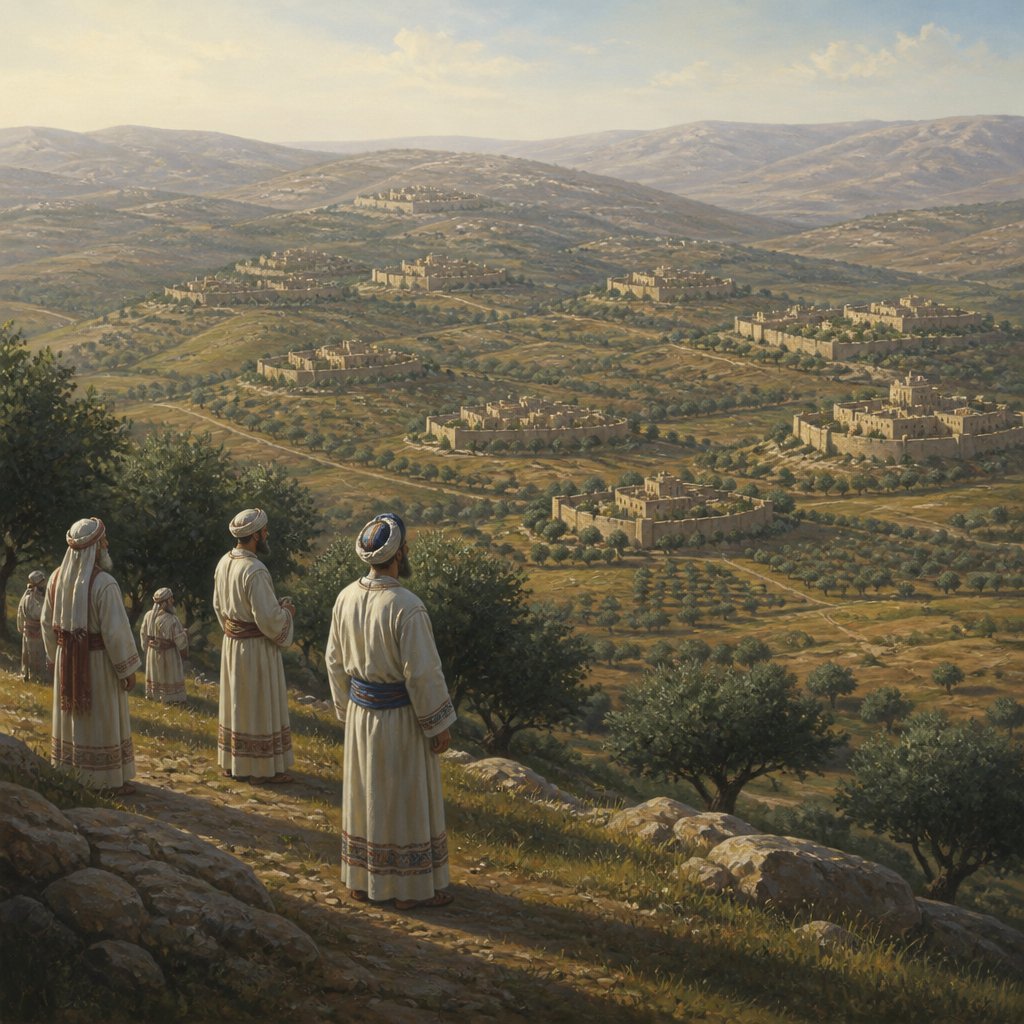
In the book of Joshua, particularly in Joshua 21:19, we read: "All the cities of the children of Aaron, the priests, were thirteen cities with their suburbs." At first glance, this verse may seem like an obscure detail of ancient Israelite geography and land allocations. However, beneath the surface, it reveals profound themes of grace, inheritance, and divine appointment that resonate powerfully in the lives of believers today.
To understand the significance of the cities assigned to the children of Aaron, we must first recognize who Aaron was. Aaron, the brother of Moses, holds a pivotal role as the first high priest of Israel. His lineage, the Levitical priesthood, is marked by a unique calling to serve God and the community, mediating between the heavens and the earth. The cities allocated to Aaron's descendants signify not just a geographical assignment, but a sacred inheritance steeped in the responsibility of worship and spiritual leadership.
The number thirteen is noteworthy. In biblical numerology, the number 12 often symbolizes God’s divine governance, representing the twelve tribes of Israel. The addition of one more city for the priests of Aaron can remind us of God's grace. It suggests that God extends His grace beyond mere numbers or rules, showing generosity in His provision. Each city signifies a place where the priests could carry out their duties—they were centers for worship, places to teach the law, and sanctuaries for the people.
In the sprawling desert of Old Testament theology, the cities of Aaron remind us that God designed citizenship in His kingdom not based on merit, but on His sovereign choice and purpose. The children of Aaron did not earn their cities through conquest or exertion; they received them as a testament to God's promise and faithfulness. Similarly, in our faith, we are reminded that our salvation and our standing before God are not rooted in our achievements but in Christ's finished work on the cross.
Furthermore, the provision of suburbs around these cities symbolizes a place of sanctuary, where community life could thrive in proximity to the holy. This speaks powerfully to the nature of our lives as believers. We are called to live in community, surrounded by the grace of God and the support of our spiritual family. Just as the priests had access to the spiritual provisions of their cities, believers today also have a community—a church—where they can be nurtured, serve, and grow in their faith. The suburbs represent not just physical space but spiritual coverage and protection that comes when we connect with fellow believers.
As we reflect on this verse, we are prompted to ask ourselves: Are we nurturing our spiritual inheritance? Are we consciously engaging in the community of faith where we can develop our gifts, serve others, and draw closer to God? Each city assigned to Aaron’s lineage represents a call to holiness and lifestyle stewardship. In our modern context, we live in a world requiring us to uphold the standards of God’s holiness and righteousness, to be priests in our communities, sharing grace and truth.
Moreover, the distribution of cities emphasizes the importance of both responsibility and privilege in the believer’s life. The children of Aaron were not just recipients of land; they bore the responsibility of communicating God’s presence, His glory, and His laws to the people. Such is our calling as Christians. We are called to be the light of the world, tasked with sharing the good news of Jesus Christ, maintaining our roles as ambassadors of His love and truth.
In conclusion, Joshua 21:19 serves as a rich reminder of the depth of God’s provision, grace, and the divine calling that echoes today in our lives. Let us embrace our inheritance, live out our calling with diligence, and serve our communities with love, knowing that we, too, are priests in His glorious kingdom.
Get our apps


Artwork for Joshua 21:19

Joshua 21:19 - "All the cities of the children of Aaron, the priests, were thirteen cities with their suburbs."

"All the cities of the children of Aaron, the priests, were thirteen cities with their suburbs." - Joshua 21:19

Joshua 19:21 - "And Remeth, and En-gannim, and En-haddah, and Beth-pazzez;"

"And Remeth, and En-gannim, and En-haddah, and Beth-pazzez;" - Joshua 19:21

Joshua 19:19 - "And Haphraim, and Shion, and Anaharath,"

Joshua 24:21 - "And the people said unto Joshua, Nay; but we will serve the LORD."

"And Haphraim, and Shion, and Anaharath," - Joshua 19:19

Revelation 19:19-21

Revelation 19:19-21

Revelation 19:19-21

Joshua 19:4 - "And Eltolad, and Bethul, and Hormah,"

Joshua 19:42 - "And Shaalabbin, and Ajalon, and Jethlah,"

Joshua 19:44 - "And Eltekeh, and Gibbethon, and Baalath,"

Joshua 19:43 - "And Elon, and Thimnathah, and Ekron,"

Joshua 19:36 - "And Adamah, and Ramah, and Hazor,"

Joshua 19:20 - "And Rabbith, and Kishion, and Abez,"

Joshua 19:37 - "And Kedesh, and Edrei, and En-hazor,"

Joshua 19:3 - "And Hazar-shual, and Balah, and Azem,"

Joshua 10:21 - "And all the people returned to the camp to Joshua at Makkedah in peace: none moved his tongue against any of the children of Israel."

Joshua 21:21 - "For they gave them Shechem with her suburbs in mount Ephraim, to be a city of refuge for the slayer; and Gezer with her suburbs,"

Joshua 19:5 - "And Ziklag, and Beth-marcaboth, and Hazar-susah,"

Joshua 19:45 - "And Jehud, and Bene-berak, and Gath-rimmon,"

Joshua 19:25 - "And their border was Helkath, and Hali, and Beten, and Achshaph,"

Joshua 8:21 - "And when Joshua and all Israel saw that the ambush had taken the city, and that the smoke of the city ascended, then they turned again, and slew the men of Ai."

Joshua 19:18 - "And their border was toward Jezreel, and Chesulloth, and Shunem,"

Joshua 12:21 - "The king of Taanach, one; the king of Megiddo, one;"

Joshua 21:14 - "And Jattir with her suburbs, and Eshtemoa with her suburbs,"

Joshua 21:15 - "And Holon with her suburbs, and Debir with her suburbs,"

Joshua 19:49 - "¶ When they had made an end of dividing the land for inheritance by their coasts, the children of Israel gave an inheritance to Joshua the son of Nun among them:"

Joshua 19:41 - "And the coast of their inheritance was Zorah, and Eshtaol, and Ir-shemesh,"