The Altar of Witness: Unity in Diversity
“And the children of Israel heard say, Behold, the children of Reuben and the children of Gad and the half tribe of Manasseh have built an altar over against the land of Canaan, in the borders of Jordan, at the passage of the children of Israel.” — Joshua 22:11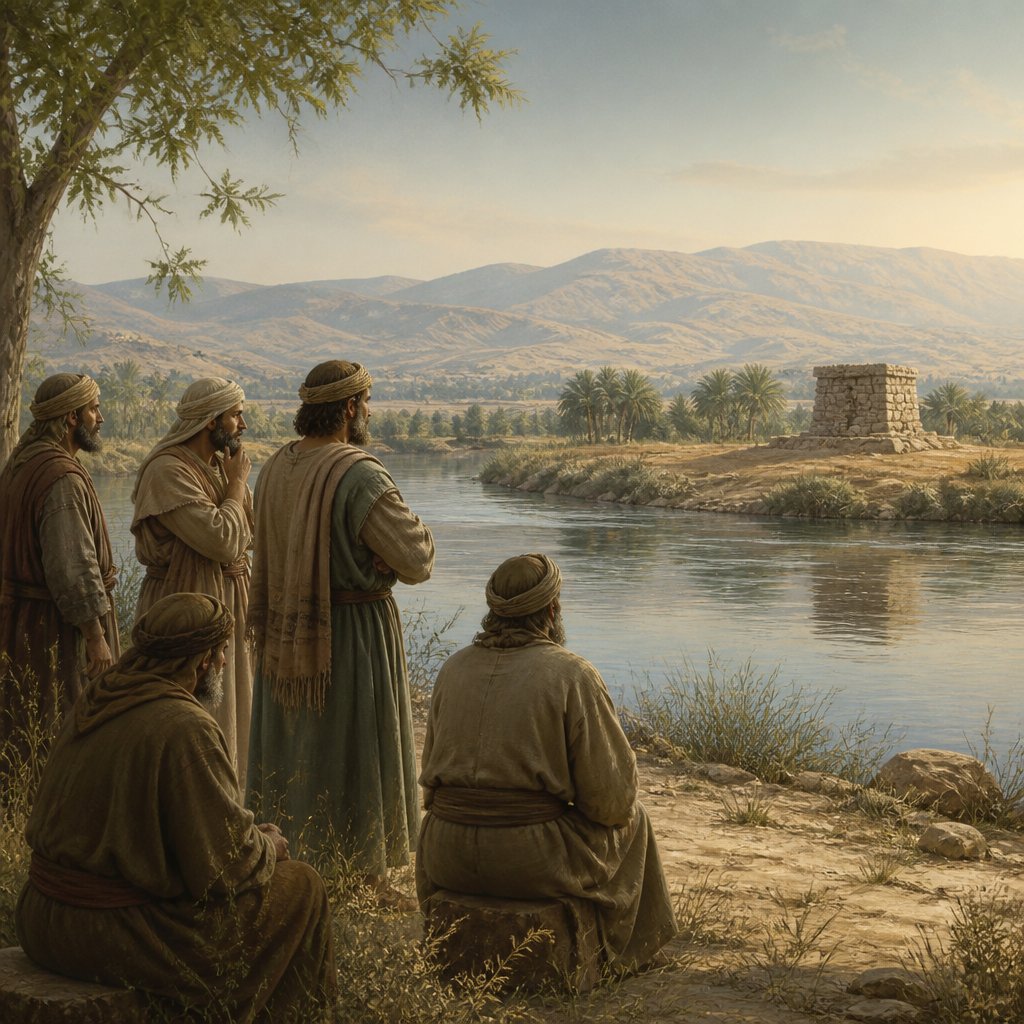
Joshua 22:11 (KJV) states, "And the children of Israel heard say, Behold, the children of Reuben and the children of Gad and the half tribe of Manasseh have built an altar over against the land of Canaan, in the borders of Jordan, at the passage of the children of Israel." At first glance, this verse appears to simply convey a report about a group of Israelites who have built an altar. However, when we dive deeper into the context of this event, we uncover profound lessons on unity, misunderstanding, and the importance of communication among God’s people.
To understand the significance of the altar built by the tribes of Reuben, Gad, and the half tribe of Manasseh, we must recall who these tribes were. These tribes were granted their inheritance on the eastern side of the Jordan River, separate from the rest of the Israelites who were to settle in Canaan. Their position created a potential rift—a geographical and symbolic barrier that could lead to disunity among the people of Israel.
The construction of the altar prompted immediate concern among the other tribes of Israel. They perceived it as a challenge to their collective identity and faith; to them, the altar could be seen as a rejection of the worship established in the central sanctuary at Shiloh, which represented God’s chosen dwelling place. This concern raises an important point about how easily misunderstandings can arise in communities. Rather than reaching out with questions and seeking clarification, the Israelites leap to judgment based on what they have heard. We, too, are often quick to form opinions based on incomplete information.
This incident teaches us about the dangers of assumptions. The children of Israel had heard reports but had not taken the time to investigate the truth before reacting. In our daily lives, this is a critical lesson—how often do we hear something and allow it to shape our perceptions and actions without verifying the facts? The Church, as the body of Christ, is called to a higher standard. We are to seek peace, pursue understanding, and protect the unity of the Spirit (Ephesians 4:3).
Fortunately, this story does not end in conflict. In the chapters that follow, the leaders of the tribes approach the Reubenites, Gadites, and Manassites to address their concerns. They engage in dialogue, seeking to understand the motivations behind the altar. Here, we see a beautiful example of conflict resolution and the necessity of coming together to communicate openly. The builders of the altar clarify that their intention was not to create a division or an alternative system of worship but to serve as a witness of their commitment to the God of Israel.
This brings us to the heart of the matter: the altar functioned as a reminder—a witness—that despite geographical divides, they were still part of one faithful community under one God. It symbolized their unity in faith regardless of where they lived, indicating that God's people can and should find methods of remembrance that acknowledge both individual identities and collective commitments.
In our own lives, it is essential that we build our altars of faith in ways that reflect our individual experiences while affirming our shared heritage in Christ. Whether through acts of service, community fellowship, or personal testimony, our lives are altars that tell the story of God’s grace and love.
As we assess our own actions, let’s take heed from the story of the altar of Reuben, Gad, and Manasseh. Let us be diligent in our pursuit of understanding, quick to seek dialogue rather than jump to conclusions, and steadfast in recognizing that ultimately, we are all part of the same body of believers.
May we build our personal and communal altars in ways that honor God and strengthen our unity in Him. Let them stand as an eternal witness of our faith—for God is not only with us in Canaan but also with every tribe gathered in His name.
Get our apps


Artwork for Joshua 22:11

Joshua 22:11 - "¶ And the children of Israel heard say, Behold, the children of Reuben and the children of Gad and the half tribe of Manasseh have built an altar over against the land of Canaan, in the borders of Jordan, at the passage of the children of Israel."
"¶ And the children of Israel heard say, Behold, the children of Reuben and the children of Gad and the half tribe of Manasseh have built an altar over against the land of Canaan, in the borders of Jordan, at the passage of the children of Israel." - Joshua 22:11

Joshua 11:22 - "There was none of the Anakims left in the land of the children of Israel: only in Gaza, in Gath, and in Ashdod, there remained."

Joshua 22:1 - "Then Joshua called the Reubenites, and the Gadites, and the half tribe of Manasseh,"
"There was none of the Anakims left in the land of the children of Israel: only in Gaza, in Gath, and in Ashdod, there remained." - Joshua 11:22

Joshua 22:6 - "So Joshua blessed them, and sent them away: and they went unto their tents."

Joshua 11:18 - "Joshua made war a long time with all those kings."

Joshua 7:22 - "¶ So Joshua sent messengers, and they ran unto the tent; and, behold, it was hid in his tent, and the silver under it."

Joshua 15:22 - "And Kinah, and Dimonah, and Adadah,"

Joshua 10:22 - "Then said Joshua, Open the mouth of the cave, and bring out those five kings unto me out of the cave."

Joshua 18:22 - "And Beth-arabah, and Zemaraim, and Beth-el,"

Rubenites buyilding alter in Joshua 22

"Then Joshua called the Reubenites, and the Gadites, and the half tribe of Manasseh," - Joshua 22:1

Joshua 11:9 - "And Joshua did unto them as the LORD bade him: he houghed their horses, and burnt their chariots with fire."

Joshua 24:22 - "And Joshua said unto the people, Ye are witnesses against yourselves that ye have chosen you the LORD, to serve him. And they said, We are witnesses."

Joshua 11:15 - "¶ As the LORD commanded Moses his servant, so did Moses command Joshua, and so did Joshua; he left nothing undone of all that the LORD commanded Moses."

Joshua 12:22 - "The king of Kedesh, one; the king of Jokneam of Carmel, one;"

Joshua 11:13 - "But as for the cities that stood still in their strength, Israel burned none of them, save Hazor only; that did Joshua burn."

Joshua 11:23 - "So Joshua took the whole land, according to all that the LORD said unto Moses; and Joshua gave it for an inheritance unto Israel according to their divisions by their tribes. And the land rested from war."

"And Kinah, and Dimonah, and Adadah," - Joshua 15:22

Joshua 11:7 - "So Joshua came, and all the people of war with him, against them by the waters of Merom suddenly; and they fell upon them."

Joshua 11:10 - "¶ And Joshua at that time turned back, and took Hazor, and smote the king thereof with the sword: for Hazor beforetime was the head of all those kingdoms."

Joshua 21:22 - "And Kibzaim with her suburbs, and Beth-horon with her suburbs; four cities."

Joshua 22:22 - "The LORD God of gods, the LORD God of gods, he knoweth, and Israel he shall know; if it be in rebellion, or if in transgression against the LORD, (save us not this day,)"

Joshua 22:7 - "¶ Now to the one half of the tribe of Manasseh Moses had given possession in Bashan: but unto the other half thereof gave Joshua among their brethren on this side Jordan westward. And when Joshua sent them away also unto their tents, then he blessed them,"

"So Joshua blessed them, and sent them away: and they went unto their tents." - Joshua 22:6

Joshua 11:16 - "So Joshua took all that land, the hills, and all the south country, and all the land of Goshen, and the valley, and the plain, and the mountain of Israel, and the valley of the same;"

Rubenites building alter of "immense size" in Joshua 22

Joshua 11:21 - "¶ And at that time came Joshua, and cut off the Anakims from the mountains, from Hebron, from Debir, from Anab, and from all the mountains of Judah, and from all the mountains of Israel: Joshua destroyed them utterly with their cities."

James 2:2-4