The Stones of Remembrance: A Legacy of Faith
“And he spake unto the children of Israel, saying, When your children shall ask their fathers in time to come, saying, What mean these stones?” — Joshua 4:21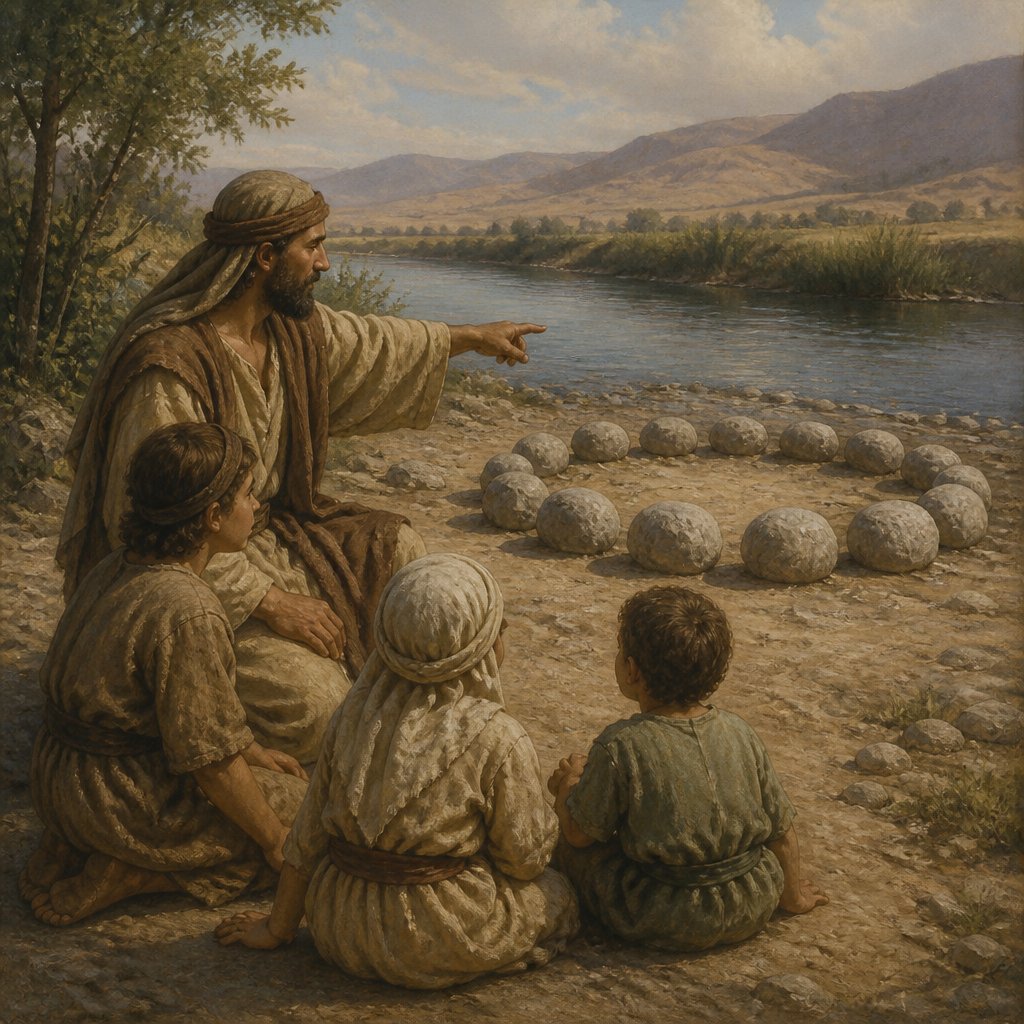
In Joshua 4:21, we encounter a powerful moment of instruction given by Joshua to the children of Israel: "And he spake unto the children of Israel, saying, When your children shall ask their fathers in time to come, saying, What mean these stones?" This simple question posed by future generations reflects a profound truth about faith, memory, and the importance of storytelling in transmitting our beliefs and heritage.
Joshua and the Israelites had just crossed the Jordan River, a miraculous event that demonstrated God’s power and faithfulness. As they stood on the banks of the river, the Lord instructed Joshua to gather twelve stones from the river to set up a memorial. This was not merely a ritual but an act deeply rooted in remembrance—reminding them of their journey, their deliverance, and the covenant faithfulness of God. These stones would serve as a catalyst for questions, sparking curiosity in future generations.
The directive to remember is significant because it carves out a space for discussion about God’s deeds and character. When children asked their fathers, "What mean these stones?" it opened an opportunity for parents to share the story of God’s miraculous acts, linking the past with the present. It invites us to reflect on how we, too, can communicate the essence of our faith to the next generation.
The stones are symbolic reminders of God’s presence in our lives—tangible evidences of His interventions. In our own lives, we can identify stones of remembrance, whether they be places of spiritual breakthrough, moments of answered prayer, or milestones in our faith journey. Each of these memorials serves as a testament to God’s faithfulness. However, it is essential that these memories are shared, told and retold in the context of our families and communities.
There is a profound responsibility placed upon us as parents, mentors, and leaders to nurture a culture of remembrance. It is not enough to experience God’s goodness; we must retell those experiences. This is foundational for a flourishing faith, as our children learn from our stories about who God is, what He has done, and how He remains ever faithful.
Indeed, as we prepare to answer the question posed by Joshua’s instructions to the Israelites, we must thoughtfully and deliberately recall our own "stones." We might not set up literal piles of stones, but we create environments of remembrance through conversations, traditions, and rituals. Family gatherings where testimonies are shared; church events that recount historical moves of God; even simple photo albums that capture spiritual milestones serve the same purpose.
Moreover, acknowledging these stones not only solidifies our faith but also forms a bedrock of hope for future generations. Our children will encounter difficulties and trials, but when armed with the testimonies of God’s faithfulness, they can stand firm amidst uncertainty, knowing that if God did it before, He can do it again. By sharing our stones, we instill courage and conviction into their hearts.
Let us also remember that the significance of these stones extends beyond just recounting deeds. As modern-day believers, we are asked to actively engage with our faith. The stones call us to action, encouraging us to build our lives in a manner that honors the God we proclaim. We must engage in acts of love, mercy, and justice, creating our own stones of remembrance that future generations will look back on.
In conclusion, Joshua 4:21 serves as a poignant reminder of the importance of legacy and the necessity of storytelling within the Christian life. Let us gather our stones, define their significance, and encourage deep conversations about faith within our families. When our children ask about the stones, may we seize the opportunity to narrate not only our stories but to illuminate the unchanging character of our God.
As you engage in sharing your stones, remember that these acts are not just about the past; they shape the future. They invite our children into a living faith that spans generations. Let us make the telling of our stones a cherished tradition, passing down a legacy rich with the awareness of God's constant presence.
Get our apps


Artwork for Joshua 4:21
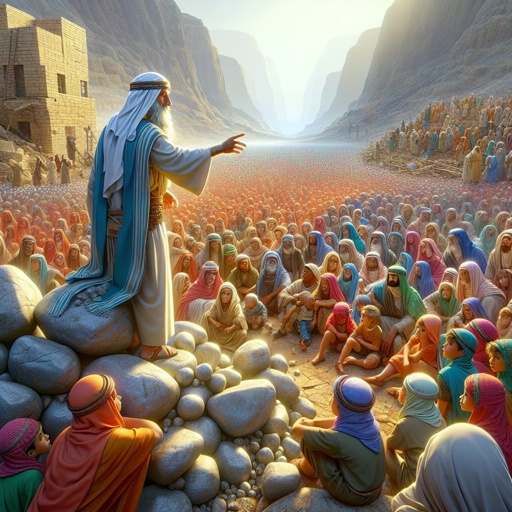
Joshua 4:21 - "And he spake unto the children of Israel, saying, When your children shall ask their fathers in time to come, saying, What mean these stones?"
"And he spake unto the children of Israel, saying, When your children shall ask their fathers in time to come, saying, What mean these stones?" - Joshua 4:21

Joshua 24:21 - "And the people said unto Joshua, Nay; but we will serve the LORD."

Joshua 21:4 - "And the lot came out for the families of the Kohathites: and the children of Aaron the priest, which were of the Levites, had by lot out of the tribe of Judah, and out of the tribe of Simeon, and out of the tribe of Benjamin, thirteen cities."

Joshua 4:15 - "And the LORD spake unto Joshua, saying,"

Joshua 4:4 - "Then Joshua called the twelve men, whom he had prepared of the children of Israel, out of every tribe a man:"

Joshua 10:21 - "And all the people returned to the camp to Joshua at Makkedah in peace: none moved his tongue against any of the children of Israel."

Joshua 21:21 - "For they gave them Shechem with her suburbs in mount Ephraim, to be a city of refuge for the slayer; and Gezer with her suburbs,"

Joshua 8:21 - "And when Joshua and all Israel saw that the ambush had taken the city, and that the smoke of the city ascended, then they turned again, and slew the men of Ai."

Joshua 12:21 - "The king of Taanach, one; the king of Megiddo, one;"

Joshua 21:14 - "And Jattir with her suburbs, and Eshtemoa with her suburbs,"

Joshua 21:15 - "And Holon with her suburbs, and Debir with her suburbs,"

"And the people said unto Joshua, Nay; but we will serve the LORD." - Joshua 24:21

Joshua 11:21 - "¶ And at that time came Joshua, and cut off the Anakims from the mountains, from Hebron, from Debir, from Anab, and from all the mountains of Judah, and from all the mountains of Israel: Joshua destroyed them utterly with their cities."

Joshua 21:1 - "Then came near the heads of the fathers of the Levites unto Eleazar the priest, and unto Joshua the son of Nun, and unto the heads of the fathers of the tribes of the children of Israel;"

Joshua 4:17 - "Joshua therefore commanded the priests, saying, Come ye up out of Jordan."

Joshua 19:21 - "And Remeth, and En-gannim, and En-haddah, and Beth-pazzez;"

Joshua 4:20 - "And those twelve stones, which they took out of Jordan, did Joshua pitch in Gilgal."

Joshua 3:4

Joshua 21:31 - "Helkath with her suburbs, and Rehob with her suburbs; four cities."

Joshua 21:35 - "Dimnah with her suburbs, Nahalal with her suburbs; four cities."

Joshua 21:37 - "Kedemoth with her suburbs, and Mephaath with her suburbs; four cities."

Joshua 3:4

Joshua 21:18 - "Anathoth with her suburbs, and Almon with her suburbs; four cities."

"And the LORD spake unto Joshua, saying," - Joshua 4:15

Joshua 21:22 - "And Kibzaim with her suburbs, and Beth-horon with her suburbs; four cities."

Joshua 21:28 - "And out of the tribe of Issachar, Kishon with her suburbs, Dabareh with her suburbs,"

Joshua 21:30 - "And out of the tribe of Asher, Mishal with her suburbs, Abdon with her suburbs,"

Joshua 21:17 - "And out of the tribe of Benjamin, Gibeon with her suburbs, Geba with her suburbs,"

Joshua 21:19 - "All the cities of the children of Aaron, the priests, were thirteen cities with their suburbs."