The Weight of Words: Understanding Identity Through Shibboleth
“Then said they unto him, Say now Shibboleth: and he said Sibboleth: for he could not frame to pronounce it right. Then they took him, and slew him at the passages of Jordan: and there fell at that time of the Ephraimites forty and two thousand.” — Judges 12:6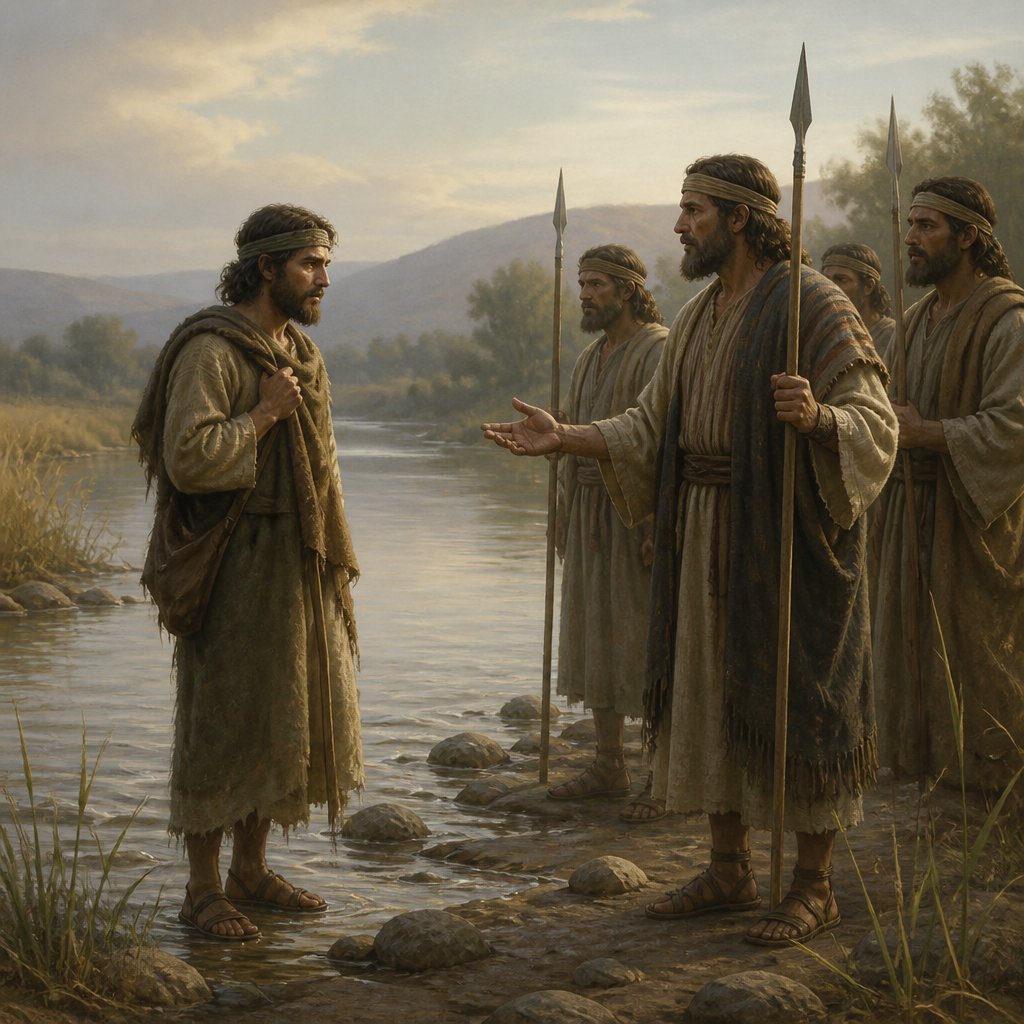
In the book of Judges, we encounter a powerful and sobering moment in the life of the Israelites. Judges 12:6 states, "Then said they unto him, Say now Shibboleth: and he said Sibboleth: for he could not frame to pronounce it right. Then they took him, and slew him at the passages of Jordan: and there fell at that time of the Ephraimites forty and two thousand." This scripture reveals not just a tale of identity but also serves as a reflection of the often unseen but profound connections that words can forge or fracture among people.
The background of this verse involves the conflict between the Gileadites and the Ephraimites. This divide was more than geographical; it was deeply rooted in cultural and linguistic differences. The word "Shibboleth"—which means an ear of corn or stream in Hebrew—was used as a linguistic test. The Gileadites recognized that the Ephraimites pronounced it as "Sibboleth" due to their distinct regional dialect. This distinction resulted in tragic consequences, as it highlighted not only linguistic differences but also the fraught sociopolitical dynamics of the time.
The act of asking someone to pronounce a word as a criterion for life or death gives a stark reminder of the seriousness with which we uphold our identities. It compels us to consider how often we value or devalue others based on their words or how they are spoken. The notion of division based on language resonates even today, where accents, dialects, and vernacular can create barriers that lead to misunderstanding.
As followers of Christ, we must ponder: how do our words reflect our identities? Are we seen as citizens of the Kingdom by how we converse with others? The Apostle Paul wrote in Ephesians 4:29 (KJV), "Let no corrupt communication proceed out of your mouth, but that which is good to the use of edifying, that it may minister grace unto the hearers." This verse points us towards the kind of speech that builds up rather than tears down, a speech that seeks to unify rather than divide.
In modern society, the verbal struggles we face can indeed echo the sentiments expressed in the story of the Gileadites and Ephraimites. Discrimination based on linguistic ability, ethnic background, or cultural heritage continues to plague communities around the world. The challenge is for us to cultivate a heart that recognizes the intrinsic value and dignity of every individual, regardless of how they articulate their identity.
Furthermore, from a spiritual perspective, consider how accurately we represent our faith through our words. Jesus said in Matthew 12:34 (KJV), "For out of the abundance of the heart the mouth speaketh." Our speech should be a reflection of our inner beliefs and values, creating a pathway for others to encounter the grace and truth we find in Christ. When we falter, we must seek forgiveness and realignment with His will, ensuring that our words do not lead to division but offer insight and love.
This meditation on the tragic tale of Shibboleth teaches us about the importance of understanding and empathy with one another. Just as the Gileadites discerned the Ephraimites based on a singular word, we must be cautious not to label or judge our brothers and sisters hastily, remembering that everyone is on their own journey toward understanding.
Let us pray that God would help us articulate our faith clearly and lovingly, to bridge divides rather than create them. May our words be instruments of peace, drawing others to contend for unity within the body of Christ, recognizing that our true identity in Christ transcends linguistic differences, cultural backgrounds, or any human divisions. In doing so, we not only honor others but similarly reflect the light of Christ in this world.
Get our apps


Artwork for Judges 12:6

Judges 12:6 - "Then said they unto him, Say now Shibboleth: and he said Sibboleth: for he could not frame to pronounce it right. Then they took him, and slew him at the passages of Jordan: and there fell at that time of the Ephraimites forty and two thousand."
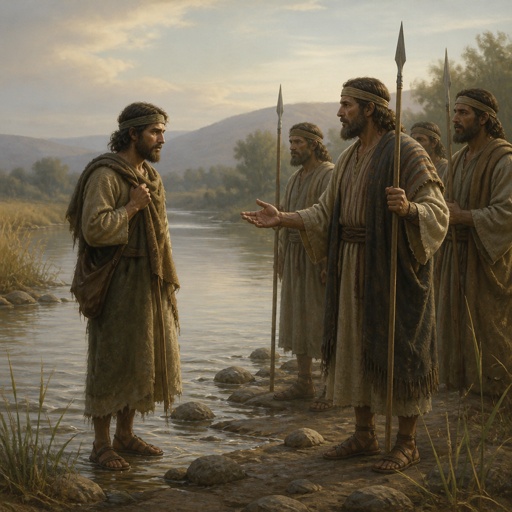
"Then said they unto him, Say now Shibboleth: and he said Sibboleth: for he could not frame to pronounce it right. Then they took him, and slew him at the passages of Jordan: and there fell at that time of the Ephraimites forty and two thousand." - Judges 12:6

Judges 6:12 - "And the angel of the LORD appeared unto him, and said unto him, The LORD is with thee, thou mighty man of valour."

Judges 12:12 - "And Elon the Zebulonite died, and was buried in Aijalon in the country of Zebulun."

Judges 12:11 - "¶ And after him Elon, a Zebulonite, judged Israel; and he judged Israel ten years."
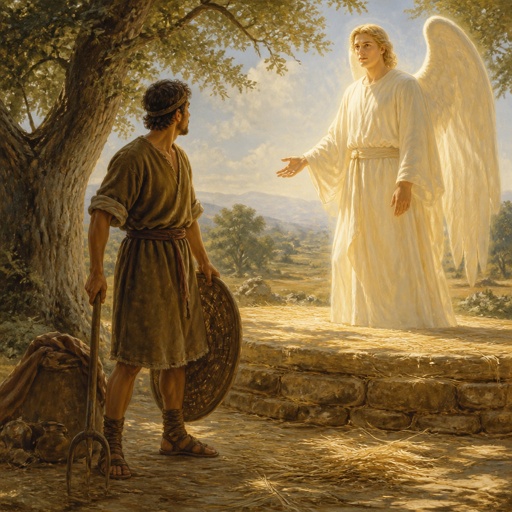
"And the angel of the LORD appeared unto him, and said unto him, The LORD is with thee, thou mighty man of valour." - Judges 6:12

Judges 6:6 - "And Israel was greatly impoverished because of the Midianites; and the children of Israel cried unto the LORD."

Judges 12:8 - "¶ And after him Ibzan of Beth-lehem judged Israel."

Judges 12:10 - "Then died Ibzan, and was buried at Beth-lehem."

Judges 12:13 - "¶ And after him Abdon the son of Hillel, a Pirathonite, judged Israel."

"And Elon the Zebulonite died, and was buried in Aijalon in the country of Zebulun." - Judges 12:12

Job 12:17 - "He leadeth counsellors away spoiled, and maketh the judges fools."

1 Corinthians 6:2 - "Do ye not know that the saints shall judge the world? and if the world shall be judged by you, are ye unworthy to judge the smallest matters?"

Judges 12:7 - "And Jephthah judged Israel six years. Then died Jephthah the Gileadite, and was buried in one of the cities of Gilead."

Judges 4:12 - "And they shewed Sisera that Barak the son of Abinoam was gone up to mount Tabor."

Judges 9:12 - "Then said the trees unto the vine, Come thou, and reign over us."

Judges 3:6 - "And they took their daughters to be their wives, and gave their daughters to their sons, and served their gods."

Luke 6:37 - "Judge not, and ye shall not be judged: condemn not, and ye shall not be condemned: forgive, and ye shall be forgiven:"

Judges 17:12 - "And Micah consecrated the Levite; and the young man became his priest, and was in the house of Micah."

1 Corinthians 5:12 - "For what have I to do to judge them also that are without? do not ye judge them that are within?"

Judges 6:36-40 – Gideon’s fleece test for dew.

John 12:47 - "And if any man hear my words, and believe not, I judge him not: for I came not to judge the world, but to save the world."

Judges 12:15 - "And Abdon the son of Hillel the Pirathonite died, and was buried in Pirathon in the land of Ephraim, in the mount of the Amalekites."

Judges 12:14 - "And he had forty sons and thirty nephews, that rode on threescore and ten ass colts: and he judged Israel eight years."

Judges 6:7 - "¶ And it came to pass, when the children of Israel cried unto the LORD because of the Midianites,"

Psalms 141:6 - "When their judges are overthrown in stony places, they shall hear my words; for they are sweet."

"¶ And after him Ibzan of Beth-lehem judged Israel." - Judges 12:8

"Then died Ibzan, and was buried at Beth-lehem." - Judges 12:10

2 Chronicles 19:6 - "And said to the judges, Take heed what ye do: for ye judge not for man, but for the LORD, who is with you in the judgment."

"¶ And after him Elon, a Zebulonite, judged Israel; and he judged Israel ten years." - Judges 12:11