Behold the Divine: Encountering God’s Holiness
“And Manoah said unto his wife, We shall surely die, because we have seen God.” — Judges 13:22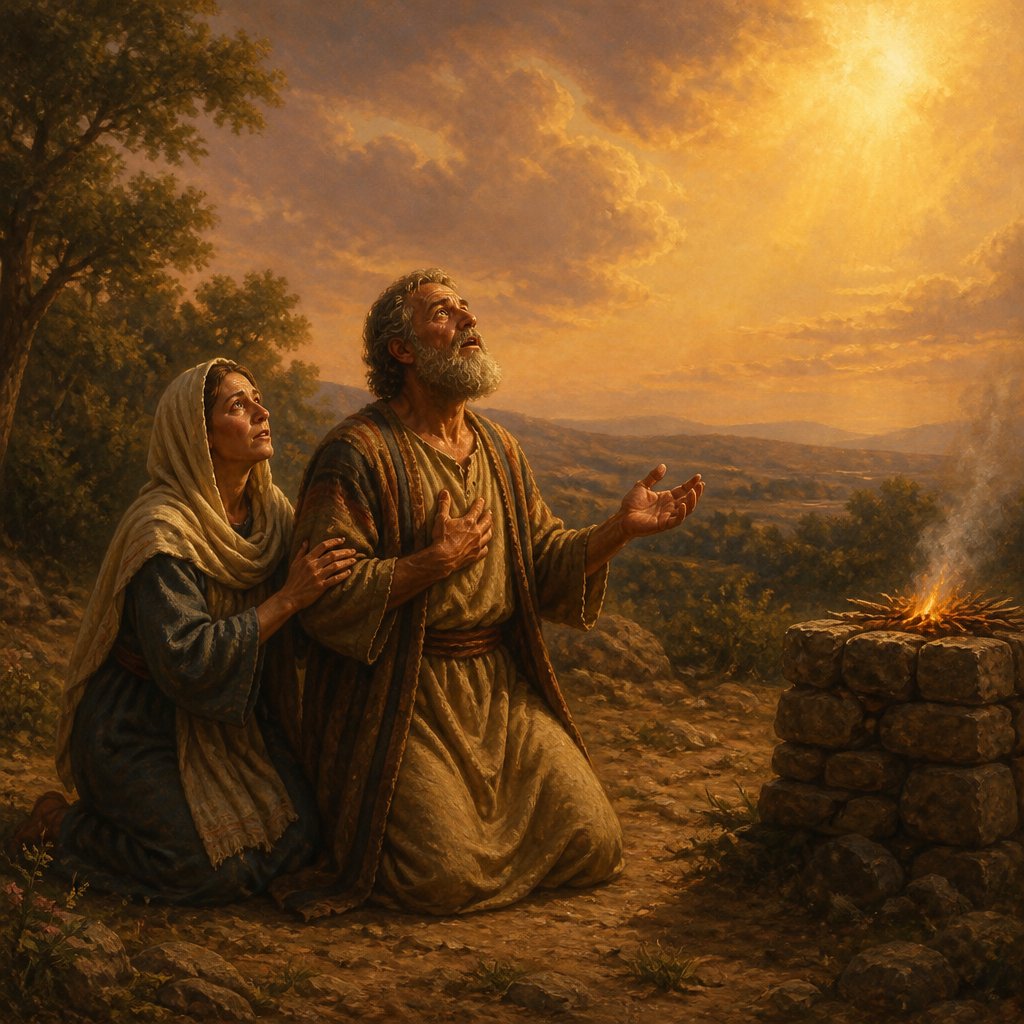
In Judges 13:22, we find an enthralling account of Manoah, the father of Samson, and his remarkable encounter with the Divine. The verse states, "And Manoah said unto his wife, We shall surely die, because we have seen God" (KJV). This illustrates a deeply profound moment in the narrative, revealing both the holiness of God and the human reaction to divine encounters.
To delve into this verse, we must first understand the context. Manoah and his wife had received a visit from an angel of the Lord who announced to them the forthcoming birth of their son, Samson, who was destined to deliver Israel from the hands of the Philistines. This declaration was not simply a chance encounter; it was laden with the tremendous importance of divine purpose and intervention in human history.
When Manoah realized that they had indeed encountered God, his immediate response was one of fear. The cultural and historical significance of this moment cannot be overstated. In the ancient Near Eastern context, seeing God was equated with imminent death—no human could look upon the face of God and live (Exodus 33:20). Manoah's reaction mirrors the universal human inclination to be struck by awe and dread when faced with the truth of God’s pure holiness. He understood that having been in the presence of the Almighty, they had experienced something incomprehensible. The encounter exposed his humanity, frailties, and the weight of the divine glory.
This moment sheds light on two fundamental aspects of God’s character: His holiness and His grace. First, God's holiness is absolute. It is the quality that sets Him apart from humanity. When we stand in the presence of perfect holiness, we are confronted with our imperfections. Manoah and his wife, in their moment of revelation, grasped this reality; they saw a glimpse of God’s glory and felt their unworthiness weigh heavily upon them. In our lives, we often fail to recognize the greatness and majesty of God. We underestimate the gap between our sinfulness and His holiness. Like Manoah, we may find ourselves paralyzed with fear when faced with the depth of our own transgressions against a holy God.
However, Manoah's statement also reflects a misunderstanding of God's nature and intention. While it is true that God's presence is convicting, the angelic visitor had not come to pronounce death but rather to bring life—a promise of a deliverer. This leads us to the second aspect of God’s character: His grace. God desires relationship and reconciliation rather than destruction. Despite the weighty consequences of human sin, God intervenes and makes a way for us to come into His presence. The narrative does not conclude with Manoah’s fear; rather, through deep reflection and dialogue with his wife, we see an eventual movement towards understanding God’s will. They realized that divine encounters, while formidable and challenging, are also opportunities for growth and grace.
As we meditate on Judges 13:22, we are invited to reflect on our own encounters with God. Are we overwhelmed with fear, fixating on our unworthiness and the chasm between us and the Almighty? Or do we see His grace entwined in the narrative of our lives? The challenge is to approach the throne of grace with reverence while also embracing the love that God has for us through Christ. He does not meet us with condemnation but rather with hope and the promise of transformation.
In conclusion, Manoah teaches us about the duality of fear and grace. May we come to understand that while a true encounter with God can evoke a healthy fear of His holiness, it also invites us into a beautiful relationship marked by His unending grace. Let us remember that seeing God should not lead us to despair, but rather to the awe-filled joy of development and transformation into His likeness.
Get our apps


Artwork for Judges 13:22

Judges 13:22 - "And Manoah said unto his wife, We shall surely die, because we have seen God."
"And Manoah said unto his wife, We shall surely die, because we have seen God." - Judges 13:22

Job 22:13 - "And thou sayest, How doth God know? can he judge through the dark cloud?"
"And thou sayest, How doth God know? can he judge through the dark cloud?" - Job 22:13

Judges 9:22 - "¶ When Abimelech had reigned three years over Israel,"

Judges 5:22 - "Then were the horsehoofs broken by the means of the pransings, the pransings of their mighty ones."

Judges 2:13 - "And they forsook the LORD, and served Baal and Ashtaroth."

Judges 13:13 - "And the angel of the LORD said unto Manoah, Of all that I said unto the woman let her beware."

Judges 12:13 - "¶ And after him Abdon the son of Hillel, a Pirathonite, judged Israel."

Judges 1:22 - "¶ And the house of Joseph, they also went up against Beth-el: and the LORD was with them."

Judges 16:22 - "Howbeit the hair of his head began to grow again after he was shaven."
2 Kings 23:22 - "Surely there was not holden such a passover from the days of the judges that judged Israel, nor in all the days of the kings of Israel, nor of the kings of Judah;"

Judges 18:13 - "And they passed thence unto mount Ephraim, and came unto the house of Micah."

Judges 8:13 - "¶ And Gideon the son of Joash returned from battle before the sun was up,"

Judges 13:3 make the Angel of the Lord male

Judges 11:22 - "And they possessed all the coasts of the Amorites, from Arnon even unto Jabbok, and from the wilderness even unto Jordan."

Genesis 22-13

Judges 13:25 - "And the Spirit of the LORD began to move him at times in the camp of Dan between Zorah and Eshtaol."

Ezekiel 22:2 - "Now, thou son of man, wilt thou judge, wilt thou judge the bloody city? yea, thou shalt shew her all her abominations."

Judges 2:22 - "That through them I may prove Israel, whether they will keep the way of the LORD to walk therein, as their fathers did keep it, or not."

Psalms 96:13 - "Before the LORD: for he cometh, for he cometh to judge the earth: he shall judge the world with righteousness, and the people with his truth."

Judges 13:2 - "¶ And there was a certain man of Zorah, of the family of the Danites, whose name was Manoah; and his wife was barren, and bare not."

"And they forsook the LORD, and served Baal and Ashtaroth." - Judges 2:13

Judges 13:24 - "¶ And the woman bare a son, and called his name Samson: and the child grew, and the LORD blessed him."

Exodus 22:9 - "For all manner of trespass, whether it be for ox, for ass, for sheep, for raiment, or for any manner of lost thing, which another challengeth to be his, the cause of both parties shall come before the judges; and whom the judges shall condemn, he shall pay double unto his neighbour."

Judges 20:22 - "And the people the men of Israel encouraged themselves, and set their battle again in array in the place where they put themselves in array the first day."

Judges 10:13 - "Yet ye have forsaken me, and served other gods: wherefore I will deliver you no more."

Judges 13:21 - "But the angel of the LORD did no more appear to Manoah and to his wife. Then Manoah knew that he was an angel of the LORD."

Romans 14:13 - "Let us not therefore judge one another any more: but judge this rather, that no man put a stumblingblock or an occasion to fall in his brother's way."

"¶ And after him Abdon the son of Hillel, a Pirathonite, judged Israel." - Judges 12:13