Called to Accountability: The Cry of the Children of Dan
“And they cried unto the children of Dan. And they turned their faces, and said unto Micah, What aileth thee, that thou comest with such a company?” — Judges 18:23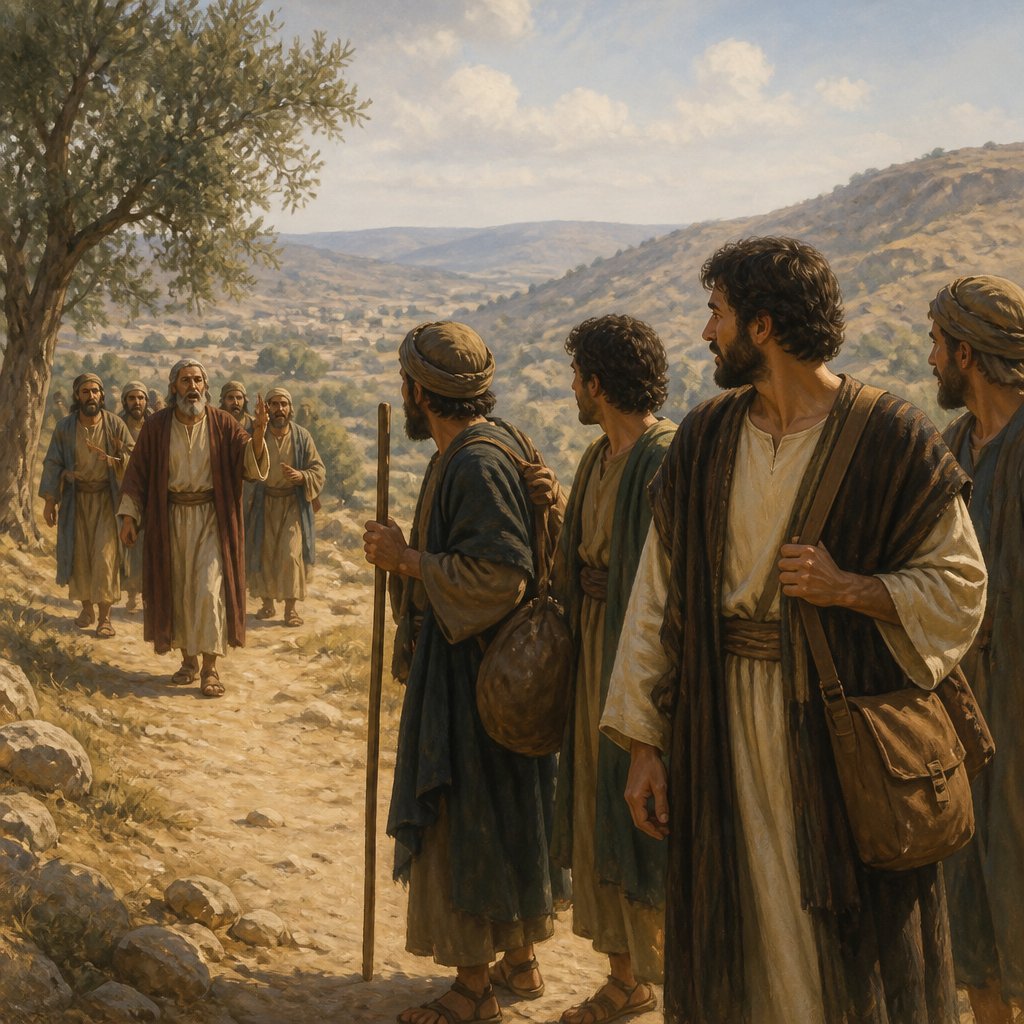
In Judges 18:23, we encounter a pivotal moment in the narrative of the Danites: "And they cried unto the children of Dan. And they turned their faces, and said unto Micah, What aileth thee, that thou comest with such a company?" This verse is rich with meaning, pointing to themes of accountability, community, and the significance of righteous relationships.
When we delve into the circumstances surrounding this encounter, we find the children of Dan, a tribe that was seeking to solidify their identity and territory amidst the chaos of the Israelite settlement in Canaan. Their journey reflects a quest for purpose and belonging that resonates deeply within ourselves. As they venture to capture a new inheritance, they encounter Micah, an individual whose story is intertwined with idolatry and spiritual corruption.
The phrase "they cried unto the children of Dan" signifies a call—a plea for accountability. Micah is confronted by the Danites, who, unaware of their shared responsibility, question his intentions. Their inquiry, "What aileth thee, that thou comest with such a company?" serves as a reminder that actions do not occur in isolation; they have rippling effects on the community and those who surround us. The question posed by the Danites encapsulates the essence of our journey as believers: to recognize our own roles within the broader tapestry of relationships.
Within our lives, it is essential to consider what we bring into our spaces. Are we contributing to the enrichment of our communities or perpetuating discord? Micah’s actions represent a departure from the covenant of God, indicating how easily one can fall into the trap of self-centeredness. In that moment, the Danites reflect a necessary aspect of accountability, prompting a critical examination of our motives and alignments. This interaction reminds us that accountability is not merely about enforcement but also about support and encouragement—it is about caring enough to ask others the difficult questions.
Furthermore, this scripture encourages us to consider the company we keep. The Danites were not just asking about Micah’s intent; they were recognizing the implications of his actions on their collective identity. In a world flooded with diverse ideologies and moral ambiguities, the beliefs we hold and the individuals we surround ourselves with shape the trajectory of our lives. The power of community, whether for good or for ill, cannot be understated. Like the Danites, we must examine how our associations may influence our faith journeys.
In addition, let us reflect on the broader implications of our choices. The cry of the children of Dan serves as a warning against the idolatries of our own lives—the distractions that pull us away from our devotion to God. Micah had built a household of idols, showing us the temptations we face as we live in a culture that often elevates material possessions and self-idolatry over spiritual truths. What might we be holding onto that detracts from our relationship with God? What are the standing idols in our lives against which we must cry out?
Finally, the scripture solicits introspection: are we fellow Danites in the mental space of our own communities, calling out to each other when we stray, or are we complacent with the status quo? True community allows us to gently point each other back to righteousness when we veer off the path. When we perceive our brother or sister wandering, like the Danites, we should feel compelled to inquire, "What aileth thee?" This inquiry reflects an act of love rather than judgment.
As we conclude, let us take to heart the cry of the children of Dan. May it inspire us to become voices of accountability within our own circles, to eliminate the idols that ensnare us, and to encourage one another on the narrow path as we seek to honor God in all that we do. Amen.
Get our apps


Artwork for Judges 18:23

Judges 18:23 - "And they cried unto the children of Dan. And they turned their faces, and said unto Micah, What aileth thee, that thou comest with such a company?"
"And they cried unto the children of Dan. And they turned their faces, and said unto Micah, What aileth thee, that thou comest with such a company?" - Judges 18:23

Isaiah 40:23 - "That bringeth the princes to nothing; he maketh the judges of the earth as vanity."

Judges 18:18 - "And these went into Micah's house, and fetched the carved image, the ephod, and the teraphim, and the molten image. Then said the priest unto them, What do ye?"

Judges 4:23 - "So God subdued on that day Jabin the king of Canaan before the children of Israel."

Judges 1:23 - "And the house of Joseph sent to descry Beth-el. (Now the name of the city before was Luz.)"

Judges 18:13 - "And they passed thence unto mount Ephraim, and came unto the house of Micah."

Judges 6:23 - "And the LORD said unto him, Peace be unto thee; fear not: thou shalt not die."

Genesis 23-18

Jeremiah 23:18

Judges 18: Micah’s Influence: A Spiritual Ripple Effect

Judges 3:23 - "Then Ehud went forth through the porch, and shut the doors of the parlour upon him, and locked them."

Judges 2:18 - "And when the LORD raised them up judges, then the LORD was with the judge, and delivered them out of the hand of their enemies all the days of the judge: for it repented the LORD because of their groanings by reason of them that oppressed them and vexed them."

Judges 18:21 - "So they turned and departed, and put the little ones and the cattle and the carriage before them."

2 Kings 23:22 - "Surely there was not holden such a passover from the days of the judges that judged Israel, nor in all the days of the kings of Israel, nor of the kings of Judah;"

Genesis 18-23

Exodus 18:26 - "And they judged the people at all seasons: the hard causes they brought unto Moses, but every small matter they judged themselves."

Judges 9:23 - "Then God sent an evil spirit between Abimelech and the men of Shechem; and the men of Shechem dealt treacherously with Abimelech:"

Judges 5:18 - "Zebulun and Naphtali were a people that jeoparded their lives unto the death in the high places of the field."

Joshua 18:23 - "And Avim, and Parah, and Ophrah,"

Matthew 18:23-34

Matthew 18:23-34

Matthew 18:23-34

Judges 18:20 - "And the priest's heart was glad, and he took the ephod, and the teraphim, and the graven image, and went in the midst of the people."

Judges 18:8 - "And they came unto their brethren to Zorah and Eshtaol: and their brethren said unto them, What say ye?"

Judges 1:18 - "Also Judah took Gaza with the coast thereof, and Askelon with the coast thereof, and Ekron with the coast thereof."

Judges 7:23 - "And the men of Israel gathered themselves together out of Naphtali, and out of Asher, and out of all Manasseh, and pursued after the Midianites."

Matthew 18:23-34

Judges 3:18 - "And when he had made an end to offer the present, he sent away the people that bare the present."

Judges 18:15 - "And they turned thitherward, and came to the house of the young man the Levite, even unto the house of Micah, and saluted him."