The Tent of Refuge: Lessons from Jael and Sisera
“Howbeit Sisera fled away on his feet to the tent of Jael the wife of Heber the Kenite: for there was peace between Jabin the king of Hazor and the house of Heber the Kenite.” — Judges 4:17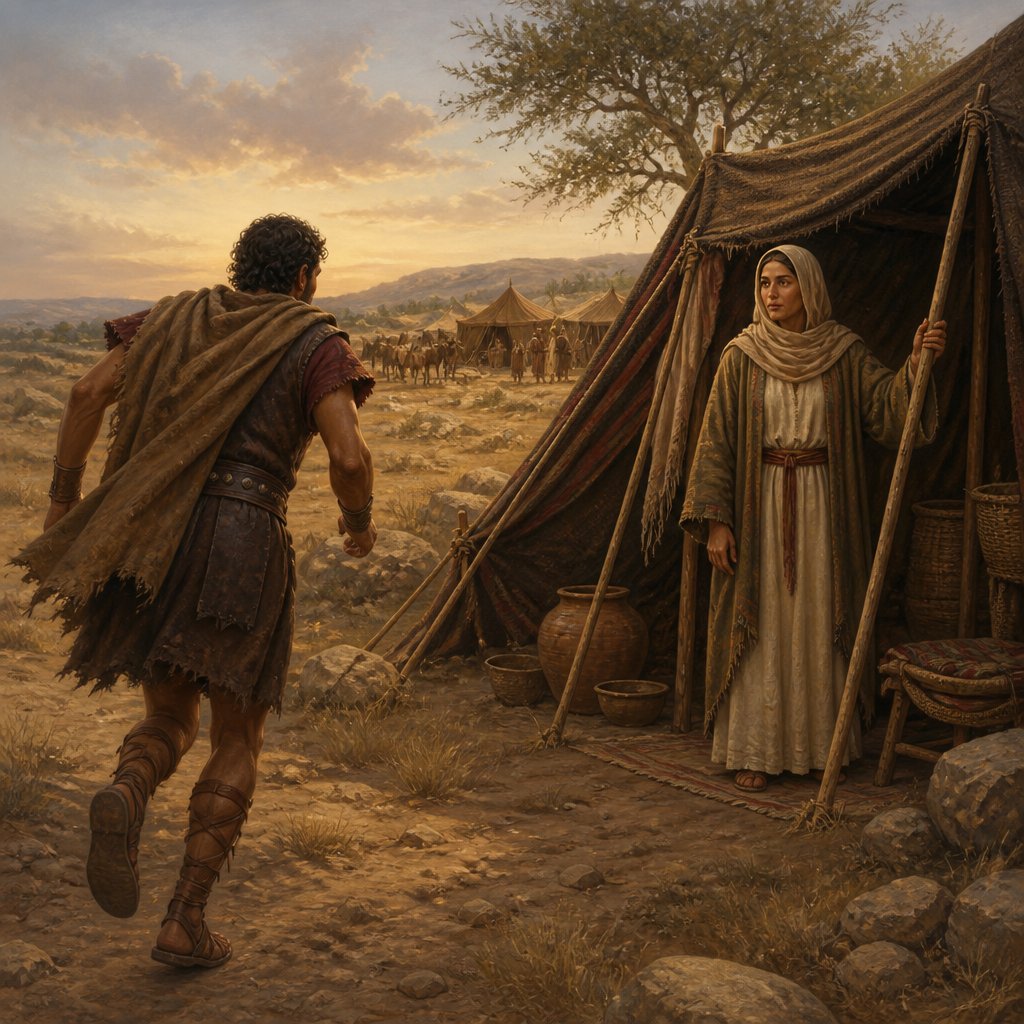
In the Book of Judges, we see a series of Israel’s ups and downs, a cycle of disobedience followed by oppression, and then deliverance through brave leaders. The narrative of Sisera fleeing to Jael’s tent in Judges 4:17, “Howbeit Sisera fled away on his feet to the tent of Jael the wife of Heber the Kenite: for there was peace between Jabin the king of Hazor and the house of Heber the Kenite,” serves as a remarkable testament to divine providence and the unexpected avenues through which God’s sovereignty manifests itself.
Sisera, the commander of Jabin's army, had been defeated by the forces of Barak and Deborah. Beaten and desperate, he fled for his life, seeking sanctuary in the tent of Jael. Sisera believed he had found a safe haven, given the relationship between his king and the Kenites. This single verse tells a complex story of political relationships, personal decisions, and the overarching will of God.
Jael is a fascinating character. As a woman in a time dominated by patriarchal norms, she exhibits uncommon courage and resourcefulness. She was not just a passive figure—her actions would lead to the swift end of Sisera’s reign of terror. Scripture, through the lens of the KJV, does not depict Jael as a mere bystander; instead, she is the instrument through which deliverance would come. This underlines an important principle: God can use anyone, regardless of societal status or identity, to fulfill His purposes.
In many ways, Sisera’s choice to trust Jael was his folly. He underestimated God’s plan for the Israelites and overestimated the loyalty of those seemingly at peace with him. Peace can be deceptive; it can sometimes mask deeper conflicts and the design of God’s deliverance. As Sisera rests in false security, we see a parallel to our own lives. How often do we find ourselves in situations where we feel safe yet are oblivious to the spiritual battles waging around us?
Jael’s tent becomes a critical focal point—a place of refuge that turns treacherous. It's important to understand the symbology of the tent. In biblical times, tents were places of hospitality and safety. They represented shelter from the outside world, yet this tent would betray and seal the fate of one who sought refuge. Just as Sisera did not recognize that he was entering a den of his enemies, we too can often misplace our trust, seeking comfort in false securities rather than relying on God’s truth.
When Sisera approached Jael, he was not only seeking physical safety; he sought peace. However, this peace was superficial due to his past sins against the Israelites, and it ultimately led him to destruction. It reminds us of the ultimate need for spiritual discernment—understanding the difference between worldly peace and the peace provided by God. The latter comes through repentance and alignment with His will, rather than through human alliances and expectations.
God's providence shone through Jael’s actions. She acted decisively, delivering a blow to Sisera that fulfilled God’s promise of victory. When we surrender to God's guidance, we may find ourselves in situations where we must act boldly and faithfully, as Jael did. The lesson here is that deliverance can come through unexpected means, and God’s plans often unfold in ways we cannot foresee.
As we reflect on Judges 4:17, let us be inspired by Jael’s courage, reminded of God’s sovereignty, and vigilant in seeking true peace in His presence. May we recognize the signs of divine intervention in our lives. Let us learn to discern between superficial securities that lead us away from God and His overarching plan that embraces all, offering profound and lasting peace. Thus, like Jael, we are called not only to be passive recipients of deliverance but to actively participate in God’s work in the world.
Get our apps


Artwork for Judges 4:17

Judges 4:17 - "Howbeit Sisera fled away on his feet to the tent of Jael the wife of Heber the Kenite: for there was peace between Jabin the king of Hazor and the house of Heber the Kenite."
"Howbeit Sisera fled away on his feet to the tent of Jael the wife of Heber the Kenite: for there was peace between Jabin the king of Hazor and the house of Heber the Kenite." - Judges 4:17

Judges 17:4 - "Yet he restored the money unto his mother; and his mother took two hundred shekels of silver, and gave them to the founder, who made thereof a graven image and a molten image: and they were in the house of Micah."

Judges 4:4

Judges 4:4 - "¶ And Deborah, a prophetess, the wife of Lapidoth, she judged Israel at that time."

Judges 17:1 - "And there was a man of mount Ephraim, whose name was Micah."

Job 12:17 - "He leadeth counsellors away spoiled, and maketh the judges fools."

Judges 8:17 - "And he beat down the tower of Penuel, and slew the men of the city."

Judges 21:17 - "And they said, There must be an inheritance for them that be escaped of Benjamin, that a tribe be not destroyed out of Israel."

Judges 17:12 - "And Micah consecrated the Levite; and the young man became his priest, and was in the house of Micah."

Judges 3:17 - "And he brought the present unto Eglon king of Moab: and Eglon was a very fat man."

Judges 17:11 - "And the Levite was content to dwell with the man; and the young man was unto him as one of his sons."

Judges 2:17 - "And yet they would not hearken unto their judges, but they went a whoring after other gods, and bowed themselves unto them: they turned quickly out of the way which their fathers walked in, obeying the commandments of the LORD; but they did not so."

Judges 4:4 - "¶ And Deborah, a prophetess, the wife of Lapidoth, she judged Israel at that time."

Judges 17:7 - "¶ And there was a young man out of Beth-lehem-judah of the family of Judah, who was a Levite, and he sojourned there."

"¶ And Deborah, a prophetess, the wife of Lapidoth, she judged Israel at that time." - Judges 4:4

Judges 17:6 - "In those days there was no king in Israel, but every man did that which was right in his own eyes."

James 2:4 - "Are ye not then partial in yourselves, and are become judges of evil thoughts?"

Judges 9:17 - "(For my father fought for you, and adventured his life far, and delivered you out of the hand of Midian:"

Judges 10:17 - "Then the children of Ammon were gathered together, and encamped in Gilead. And the children of Israel assembled themselves together, and encamped in Mizpeh."

"And there was a man of mount Ephraim, whose name was Micah." - Judges 17:1

Judges 4:15 – "The Lord routed Sisera and all his chariots and army by the sword."

Judges 1:17 - "And Judah went with Simeon his brother, and they slew the Canaanites that inhabited Zephath, and utterly destroyed it. And the name of the city was called Hormah."

Judges 17:13 - "Then said Micah, Now know I that the LORD will do me good, seeing I have a Levite to my priest."

Judges 4:12 - "And they shewed Sisera that Barak the son of Abinoam was gone up to mount Tabor."

Judges 17:5 - "And the man Micah had an house of gods, and made an ephod, and teraphim, and consecrated one of his sons, who became his priest."

Judges 5:17 - "Gilead abode beyond Jordan: and why did Dan remain in ships? Asher continued on the sea shore, and abode in his breaches."

Deuteronomy 19:17 - "Then both the men, between whom the controversy is, shall stand before the LORD, before the priests and the judges, which shall be in those days;"

Judges 20:17 - "And the men of Israel, beside Benjamin, were numbered four hundred thousand men that drew sword: all these were men of war."

Judges 4:23 - "So God subdued on that day Jabin the king of Canaan before the children of Israel."