The Danger of Comparison and Dissent
“And the men of Ephraim said unto him, Why hast thou served us thus, that thou calledst us not, when thou wentest to fight with the Midianites? And they did chide with him sharply.” — Judges 8:1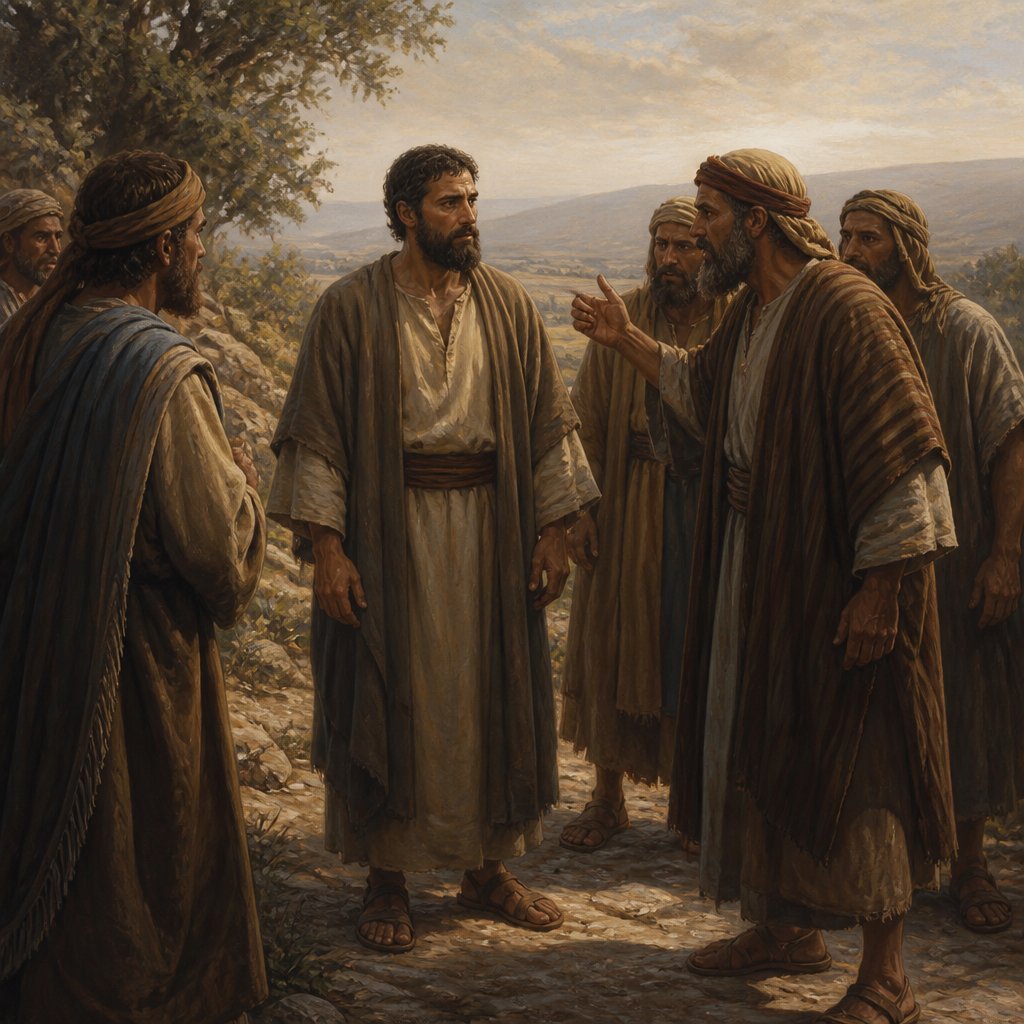
In Judges 8:1, we are drawn into a tense moment in the life of Gideon and the people of Israel, particularly the tribe of Ephraim. The verse states: "And the men of Ephraim said unto him, Why hast thou served us thus, that thou calledst us not, when thou wentest to fight with the Midianites? And they did chide with him sharply" (Judges 8:1, KJV). In this brief passage, we witness a critical lesson about the dynamics of leadership, the human propensity for comparison, and the dangers of dissent in community dynamics.
**Contextual Background**
To fully appreciate this interaction, we must understand the unfolding narrative. Gideon, chosen by God to lead Israel against the oppressive Midianites, had assembled a small army and witnessed divine victory against overwhelming odds. Yet, as we look at Judges 8:1, we see that not every tribe celebrated the triumph. The men of Ephraim felt excluded and voiced their dissatisfaction. Here, we are reminded that victories in God's name may not always unify every party involved; human emotions and perceptions can cloud judgment even in the wake of divine intervention.
**The Heart of Dissent**
The men of Ephraim's grievance reveals a common pitfall in communal faith journeys: the tendency towards comparison and dissatisfaction. They questioned Gideon about why he did not summon them for battle, implying that their omission from the conflict diminished their importance or contribution. This resentment led them to chide Gideon sharply. The spirit of comparison breeds disunity; instead of celebrating God’s victory, their focus shifted to their perceived exclusion, highlighting a profound instance of envy. How often do we find ourselves in similar situations? Rather than rejoicing in others’ successes, we might brood over our perceived neglect or insignificance.
**Lessons in Leadership**
Gideon’s leadership also comes into focus here; effective leaders must not only guide through action but also by communication and inclusion. Though his intentions were perhaps noble, acknowledging the contributions of all tribes could have fostered unity rather than strife. Leaders today, whether in the church, workplace, or home, are encouraged to communicate clearly and ensure that everyone involved feels valued. Gideon could have reached out to Ephraim beforehand, alleviating their discontent and promoting harmony.
**God’s Sovereignty Amidst Division**
Despite the harsh tone of Ephraim's criticism, it is important to remember the overarching narrative of God’s sovereignty and grace. God’s plan unfolded in spite of human flaws. Gideon did not allow the dissent to deter him, and he chose to respond with humility rather than defensiveness. His subsequent dialogue with them demonstrates an essential biblical principle: the power of gentle answers. Gideon’s calm and measured response diffuses the tension, illustrating that humility in leadership can de-escalate conflict. Instead of retaliating, Gideon redirected their attention back to God’s work and the great victory that had been accomplished—the spoils of war defined by God’s greatness rather than human recognition.
**Reflection and Application**
As we reflect on Judges 8:1, let us ask ourselves: Are we falling into the trap of comparison? Do we chide others when we feel overlooked? Are we acting in humility, recognizing that every member of the Body of Christ plays a significant role, whether seen or unseen? In moments of discord, let us be reminded of Gideon’s response. We, too, must strive for unity and understanding, recognizing that every victory in the Kingdom belongs to God and His purpose, not just to individual tribes or leaders.
The danger of comparison and dissent is ever-present, but with prayerful humility and community spirit, we can cultivate a church filled with harmony, thanksgiving, and collective joy in the victories that our God accomplishes through each and every one of us.
Get our apps


Artwork for Judges 8:1

Judges 8:1 - "And the men of Ephraim said unto him, Why hast thou served us thus, that thou calledst us not, when thou wentest to fight with the Midianites? And they did chide with him sharply."
"And the men of Ephraim said unto him, Why hast thou served us thus, that thou calledst us not, when thou wentest to fight with the Midianites? And they did chide with him sharply." - Judges 8:1

1 Samuel 8:1 - "And it came to pass, when Samuel was old, that he made his sons judges over Israel."

1 Samuel 8:2 - "Now the name of his firstborn was Joel; and the name of his second, Abiah: they were judges in Beer-sheba."

Judges 1:8 - "Now the children of Judah had fought against Jerusalem, and had taken it, and smitten it with the edge of the sword, and set the city on fire."
1 Samuel 8:1 - "And it came to pass, when Samuel was old, that he made his sons judges over Israel."

Judges 9:8-15

1 Samuel 8:6 - "¶ But the thing displeased Samuel, when they said, Give us a king to judge us. And Samuel prayed unto the LORD."

John 8:15 - "Ye judge after the flesh; I judge no man."

"And it came to pass, when Samuel was old, that he made his sons judges over Israel." - 1 Samuel 8:1

Judges 12:8 - "¶ And after him Ibzan of Beth-lehem judged Israel."

Judges 1:18 - "Also Judah took Gaza with the coast thereof, and Askelon with the coast thereof, and Ekron with the coast thereof."

1 Samuel 8:20 - "That we also may be like all the nations; and that our king may judge us, and go out before us, and fight our battles."

Judges 8:17 - "And he beat down the tower of Penuel, and slew the men of the city."

Judges 8:29 - "And Jerubbaal the son of Joash went and dwelt in his own house."

Proverbs 8:16 - "By me princes rule, and nobles, even all the judges of the earth."

Judges 8:13 - "¶ And Gideon the son of Joash returned from battle before the sun was up,"

Judges 8:8 - "¶ And he went up thence to Penuel, and spake unto them likewise: and the men of Penuel answered him as the men of Succoth had answered him."

1 Samuel 8:5 - "And said unto him, Behold, thou art old, and thy sons walk not in thy ways: now make us a king to judge us like all the nations."

Psalms 7:8 - "The LORD shall judge the people: judge me, O LORD, according to my righteousness, and according to mine integrity that is in me."

Judges 2:8 - "And Joshua the son of Nun, the servant of the LORD, died, being an hundred and ten years old."

1 Kings 8:32 - "Then hear thou in heaven, and do, and judge thy servants, condemning the wicked, to bring his way upon his head; and justifying the righteous, to give him according to his righteousness."

"Now the name of his firstborn was Joel; and the name of his second, Abiah: they were judges in Beer-sheba." - 1 Samuel 8:2

Gideon's ephod in Judges 8:29 and peoplw worshipping him

"¶ And after him Ibzan of Beth-lehem judged Israel." - Judges 12:8

Judges 18:8 - "And they came unto their brethren to Zorah and Eshtaol: and their brethren said unto them, What say ye?"

"Ye judge after the flesh; I judge no man." - John 8:15

Judges 8:30 - "And Gideon had threescore and ten sons of his body begotten: for he had many wives."

Judges 5:8 - "They chose new gods; then was war in the gates: was there a shield or spear seen among forty thousand in Israel?"

Judges 8:16 - "And he took the elders of the city, and thorns of the wilderness and briers, and with them he taught the men of Succoth."