The Weight of Responsibility: A Reflection on Judges 9:5
“And he went unto his father’s house at Ophrah, and slew his brethren the sons of Jerubbaal, being threescore and ten persons, upon one stone: notwithstanding yet Jotham the youngest son of Jerubbaal was left; for he hid himself.” — Judges 9:5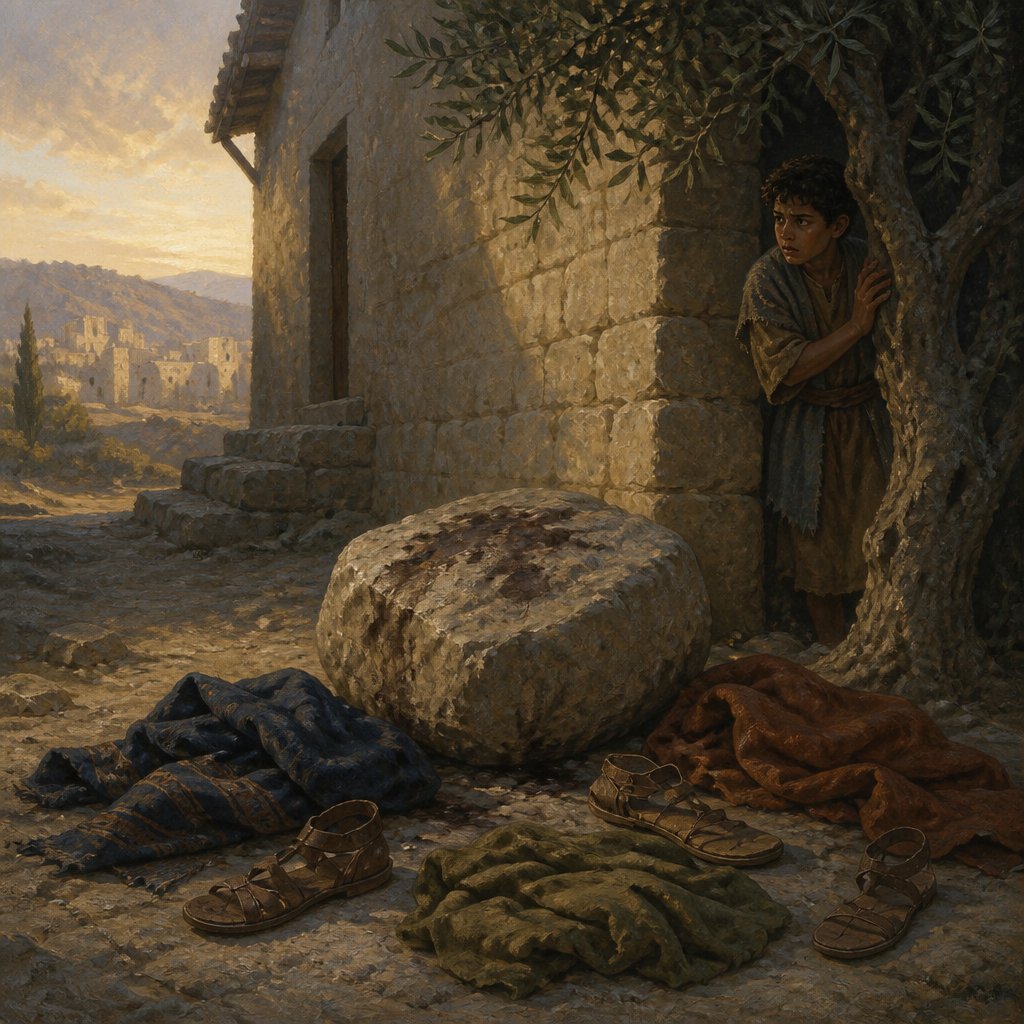
The narrative found in Judges 9:5 paints a harrowing picture of betrayal and violence within a family. It reads: "And he went unto his father's house at Ophrah, and slew his brethren the sons of Jerubbaal, being threescore and ten persons, upon one stone: notwithstanding yet Jotham the youngest son of Jerubbaal was left; for he hid himself." This verse is not just a historical account; it serves as a profound warning and an invitation to reflection about morality, consequences, and the weight of our choices.
In Judges, Gideon, also known as Jerubbaal, had been a judge in Israel who led his people to victory against the Midianites. He had seventy sons, a symbol of his legacy and strength. However, after his death, the dynamics of leadership and family took a dark turn as one of his sons, Abimelech, grasps for power in a ruthless manner. His ambition results in an unspeakable atrocity; he murders all his brothers, save for Jotham, the youngest, who escapes.
The act of killing one's own siblings is almost unimaginable, highlighting the depths of human depravity. Abimelech’s heinous action reflects a deeper issue than mere ambition; it emphasizes how power can corrupt and lead individuals to betray their most fundamental relationships. Jealousy, pride, and the relentless pursuit of authority can blind an individual to the sanctity of family bonds. Abimelech’s violent quest for power disrupts the family structure, illustrating how external desires can result in internal destruction.
Moreover, the phrase "upon one stone" should resonate deeply with the reader. It implies a singular act of execution that was methodical and intentional. While the image of the stone signifies a simple, dark tool of execution, metaphorically, it reveals how one decisive choice can set in motion a cascade of devastating consequences. Each stone laid in a life of betrayal builds a tomb for one's own humanity. Abimelech’s action not only brought destruction upon his brothers but ultimately laid the groundwork for his own tragic downfall.
In contrast, Jotham—the youngest son—responds differently. He hides. While this may seem like an act of cowardice, it can also be seen as wisdom and precaution. Jotham’s instinct to preserve his life amidst chaos prompts us to consider the instinct of survival and the careful discernment in the face of malevolence. For Jotham, self-preservation during such treachery is not an admission of weakness; rather, it indicates an awareness of the severity of evil he confronted.
As we reflect on this passage, it is essential to understand the importance of our choices. Every decision we make—even seemingly small ones—can lead to unforeseen consequences. Just as Abimelech’s ambition led to familial slaughter, our actions can impact the lives of those around us. The scripture warns us that while the pursuit of power or treasures can seem alluring, it is often fraught with peril and may lead to moral decay.
In our modern world, where ambition often supersedes morality, we are reminded of the necessity to govern our hearts and desires diligently. True leadership and strength lie not in the iron grip of control but in the inclusive embrace of love, compassion, and understanding. Jotham, having witnessed the carnage and survived it, may very well serve as a symbol of hope—reminding us that even in the face of betrayal, there is an opportunity for resilience and rebirth.
As we meditate on Judges 9:5, let us pray for wisdom to navigate the complexities of our relationships and to avoid the pitfalls that can lead to destruction. May we seek a heart of discernment that recognizes the value of family, community, and integrity, viewing every stone we lay as potential builders of a bright future rather than destructive legacies.
Get our apps


Artwork for Judges 9:5

Judges 9:5 - "And he went unto his father's house at Ophrah, and slew his brethren the sons of Jerubbaal, being threescore and ten persons, upon one stone: notwithstanding yet Jotham the youngest son of Jerubbaal was left; for he hid himself."
"And he went unto his father's house at Ophrah, and slew his brethren the sons of Jerubbaal, being threescore and ten persons, upon one stone: notwithstanding yet Jotham the youngest son of Jerubbaal was left; for he hid himself." - Judges 9:5

Judges 5:9 - "My heart is toward the governors of Israel, that offered themselves willingly among the people. Bless ye the LORD."

James 5:9 - "Grudge not one against another, brethren, lest ye be condemned: behold, the judge standeth before the door."
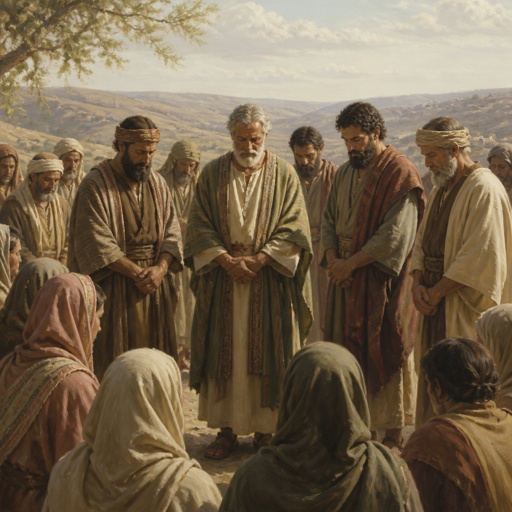
"My heart is toward the governors of Israel, that offered themselves willingly among the people. Bless ye the LORD." - Judges 5:9

Judges 5:7

Judges 9:8-15

Judges 10:5 - "And Jair died, and was buried in Camon."

Judges 5:5 - "The mountains melted from before the LORD, even that Sinai from before the LORD God of Israel."

Judges 9:50 - "¶ Then went Abimelech to Thebez, and encamped against Thebez, and took it."
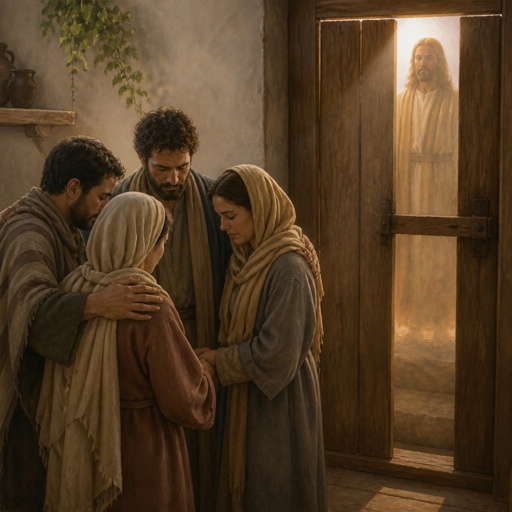
"Grudge not one against another, brethren, lest ye be condemned: behold, the judge standeth before the door." - James 5:9

Judges 5:1 - "Then sang Deborah and Barak the son of Abinoam on that day, saying,"

Judges 2:5 - "And they called the name of that place Bochim: and they sacrificed there unto the LORD."

Judges 9:22 - "¶ When Abimelech had reigned three years over Israel,"

Judges 15:9 - "¶ Then the Philistines went up, and pitched in Judah, and spread themselves in Lehi."

Judges 9:39 - "And Gaal went out before the men of Shechem, and fought with Abimelech."

Judges 5:20 - "They fought from heaven; the stars in their courses fought against Sisera."

Judges 21:9 - "For the people were numbered, and, behold, there were none of the inhabitants of Jabesh-gilead there."

Judges 5:22 - "Then were the horsehoofs broken by the means of the pransings, the pransings of their mighty ones."

Judges 9:10 - "And the trees said to the fig tree, Come thou, and reign over us."

Judges 9:42 - "And it came to pass on the morrow, that the people went out into the field; and they told Abimelech."

Judges 9:12 - "Then said the trees unto the vine, Come thou, and reign over us."

Judges 9:47 - "And it was told Abimelech, that all the men of the tower of Shechem were gathered together."

Psalms 98:9 - "Before the LORD; for he cometh to judge the earth: with righteousness shall he judge the world, and the people with equity."

Judges 9:9 - "But the olive tree said unto them, Should I leave my fatness, wherewith by me they honour God and man, and go to be promoted over the trees?"

Judges 9:32 - "Now therefore up by night, thou and the people that is with thee, and lie in wait in the field:"

Judges 9:14 - "Then said all the trees unto the bramble, Come thou, and reign over us."

"And Jair died, and was buried in Camon." - Judges 10:5

Judges 9:46 - "¶ And when all the men of the tower of Shechem heard that, they entered into an hold of the house of the god Berith."

Judges 5:29 - "Her wise ladies answered her, yea, she returned answer to herself,"