The Authority of the Underdog: Lessons from the Millstone
“And a certain woman cast a piece of a millstone upon Abimelech’s head, and all to brake his skull.” — Judges 9:53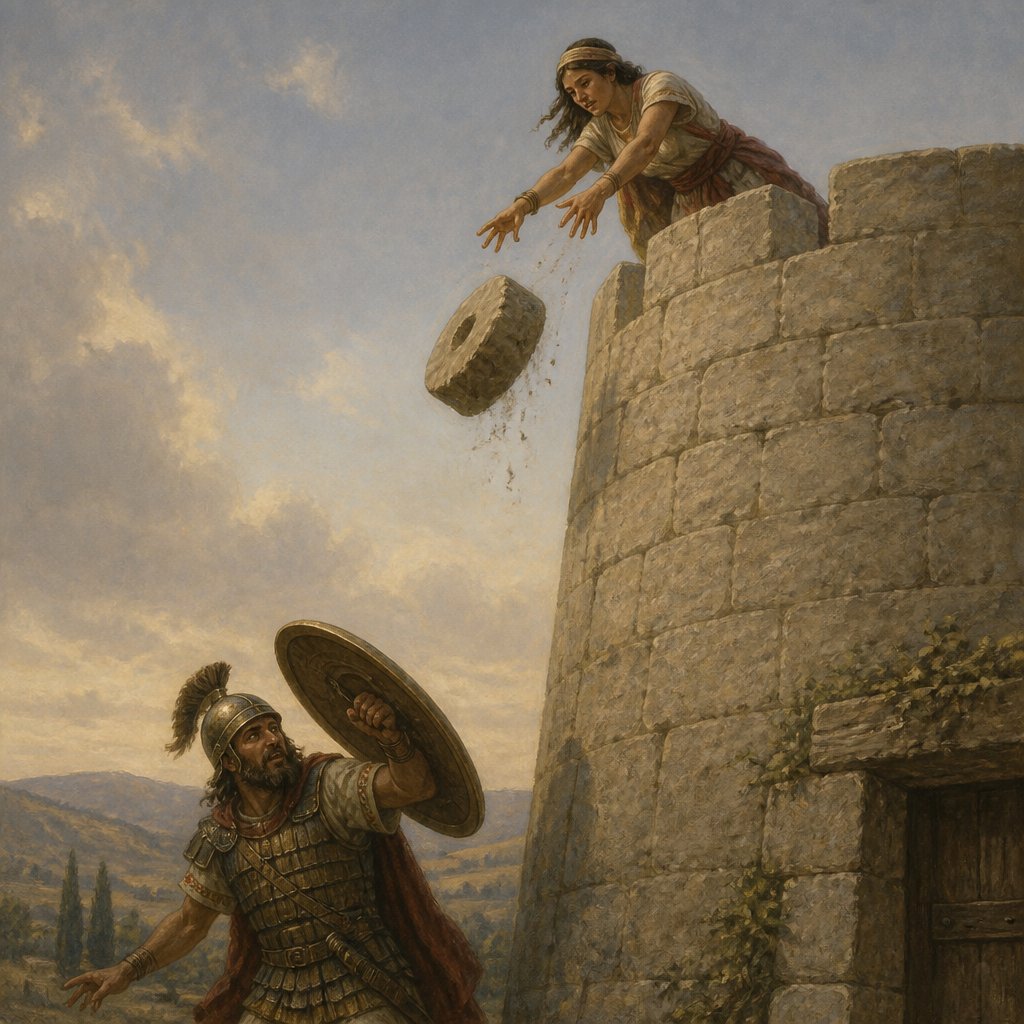
Judges 9:53 recounts a striking moment in the narrative of Abimelech, a self-proclaimed king who sought power at a great cost. The verse reads: "And a certain woman cast a piece of a millstone upon Abimelech's head, and all to brake his skull." This imagery is powerful, yet startling. The cast of a millstone—a heavy and significant tool of the everyday—becomes a weapon in the hands of a nameless woman. What can we learn from this moment, and how might it speak to our lives today?
First, let us consider the context. Abimelech, the son of Gideon, has embarked on a bloody campaign to secure his reign. He has killed his seventy brothers, claiming the throne through political and physical violence. He represents human ambition devoid of divine justice. The woman who casts the millstone—that nameless figure—encounters a leader who seemingly wields all authority. Yet, in a moment of desperation, she turns the very tools of homemaking into an instrument of justice.
We must realize that the story holds a mirror to our own perceptions of power and authority. Often, we feel small and insignificant when faced with giants—be it in our workplaces, communities, or even within our families. Abimelech typifies those giants: the powerful, the corrupt, who seem beyond the reach of challenge. Yet this woman, armed with a millstone, was not paralyzed by her circumstances; she claimed her space in history through an act of defiance.
The millstone can symbolize various meaningful points. First, it is a tool of labor, representing the work and struggle of the everyday person. It is not a sword or a spear; it is a weighty reminder of the burdens we carry in our lives. When we look at our own trials—financial struggles, health issues, relational conflicts—we might feel overwhelmed. Yet, this woman demonstrates that even the tools of our toil can be transformed into means for resistance against oppression. Our burdens can serve a purpose, leading us not only to fight back but also to bring about change.
Second, the act of casting the millstone signifies hope and courage. The woman could have chosen passivity or despair in the face of Abimelech's relentless evil. Instead, she chose a bold action that changed the course of her narrative. In contrast, we often cling to passivity, waiting for deliverance while believing our actions are futile. But God calls us to be agents in our stories, to recognize that He can work through our small choices. Sometimes, all it takes is a moment of courage to make a significant impact. An act of defiance that the world may overlook can reverberate through time.
Moreover, we find profound spiritual lessons herein. Abimelech’s downfall came not from the might of an army but from a simple act of defiance—the unwillingness to accept tyranny. As believers, we are assured that God is interested in the actions of the so-called ‘least’ amongst us, reminding us in 1 Corinthians 1:27 (KJV), "But God hath chosen the foolish things of the world to confound the wise; and God hath chosen the weak things of the world to confound the things which are mighty."
In conclusion, this story impels us to acknowledge the power and authority that lie within us, regardless of our status or strength. Like the woman with the millstone, we are invited to utilize our circumstances, our struggles, and our faith to make a stand against injustices that permeate our lives and the world around us. Let us remember that though we may feel like underdogs, we are never truly powerless. In God, every small action holds the potential for monumental change, and every one of us has a part to play in the unfolding of His divine purposes.
Get our apps


Artwork for Judges 9:53

Judges 9:53 - "And a certain woman cast a piece of a millstone upon Abimelech's head, and all to brake his skull."
"And a certain woman cast a piece of a millstone upon Abimelech's head, and all to brake his skull." - Judges 9:53

Genesis 31:53 - "The God of Abraham, and the God of Nahor, the God of their father, judge betwixt us. And Jacob sware by the fear of his father Isaac."

Luke 9:53 - "And they did not receive him, because his face was as though he would go to Jerusalem."

Isaiah 53:9 - "And he made his grave with the wicked, and with the rich in his death; because he had done no violence, neither was any deceit in his mouth."

Judges 9:8-15

"And they did not receive him, because his face was as though he would go to Jerusalem." - Luke 9:53
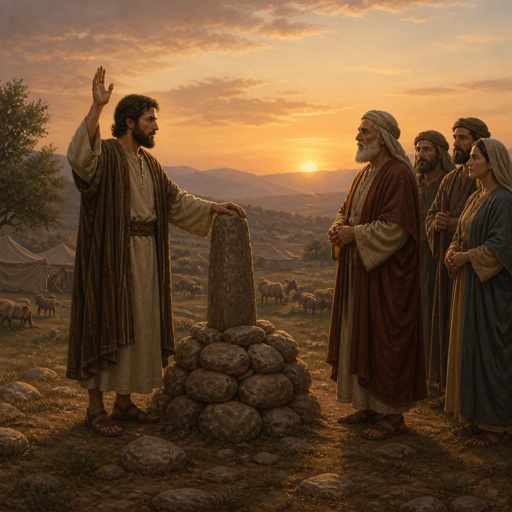
"The God of Abraham, and the God of Nahor, the God of their father, judge betwixt us. And Jacob sware by the fear of his father Isaac." - Genesis 31:53

Judges 9:50 - "¶ Then went Abimelech to Thebez, and encamped against Thebez, and took it."

Judges 9:22 - "¶ When Abimelech had reigned three years over Israel,"

Judges 15:9 - "¶ Then the Philistines went up, and pitched in Judah, and spread themselves in Lehi."

Judges 9:39 - "And Gaal went out before the men of Shechem, and fought with Abimelech."

Judges 21:9 - "For the people were numbered, and, behold, there were none of the inhabitants of Jabesh-gilead there."

Judges 9:10 - "And the trees said to the fig tree, Come thou, and reign over us."

Judges 9:42 - "And it came to pass on the morrow, that the people went out into the field; and they told Abimelech."

Judges 9:12 - "Then said the trees unto the vine, Come thou, and reign over us."

Judges 9:47 - "And it was told Abimelech, that all the men of the tower of Shechem were gathered together."

Psalms 98:9 - "Before the LORD; for he cometh to judge the earth: with righteousness shall he judge the world, and the people with equity."

Judges 9:9 - "But the olive tree said unto them, Should I leave my fatness, wherewith by me they honour God and man, and go to be promoted over the trees?"

Judges 9:32 - "Now therefore up by night, thou and the people that is with thee, and lie in wait in the field:"

Judges 9:14 - "Then said all the trees unto the bramble, Come thou, and reign over us."

Judges 9:46 - "¶ And when all the men of the tower of Shechem heard that, they entered into an hold of the house of the god Berith."

Judges 9:21 - "And Jotham ran away, and fled, and went to Beer, and dwelt there, for fear of Abimelech his brother."

Judges 9:30 - "¶ And when Zebul the ruler of the city heard the words of Gaal the son of Ebed, his anger was kindled."

Job 9:24 - "The earth is given into the hand of the wicked: he covereth the faces of the judges thereof; if not, where, and who is he?"

Judges 1:9 - "¶ And afterward the children of Judah went down to fight against the Canaanites, that dwelt in the mountain, and in the south, and in the valley."

Judges 9:41 - "And Abimelech dwelt at Arumah: and Zebul thrust out Gaal and his brethren, that they should not dwell in Shechem."

Judges 9:55 - "And when the men of Israel saw that Abimelech was dead, they departed every man unto his place."

Judges 20:9 - "But now this shall be the thing which we will do to Gibeah; we will go up by lot against it;"

Judges 9:52 - "And Abimelech came unto the tower, and fought against it, and went hard unto the door of the tower to burn it with fire."