Restoration from Desolation: A Journey Through Lamentations 1:10
“The adversary hath spread out his hand upon all her pleasant things: for she hath seen that the heathen entered into her sanctuary, whom thou didst command that they should not enter into thy congregation.” — Lamentations 1:10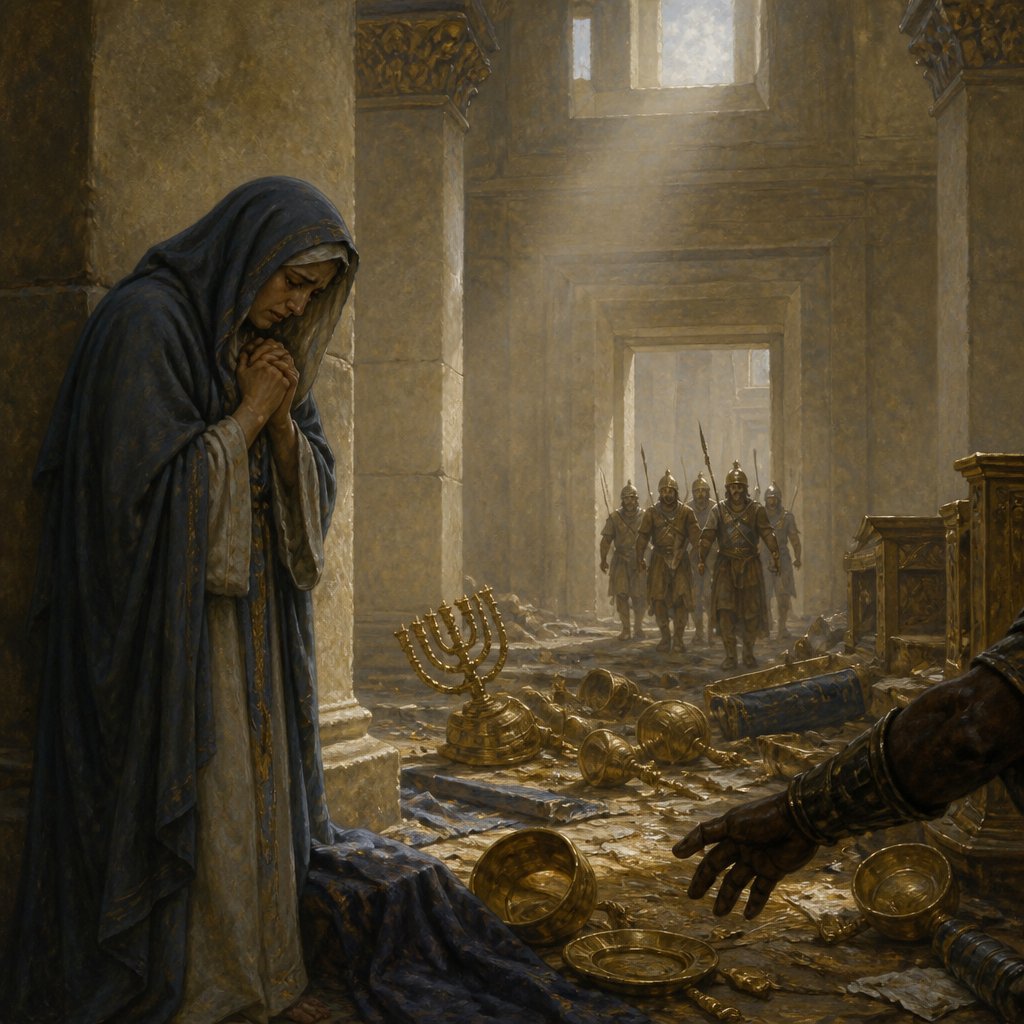
The book of Lamentations is a poignant collection of poetic laments expressing grief over the destruction of Jerusalem and the depths of suffering experienced by the people due to their disobedience to God. Lamentations 1:10 specifically highlights a painful reality: "The adversary hath spread out his hand upon all her pleasant things: for she hath seen that the heathen entered into her sanctuary, whom thou didst command that they should not enter into thy congregation." This verse encapsulates a scene of desolation, powerlessness, and poignant loss, and it offers rich insight for reflection and devotion.
In the context of Lamentations, the adversary refers to the invading nations that laid waste to Jerusalem, an embodiment of chaos and ruin that led to the desecration of what was once sacred. This imagery serves as a powerful reminder of the consequences of turning away from God and allowing our spiritual lives to be infiltrated by external forces. The reference to the pleasant things represents the blessings, the beauty of worship, the joy of God's presence which had been stripped away, leaving behind an aching void.
As we meditate on this verse, we must first confront the reality of adversarial forces in our own lives. These adversaries can take many forms: sin, temptation, apathy, or distractions that draw our focus away from God. They infiltrate our sanctuaries, those sacred spaces in our hearts and lives, which should be devoted to God's glory and worship. How often do we neglect our spiritual lives, allowing 'heathen' influences to enter? It could be through the media we consume, the company we keep, or the values that we adopt. Like Jerusalem, we may find ourselves in places we ought not to be, witnessing the desecration of our spiritual sanctuaries.
Furthermore, this verse illuminates the absence of God's intended order. The sanctuary was a place designated for worship, for communion with God, a divine command that the heathen should not breach. This command was rooted in the desire for holiness, for God created boundaries not to confine us, but to protect and bless us. Every breach signals a potential for chaos and disorder in our lives, leading to spiritual death and loss of identity. The pain articulated in this verse is not merely historical; it resonates deeply with our daily lives as we face potential breaches in our own sanctuaries that can lead to a loss of joy, peace, and presence of God.
Yet, within this lament lies the hope of restoration. Understanding the depth of our loss beckons us toward profound reflection and a sincere return to God. Lamentations shows the power of recognizing the consequences of our choices and the divine invitation to repentance. As the adversary has spread his hand seeking to bring desolation, so too does God extend His hand towards us, inviting us to restore what has been lost. We are never outside the reach of God’s mercy.
As you ponder this verse, take time to meditate on the areas of your life where the adversary may have spread his influence. Where might you need to reclaim your sanctuaries? What pleasant things need restoration? This is the call to action: to guard our hearts, to rebuild the walls that have been torn down by neglect or rebellion, and to seek God’s presence in all its fullness.
Let us respond to this moment, embracing both the sadness of loss and the hope of a future redeemed. May we remember that despite the adversary’s schemes, our God remains sovereign, ever ready to restore what was lost. Like the faithful remnant in Jerusalem, may we rise up to rebuild our sanctuaries with the assurance that God’s grace is sufficient. Let us, therefore, commit to actively cultivate our relationship with Him and cherish the delightful blessings He has poured into our lives.
Get our apps


Artwork for Lamentations 1:10

Lamentations 1:10 - "The adversary hath spread out his hand upon all her pleasant things: for she hath seen that the heathen entered into her sanctuary, whom thou didst command that they should not enter into thy congregation."
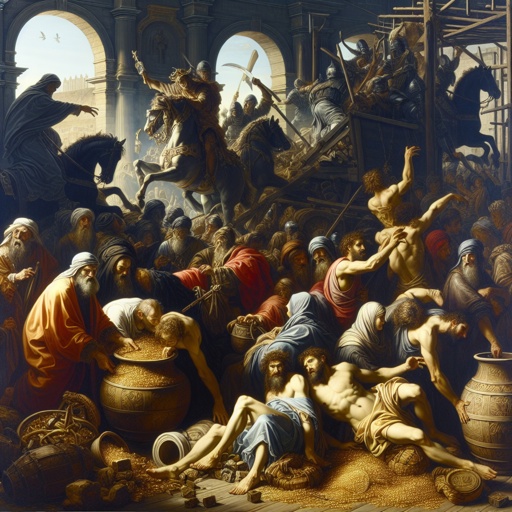
Lamentations 1:10 The enemy laid hands on all her treasures; she saw pagan nations enter her sanctuary— those you had forbidden to enter your assembly.

Lamentations 1:10 The enemy laid hands on all her treasures; she saw pagan nations enter her sanctuary— those you had forbidden to enter your assembly.

Lamentations 1:10 The enemy laid hands on all her treasures; she saw pagan nations enter her sanctuary— those you had forbidden to enter your assembly.
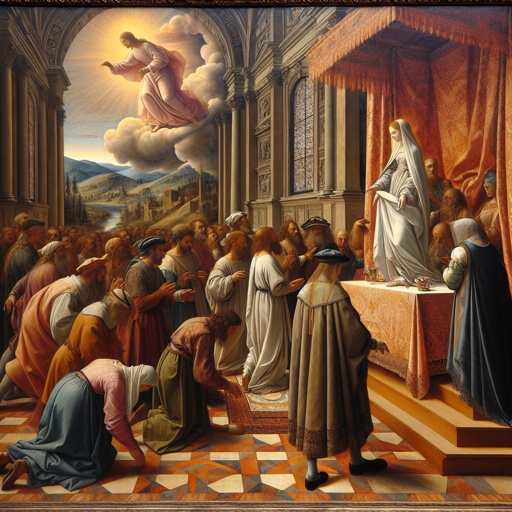
Lamentations 1:10 The enemy laid hands on all her treasures; she saw pagan nations enter her sanctuary— those you had forbidden to enter your assembly.
"The adversary hath spread out his hand upon all her pleasant things: for she hath seen that the heathen entered into her sanctuary, whom thou didst command that they should not enter into thy congregation." - Lamentations 1:10

Lamentations 5:10 - "Our skin was black like an oven because of the terrible famine."

Lamentations 3:10 - "He was unto me as a bear lying in wait, and as a lion in secret places."

Lamentations 2:1

Lamentations 2:1

Lamentations 2:1

Lamentations 3:1-18

Lamentations 3:13

Ezekiel 2:10 - "And he spread it before me; and it was written within and without: and there was written therein lamentations, and mourning, and woe."

Lamentations 4:10 - "The hands of the pitiful women have sodden their own children: they were their meat in the destruction of the daughter of my people."
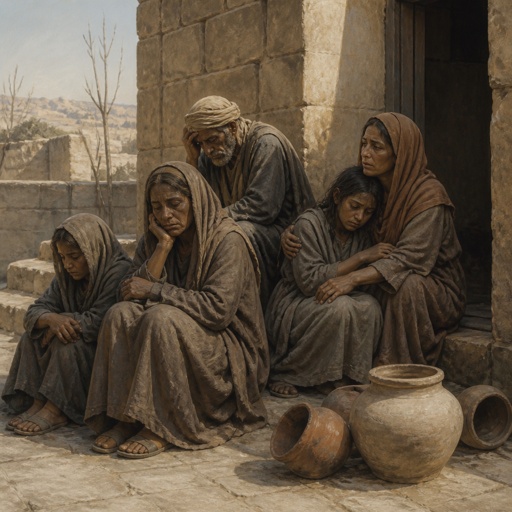
"Our skin was black like an oven because of the terrible famine." - Lamentations 5:10

"He was unto me as a bear lying in wait, and as a lion in secret places." - Lamentations 3:10

Lamentations 3:1 - "I am the man that hath seen affliction by the rod of his wrath."

Lamentations 5:1 - "Remember, O LORD, what is come upon us: consider, and behold our reproach."

Lamentations 1:1 How deserted lies the city, once so full of people!

Lamentations 1:1 How deserted lies the city, once so full of people!

Lamentations 1:1 How deserted lies the city, once so full of people!

Ezekiel 19:1 - "Moreover take thou up a lamentation for the princes of Israel,"

Lamentations 1:1 How deserted lies the city, once so full of people!

Genesis 50:10 - "And they came to the threshingfloor of Atad, which is beyond Jordan, and there they mourned with a great and very sore lamentation: and he made a mourning for his father seven days."

Lamentations 1:1 How deserted lies the city, once so full of people!

Lamentations 1:1 How deserted lies the city, once so full of people!

Lamentations 2:10 - "The elders of the daughter of Zion sit upon the ground, and keep silence: they have cast up dust upon their heads; they have girded themselves with sackcloth: the virgins of Jerusalem hang down their heads to the ground."

"And he spread it before me; and it was written within and without: and there was written therein lamentations, and mourning, and woe." - Ezekiel 2:10

2 Samuel 1:17 - "¶ And David lamented with this lamentation over Saul and over Jonathan his son:"