When the Bow is Bent: Understanding God’s Discipline
“He hath bent his bow like an enemy: he stood with his right hand as an adversary, and slew all that were pleasant to the eye in the tabernacle of the daughter of Zion: he poured out his fury like fire.” — Lamentations 2:4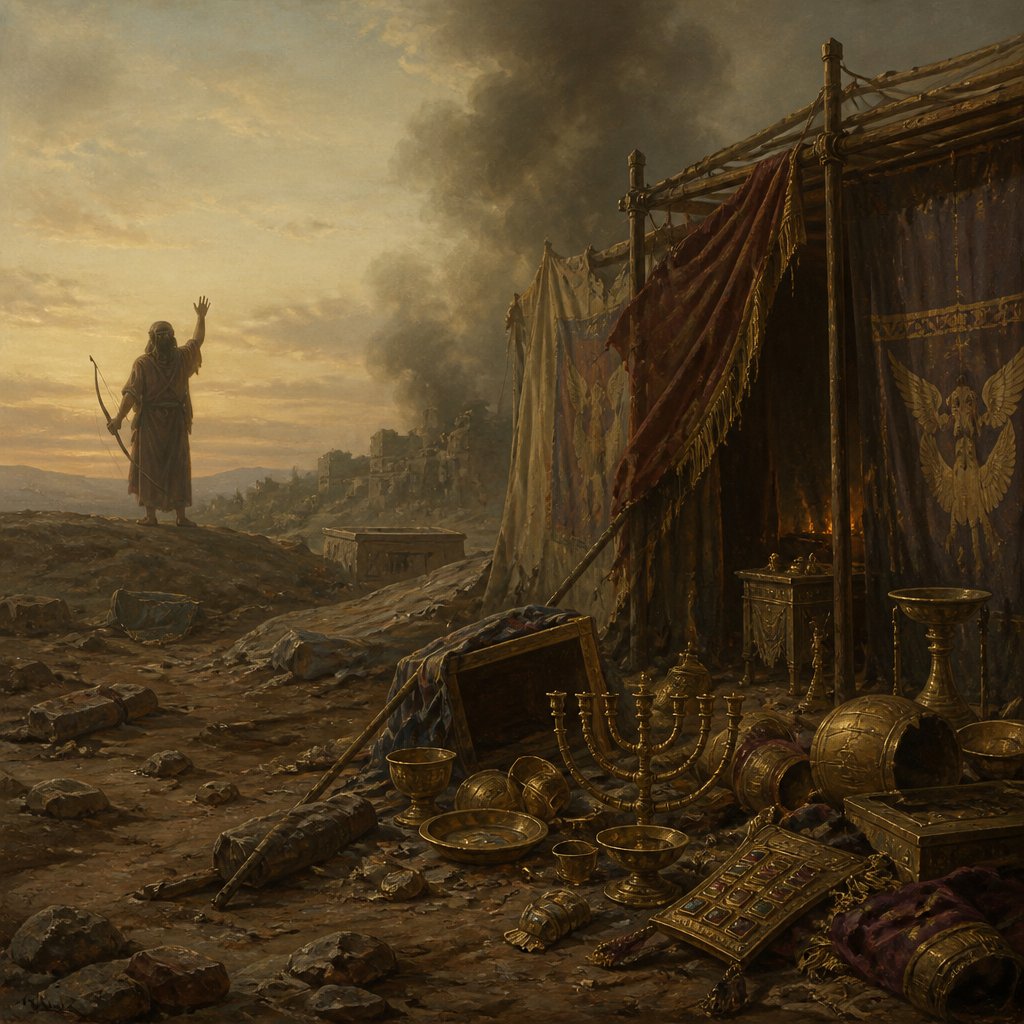
The book of Lamentations speaks profound truths about suffering, loss, and the repercussions of turning away from God. In Lamentations 2:4, the prophet Jeremiah paints a stark picture of divine judgment: "He hath bent his bow like an enemy: he stood with his right hand as an adversary, and slew all that were pleasant to the eye in the tabernacle of the daughter of Zion: he poured out his fury like fire." This verse encapsulates a moment of national tragedy for Israel but also offers a powerful insight into the character of God and the nature of His relationship with His people.
When we read the words “bent his bow,” we can envision an archer poised at full draw, preparing to release an arrow with precision and intent. In this imagery, God is not just taking aim at random targets; rather, He is targeting the hearts and souls of His people. Why would God need to take such drastic measures? The historical context helps us understand that this moment refers to the consequences of unrepentant sin in the nation of Israel. They had forsaken the covenant, rejected His statutes, and turned to the worship of false idols.
Unlike a whimsical tyrant, God’s actions are rooted in love and righteousness. His aim is to bring His people to a place of repentance, to turn their hearts back to Him. Yet, from the perspective of the suffering people, His discipline felt like that of an enemy. What pain they experienced mixed with confusion over how a loving God could allow such calamity. Sometimes, we too may feel this way when we encounter the hardships that follow our own choices or the circumstances surrounding us. The reality is that pain often serves as an effective teacher.
Jeremiah goes on to describe God as standing “with His right hand as an adversary.” The right hand often symbolizes power and authority in biblical literature. Here, God's might is both a source of comfort to those who trust in Him and a terrifying force for those who oppose His ways. There is an undeniable reality that God's hand can bring both deliverance and destruction depending on our relationship with Him. In moments of suffering, our first impulse may be to question, “How could God allow this?” But perhaps a more profound question is, “In what ways have I distanced myself from God?”
The phrase “slay all that were pleasant to the eye” reveals the severity of God’s judgment. What was beautiful and valuable to Israel became the target of His wrath. This imagery starkly reminds us that the things we cherish most can become the very distractions that lead us away from God. Are there elements in our lives that we hold dear but may not glorfiy God, contributing to our spiritual neglect? It prompts an introspective call to evaluate our priorities in the light of God’s holiness.
The conclusion of the verse serves to underscore the intensity of God’s feelings towards sin: “He poured out his fury like fire.” The imagery of fire is powerful—it can purify, destroy, and transform. In God’s fury, there is an invitation towards repentance, an opportunity to reflect on the choices that lead to estrangement. Fire can warm us but if uncontrolled, it consumes everything in its path, leaving devastation behind.
As we meditate on Lamentations 2:4, let us embrace the God of justice and mercy, acknowledging that discipline ultimately serves the purpose of restoration. In our trials, may we seek to understand rather than question, recognizing His longing for a relationship rooted in love and obedience. In our pain, we must remember—the bent bow can also create a tension that launches us towards healing, growth, and ultimately, a deeper reliance on God.
Let this verse ignite a fire in our hearts not only to pursue holiness but also to embrace the redemptive work He desires in our lives. And when the weight of discipline feels too heavy, may we find solace in knowing that through it all, God’s intent remains to draw us closer, to refine us like gold in the flames.
Get our apps


Artwork for Lamentations 2:4

Lamentations 2:4 - "He hath bent his bow like an enemy: he stood with his right hand as an adversary, and slew all that were pleasant to the eye in the tabernacle of the daughter of Zion: he poured out his fury like fire."
"He hath bent his bow like an enemy: he stood with his right hand as an adversary, and slew all that were pleasant to the eye in the tabernacle of the daughter of Zion: he poured out his fury like fire." - Lamentations 2:4

Lamentations 4:2 - "The precious sons of Zion, comparable to fine gold, how are they esteemed as earthen pitchers, the work of the hands of the potter!"

Lamentations 2:1

Lamentations 2:1

Lamentations 2:1

Lamentations 4:4 - "The tongue of the sucking child cleaveth to the roof of his mouth for thirst: the young children ask bread, and no man breaketh it unto them."
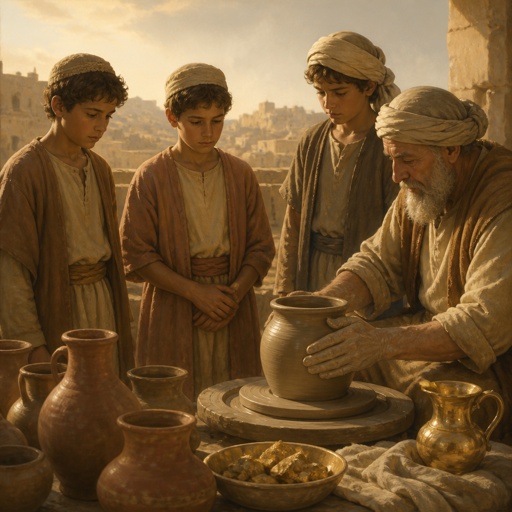
"The precious sons of Zion, comparable to fine gold, how are they esteemed as earthen pitchers, the work of the hands of the potter!" - Lamentations 4:2

2 Chronicles 35:25 - "¶ And Jeremiah lamented for Josiah: and all the singing men and the singing women spake of Josiah in their lamentations to this day, and made them an ordinance in Israel: and, behold, they are written in the lamentations."

Lamentations 4:5 - "They that did feed delicately are desolate in the streets: they that were brought up in scarlet embrace dunghills."

Lamentations 5:4 - "We have drunken our water for money; our wood is sold unto us."

Lamentations 4:13 - "¶ For the sins of her prophets, and the iniquities of her priests, that have shed the blood of the just in the midst of her,"

Lamentations 4:9 - "They that be slain with the sword are better than they that be slain with hunger: for these pine away, stricken through for want of the fruits of the field."

Lamentations 5:2 - "Our inheritance is turned to strangers, our houses to aliens."

Lamentations 4:10 - "The hands of the pitiful women have sodden their own children: they were their meat in the destruction of the daughter of my people."

Lamentations 3:4 - "My flesh and my skin hath he made old; he hath broken my bones."

Lamentations 4:8 - "Their visage is blacker than a coal; they are not known in the streets: their skin cleaveth to their bones; it is withered, it is become like a stick."

Lamentations 4:16 - "The anger of the LORD hath divided them; he will no more regard them: they respected not the persons of the priests, they favoured not the elders."

Lamentations 3:2 - "He hath led me, and brought me into darkness, but not into light."

Lamentations 4:14 - "They have wandered as blind men in the streets, they have polluted themselves with blood, so that men could not touch their garments."

Lamentations 4:19 - "Our persecutors are swifter than the eagles of the heaven: they pursued us upon the mountains, they laid wait for us in the wilderness."

Lamentations 4:6 - "For the punishment of the iniquity of the daughter of my people is greater than the punishment of the sin of Sodom, that was overthrown as in a moment, and no hands stayed on her."

Lamentations 4:12 - "The kings of the earth, and all the inhabitants of the world, would not have believed that the adversary and the enemy should have entered into the gates of Jerusalem."

Lamentations 4:1 - "How is the gold become dim! how is the most fine gold changed! the stones of the sanctuary are poured out in the top of every street."

Lamentations 4:17 - "As for us, our eyes as yet failed for our vain help: in our watching we have watched for a nation that could not save us."

Lamentations 4:18 - "They hunt our steps, that we cannot go in our streets: our end is near, our days are fulfilled; for our end is come."

Lamentations 1:4 The roads to Zion mourn, for no one comes to her appointed festivals.

Lamentations 1:4 The roads to Zion mourn, for no one comes to her appointed festivals.

Lamentations 1:4 The roads to Zion mourn, for no one comes to her appointed festivals.

Micah 2:4 - "¶ In that day shall one take up a parable against you, and lament with a doleful lamentation, and say, We be utterly spoiled: he hath changed the portion of my people: how hath he removed it from me! turning away he hath divided our fields."