The Silence of Sorrow: A Reflection on Lamentations 5:14
“The elders have ceased from the gate, the young men from their musick.” — Lamentations 5:14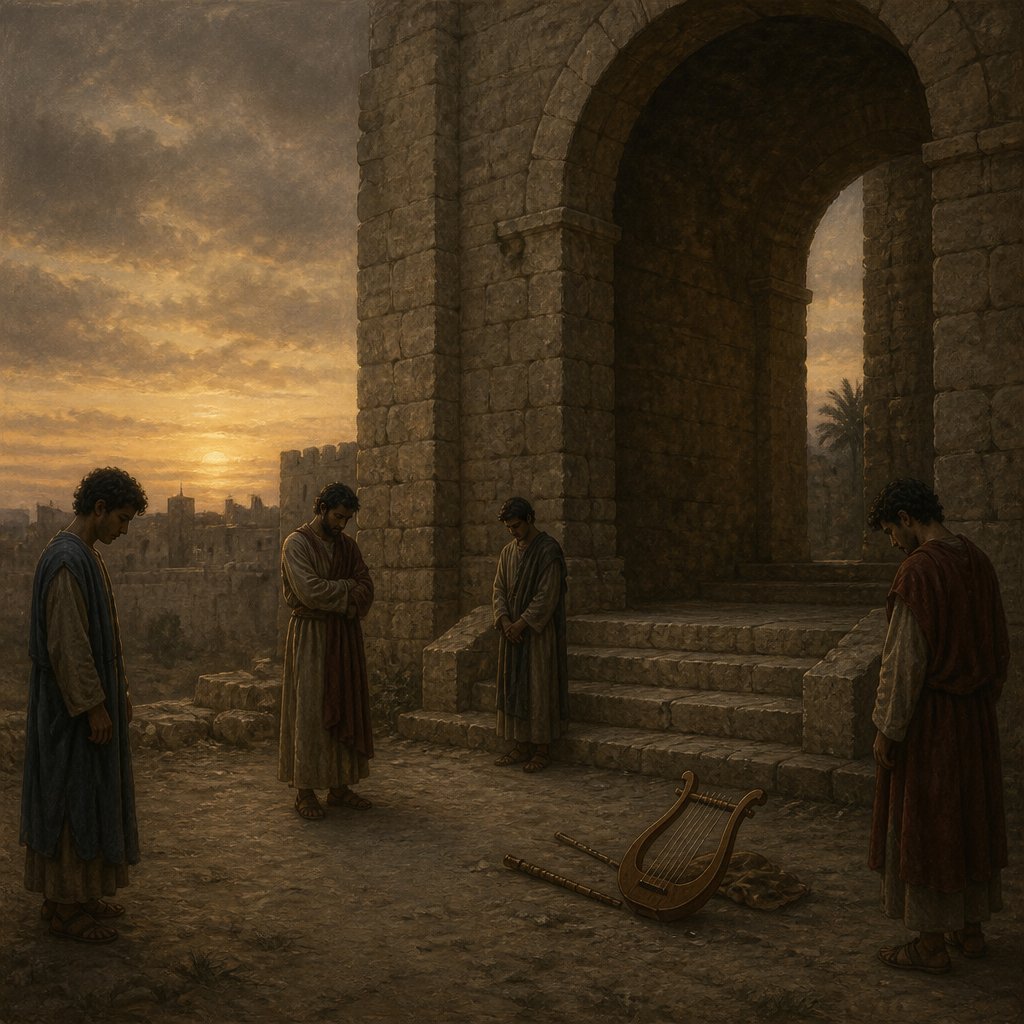
In the book of Lamentations, we encounter a tapestry of despair woven through the cries of the prophet Jeremiah, mourning the destruction of Jerusalem. Among the poignant expressions of grief, Lamentations 5:14 stands out, declaring, "The elders have ceased from the gate, the young men from their musick." This verse captures the profound loss experienced by a community that has not only lost its physical homeland but also the very fabric of its social structure, culture, and joy.
To grasp the weight of this lament, we must first consider the roles represented in this verse. The "elders" at the city gate were not merely aged men; they held positions of authority and wisdom. They were the leaders responsible for the governance and decision-making within the community. Their presence was essential because they provided guidance, serving as the link between tradition and the present. The cessation of their presence signifies a breakdown in community leadership and moral authority. Without wise counsel, chaos and confusion reign, leading individuals on paths of despair and hopelessness.
The second half of the verse highlights the absence of the "young men" who traditionally engaged in music, celebration, and joy. Music plays a crucial role in any culture; it is the heartbeat of celebration, the expression of communal joy, and a means to invoke the presence of God. In ancient Israel, music was not only reserved for more jovial occasions but was also integral to worship and connecting with the divine. The young men, representing vigor and hope for the future, have also disappeared, leaving behind a cavernous silence where once there was song and praise.
This powerful imagery of silence resonates deeply with contemporary audiences. In many ways, our world mirrors the desolation reflected in this verse. As we look around, we often see communities frayed by discord, governance plagued by corruption, and a culture that values entertainment over contemplation. When the elders, those rich in experience and wisdom, fall silent, and the energy and creativity of our youth are stifled, we can find ourselves in a similar state of spiritual and emotional desolation.
In the stillness that follows the loss of guidance and joy, the question arises: where do we turn? What do we seek in this silence? As we reflect on our own lives, we may find areas where we feel abandoned by the wisdom of the past and discouraged by the lack of joy in the present. The elders represent our connections to tradition, history, and the ancients who have gone before us, while the young men symbolize our aspirations, hopes, and dreams for the future. Both are critical to forming a resilient community.
The absence depicted in Lamentations 5:14 urges us to consider our individual and collective responses to such despair. First, what can we do to revive wisdom in our communities? Perhaps it starts with valuing the voices of the elders among us, seeking their counsel, and appreciating their experiences. They possess the blueprints of resilience built through trials and tribulations; their lessons are vital for navigating our current challenges.
Secondly, we must encourage the young among us to express joy and vibrancy through music, art, and other forms of creativity. Reinstating a culture of celebration and community worship fosters an environment where hope can thrive. Just as the elders hold a repository of wisdom, the youth carry the potential for innovation and renewal.
In this divine dialogue of grief and hope, we are reminded that while sorrow may silence us momentarily, it is in our collective responsibility to resurrect the voices of both the past and the future. The silence is an invitation to respond with courage, to create spaces for wisdom to flourish and for joy to be celebrated again.
As we go forth, let us consider how we can bridge the generational gap, establish continuous conversation, and bring forth both solemnity and song into our communities. Let us be the catalysts in our families, neighborhoods, and places of worship to rekindle the music of our faith and the wisdom of our elders, transforming despair into renewed hope.
Get our apps


Artwork for Lamentations 5:14

Lamentations 5:14 - "The elders have ceased from the gate, the young men from their musick."
"The elders have ceased from the gate, the young men from their musick." - Lamentations 5:14

Lamentations 5:5 - "Our necks are under persecution: we labour, and have no rest."

Lamentations 5:11 - "They ravished the women in Zion, and the maids in the cities of Judah."

Lamentations 5:3 - "We are orphans and fatherless, our mothers are as widows."

Lamentations 3:14 - "I was a derision to all my people; and their song all the day."

Lamentations 5:2 - "Our inheritance is turned to strangers, our houses to aliens."

Lamentations 5:17 - "For this our heart is faint; for these things our eyes are dim."

Lamentations 5:7 - "Our fathers have sinned, and are not; and we have borne their iniquities."

Lamentations 5:15 - "The joy of our heart is ceased; our dance is turned into mourning."

Lamentations 5:6 - "We have given the hand to the Egyptians, and to the Assyrians, to be satisfied with bread."

Lamentations 5:18 - "Because of the mountain of Zion, which is desolate, the foxes walk upon it."

Lamentations 5:10 - "Our skin was black like an oven because of the terrible famine."

Lamentations 5:13 - "They took the young men to grind, and the children fell under the wood."

Lamentations 5:12 - "Princes are hanged up by their hand: the faces of elders were not honoured."

Lamentations 3:5 - "He hath builded against me, and compassed me with gall and travail."

Ezekiel 19:14 - "And fire is gone out of a rod of her branches, which hath devoured her fruit, so that she hath no strong rod to be a sceptre to rule. This is a lamentation, and shall be for a lamentation."

Lamentations 5:9 - "We gat our bread with the peril of our lives because of the sword of the wilderness."

Lamentations 5:19 – "You, Lord, reign forever; your throne endures from generation to generation."

Lamentations 5:19 - "Thou, O LORD, remainest for ever; thy throne from generation to generation."
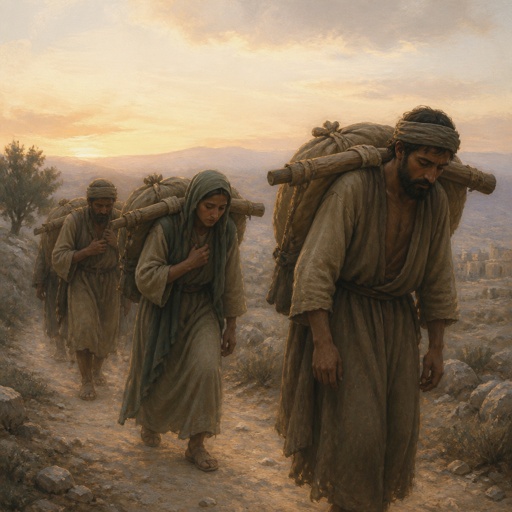
"Our necks are under persecution: we labour, and have no rest." - Lamentations 5:5

Lamentations 5:8 - "Servants have ruled over us: there is none that doth deliver us out of their hand."

Lamentations 5:1 - "Remember, O LORD, what is come upon us: consider, and behold our reproach."

Lamentations 5:22 - "But thou hast utterly rejected us; thou art very wroth against us."

Lamentations 4:5 - "They that did feed delicately are desolate in the streets: they that were brought up in scarlet embrace dunghills."

Lamentations 5:4 - "We have drunken our water for money; our wood is sold unto us."

Lamentations 5:20 - "Wherefore dost thou forget us for ever, and forsake us so long time?"

Lamentations 5:16 - "The crown is fallen from our head: woe unto us, that we have sinned!"

Lamentations 4:14 - "They have wandered as blind men in the streets, they have polluted themselves with blood, so that men could not touch their garments."

Lamentations 5:21 - "Turn thou us unto thee, O LORD, and we shall be turned; renew our days as of old."