The Weight of Compassion: Carrying Our Brethren in Times of Loss
“And Moses called Mishael and Elzaphan, the sons of Uzziel the uncle of Aaron, and said unto them, Come near, carry your brethren from before the sanctuary out of the camp.” — Leviticus 10:4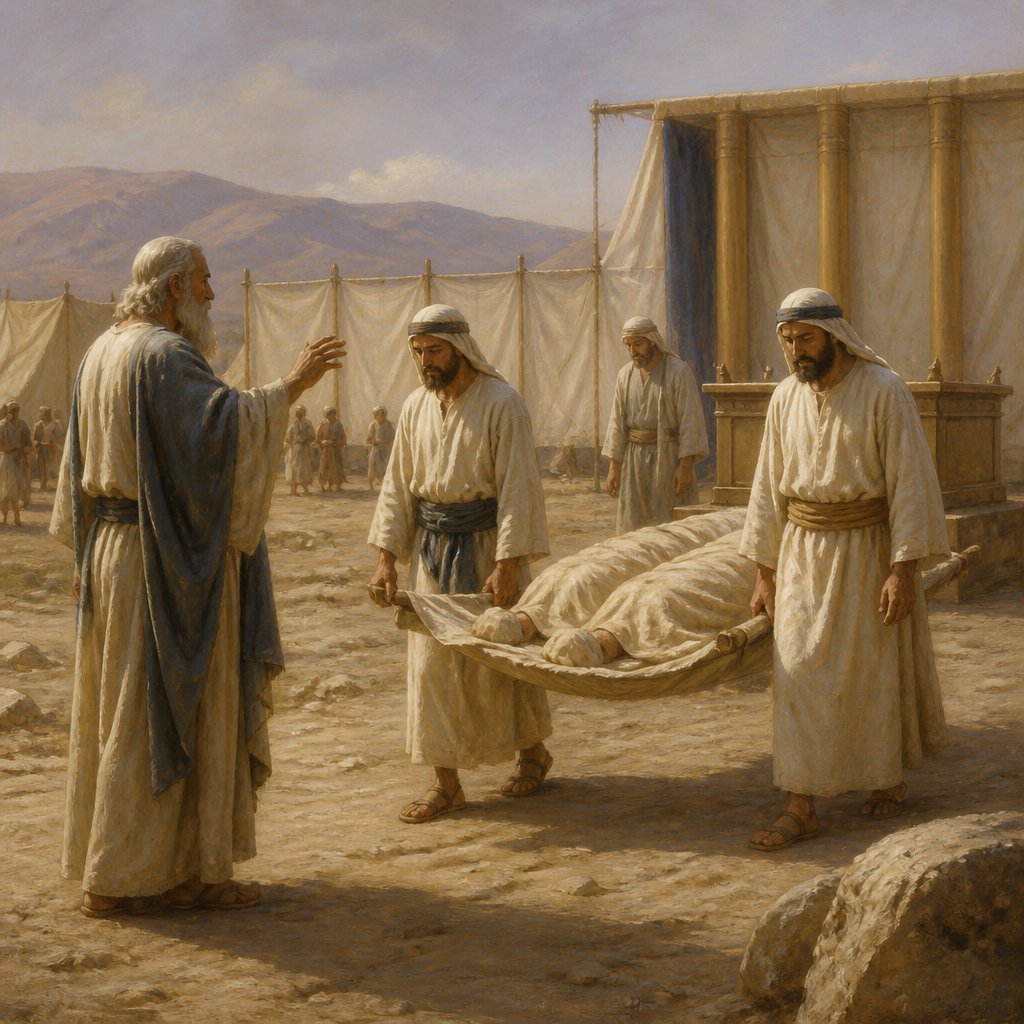
In Leviticus 10:4, we find a somber command given by Moses: "And Moses called Mishael and Elzaphan, the sons of Uzziel the uncle of Aaron, and said unto them, Come near, carry your brethren from before the sanctuary out of the camp." This verse comes at a particularly poignant moment in scripture, following the tragic deaths of Nadab and Abihu, Aaron's sons, who offered strange fire before the Lord, which He had not commanded. This incident illustrates the seriousness of God's holiness and the consequences of disobedience. However, amid this grief and judgment, we see the embodiment of compassion and responsibility in Moses' command to carry their bodies away.
The act of carrying the deceased can be seen not only as a physical action but also a spiritual duty filled with symbolism. For Mishael and Elzaphan, being called to remove their fallen brethren was not just a task; it was a moment steeped in grief, responsibility, and a deep call to honor. In essence, this verse invites us to reflect on how we care for one another in moments of sorrow and loss. The act of bearing one another’s burdens is not limited to physical needs but extends into emotional and spiritual realms.
Death, especially in the context of the spiritual family, can evoke a mixture of feelings: loss, sorrow, and sometimes, confusion. Here we witness the importance of community, as these two men were entrusted with a formidable task during a time of mourning. They were not called to stand idly by in their grief but to rise and support the family in its time of loss. This reflects a powerful truth about the body of Christ: we are called to support one another, particularly in times of mourning.
Moreover, this summons underscores the notion of proximity in community. When Moses says, "Come near," it invokes a call to intimacy and closeness. In our modern context, being near often means being present in the lives of those who are struggling, both to share in their sorrow and to help lighten their load. God has designed us for relationship and mutual support. Just as Mishael and Elzaphan were instructed to draw near, we too are called to draw near to those who suffer, offering our companionship and help.
As we meditate on this scripture, consider your own life: when have you been called to carry someone else's burden? When have you been in a position where you needed to be carried? The beauty of community is that it brings us both opportunity and vulnerability. We can be strong enough for one another, even when we feel weak. This verse encourages us to embrace the weight of compassion that accompanies caring for others. It invites us to become not just spectators in the lives of others but active participants in their struggles.
Additionally, the final part of this verse—"out of the camp"—holds significance. The camp was a sacred space, a place of God's presence. Yet when those who were unclean or under judgment were involved, they had to be removed for the purity of the camp. This concept speaks to the necessary boundaries we must sometimes observe, distinguishing between fellowship with sinners and dealing with the ramifications of sin. Few things are as bittersweet as carrying our fallen brethren, as we grapple with the tension of love, holiness, and communal responsibility.
Let us strive to walk closely with God and with each other, ensuring that we are present during times of anguish. May we be willing to heed the call to 'come near'—to lift, to carry, and to bring healing to our hurting world. In doing so, we fulfill the law of Christ, supporting one another as we navigate the complexities of life in a fallen world. Let us pray for strength and compassion to serve faithfully, allowing Christ to work through us as we carry our brethren away from the burdens of sin and into the light of His grace.
Get our apps


Artwork for Leviticus 10:4

Leviticus 10:4 - "And Moses called Mishael and Elzaphan, the sons of Uzziel the uncle of Aaron, and said unto them, Come near, carry your brethren from before the sanctuary out of the camp."
"And Moses called Mishael and Elzaphan, the sons of Uzziel the uncle of Aaron, and said unto them, Come near, carry your brethren from before the sanctuary out of the camp." - Leviticus 10:4

Leviticus 4:10 - "As it was taken off from the bullock of the sacrifice of peace offerings: and the priest shall burn them upon the altar of the burnt offering."

Leviticus 10:10 - "And that ye may put difference between holy and unholy, and between unclean and clean;"

leviticus 16:7-10

Leviticus 10:20 - "And when Moses heard that, he was content."
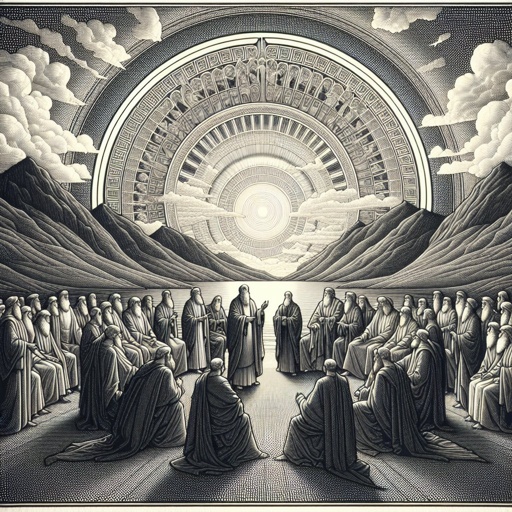
Leviticus 10:8 - "¶ And the LORD spake unto Aaron, saying,"

Leviticus 26: 4-6
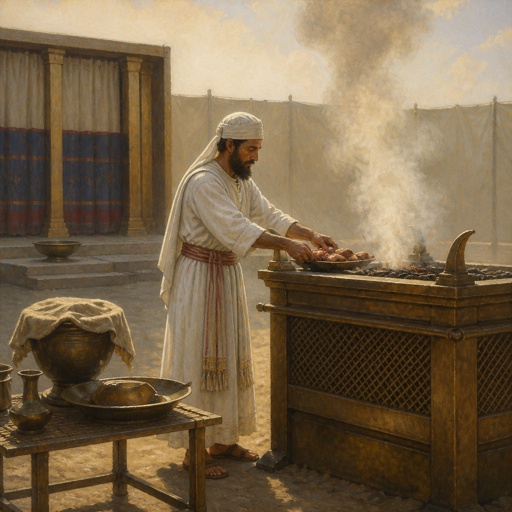
"As it was taken off from the bullock of the sacrifice of peace offerings: and the priest shall burn them upon the altar of the burnt offering." - Leviticus 4:10

Leviticus 26: 4-6

Leviticus 26: 4-6

Leviticus 4:1 - "And the LORD spake unto Moses, saying,"

Leviticus 27:4 - "And if it be a female, then thy estimation shall be thirty shekels."

Leviticus 10:2 - "And there went out fire from the LORD, and devoured them, and they died before the LORD."

Leviticus 26:10 - "And ye shall eat old store, and bring forth the old because of the new."

Leviticus 8:10 - "And Moses took the anointing oil, and anointed the tabernacle and all that was therein, and sanctified them."

Leviticus 10:5 - "So they went near, and carried them in their coats out of the camp; as Moses had said."

Leviticus 4:16 - "And the priest that is anointed shall bring of the bullock's blood to the tabernacle of the congregation:"
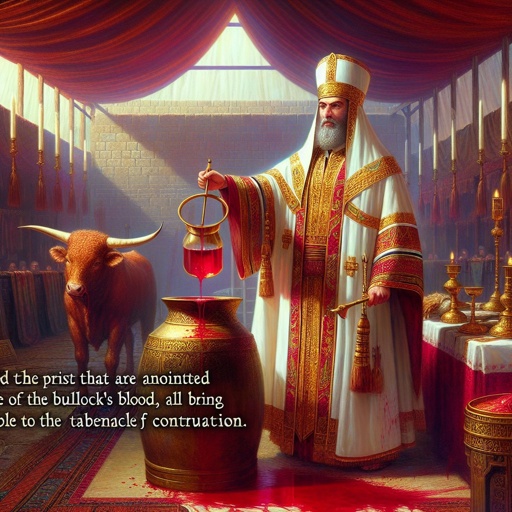
Leviticus 4:5 - "And the priest that is anointed shall take of the bullock's blood, and bring it to the tabernacle of the congregation:"
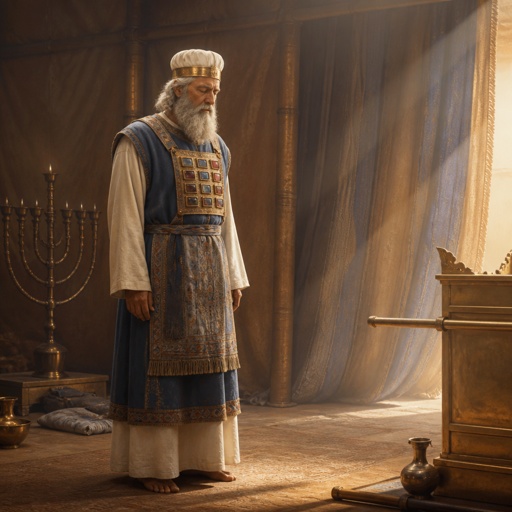
"¶ And the LORD spake unto Aaron, saying," - Leviticus 10:8
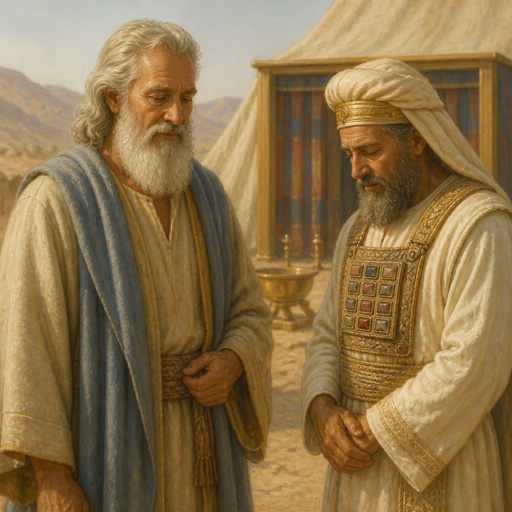
"And when Moses heard that, he was content." - Leviticus 10:20

Leviticus 24:4 - "He shall order the lamps upon the pure candlestick before the LORD continually."

Leviticus 23:4 - "¶ These are the feasts of the LORD, even holy convocations, which ye shall proclaim in their seasons."
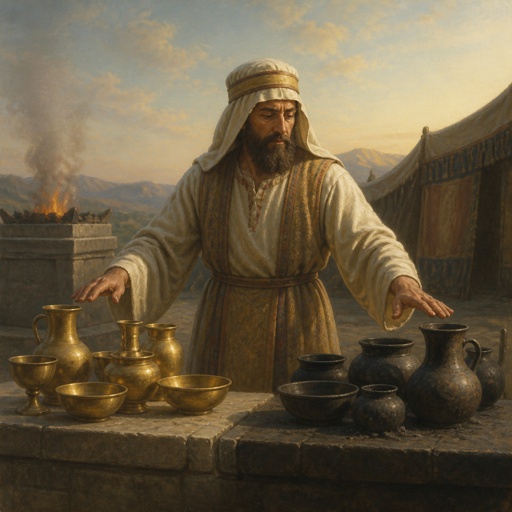
"And that ye may put difference between holy and unholy, and between unclean and clean;" - Leviticus 10:10

Leviticus 22:10 - "There shall no stranger eat of the holy thing: a sojourner of the priest, or an hired servant, shall not eat of the holy thing."

Leviticus 7:10 - "And every meat offering, mingled with oil, and dry, shall all the sons of Aaron have, one as much as another."

Leviticus 1:10 - "¶ And if his offering be of the flocks, namely, of the sheep, or of the goats, for a burnt sacrifice; he shall bring it a male without blemish."

Leviticus 4:32 - "And if he bring a lamb for a sin offering, he shall bring it a female without blemish."

Leviticus 4:19 - "And he shall take all his fat from him, and burn it upon the altar."

Leviticus 4:4 - "And he shall bring the bullock unto the door of the tabernacle of the congregation before the LORD; and shall lay his hand upon the bullock's head, and kill the bullock before the LORD."