Purity in the Process: Understanding the Significance of Leviticus 12:5
“But if she bear a maid child, then she shall be unclean two weeks, as in her separation: and she shall continue in the blood of her purifying threescore and six days.” — Leviticus 12:5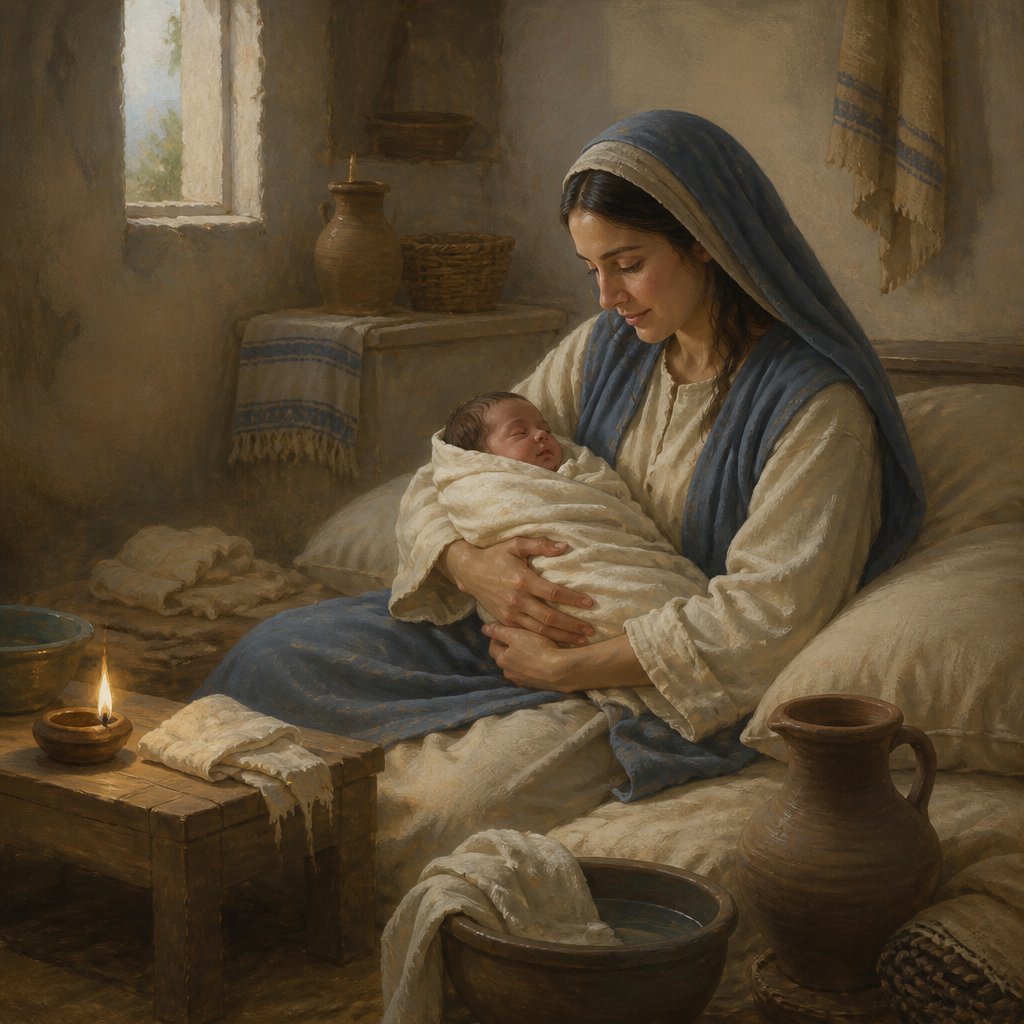
As we delve into the depths of Leviticus 12:5, we encounter a specific command concerning childbirth: "But if she bear a maid child, then she shall be unclean two weeks, as in her separation: and she shall continue in the blood of her purifying threescore and six days." This verse may appear to us as an archaic law confined to ancient rituals and cultural practices, yet it holds profound significance that resonates through the annals of time, addressing themes of purity, transition, and God's design for life.
In this verse, we confront the topic of ceremonial uncleanliness associated with childbirth, particularly the birth of a female child. Under the Levitical law, a mother was deemed unclean for a period of time, reflecting typical concerns during that era concerning health, hygiene, and spiritual cleanliness. This time of waiting—two weeks of initial uncleanliness, followed by sixty-six days for purification—highlights the seriousness with which God commands His people to regard holiness and separation. In our modern context, it is easy to dismiss these laws as outdated. However, it is essential to look beyond the surface and explore what God might be communicating through these commands.
Purity and cleanliness in the Old Testament were not merely about physical hygiene; they were profound reflections of one's relationship with God. They represented the idea that God is holy and that His people are called to reflect that holiness in their lives. When a woman gave birth, the subsequent uncleanliness symbolized the transformation from a state of expectation and new life to one of potential impurity, recognizing the physical and emotional toll that childbirth can bring to a woman.
In understanding this verse, we come face-to-face with the reality of transition. Pregnancy and childbirth are significant transitions in life—moments when a woman’s physical body undergoes profound changes, affecting her emotionally and spiritually. God acknowledges this transition by instituting a period where the mother can recover, heal, and bond with her newborn. Thus, the waiting is not merely a prohibition; it is an invitation to rest, reflect, and become re-acquainted with her new identity as a mother, a role that is holy in its own right.
Moreover, the emphasis on "uncleanness" post-birth calls us to consider how we view the process of restoration in our lives. Each of us undergoes transitions—whether through personal trials, loss, or new beginnings—that require us to step back and allow ourselves space to heal. Just as the mother’s blood signifies a time of purification, our struggles can represent seasons where we might feel "unclean," vulnerable, or distant from God. However, these periods are also moments of divine grace where God invites us to lay our burdens before Him and trust in His purifying work within us.
God’s laws are not punitive; they are protective and restorative. In laying down the laws of purification, He reassures His people that He values their well-being—physically, emotionally, and spiritually. In this way, understanding Leviticus 12:5 helps us to see that God is intimately aware of our human experiences and the transitions that accompany them.
As we reflect on this verse in our contemporary lives, let us find comfort in the intention behind God’s commands. In every period of waiting, healing, or restructuring, know that it is part of God’s divine plan. Just as the mother is called to purify herself after childbirth, we too are called to seek spiritual restoration after seasons of upheaval. Remember that God is faithful to cleanse us and draw us near when we invite Him into our process.
May we regard our own "purifying" moments with reverence, knowing they are sacred opportunities to grow closer to our Creator, and come to know the fullness of our new identifications in Christ. Let us cherish the time of transition as a pathway to purity, healing, and deeper intimacy with the Lord.
Get our apps


Artwork for Leviticus 12:5

Leviticus 12:5 - "But if she bear a maid child, then she shall be unclean two weeks, as in her separation: and she shall continue in the blood of her purifying threescore and six days."
"But if she bear a maid child, then she shall be unclean two weeks, as in her separation: and she shall continue in the blood of her purifying threescore and six days." - Leviticus 12:5

Leviticus 5:12 - "Then shall he bring it to the priest, and the priest shall take his handful of it, even a memorial thereof, and burn it on the altar, according to the offerings made by fire unto the LORD: it is a sin offering."
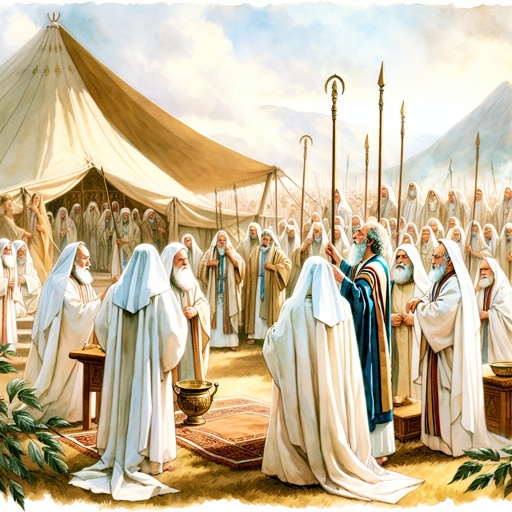
Leviticus 8:1-12

Leviticus 12:1 - "And the LORD spake unto Moses, saying,"
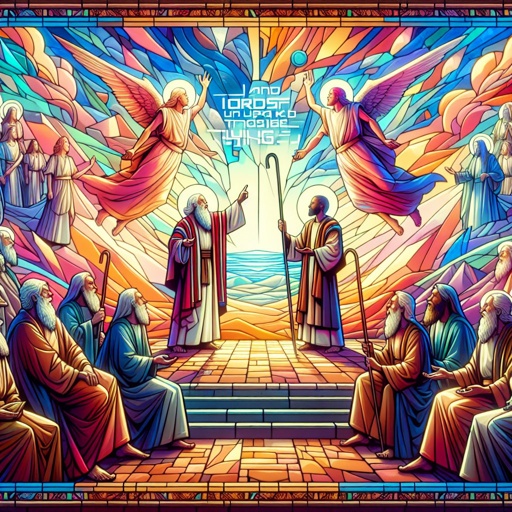
Leviticus 5:14 - "¶ And the LORD spake unto Moses, saying,"

Leviticus 12:3 - "And in the eighth day the flesh of his foreskin shall be circumcised."

Leviticus 5:5 - "And it shall be, when he shall be guilty in one of these things, that he shall confess that he hath sinned in that thing:"

Leviticus 24:12 - "And they put him in ward, that the mind of the LORD might be shewed them."

Leviticus 23:5 - "In the fourteenth day of the first month at even is the LORD'S passover."

Leviticus 3:12 - "¶ And if his offering be a goat, then he shall offer it before the LORD."

Leviticus 5:19 - "It is a trespass offering: he hath certainly trespassed against the LORD."

Leviticus 8:5 - "And Moses said unto the congregation, This is the thing which the LORD commanded to be done."
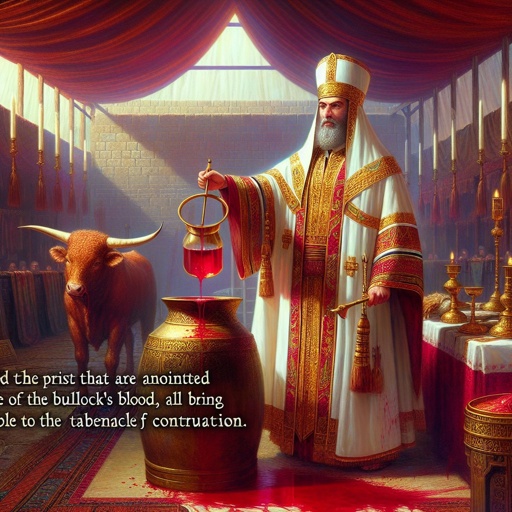
Leviticus 4:5 - "And the priest that is anointed shall take of the bullock's blood, and bring it to the tabernacle of the congregation:"

Leviticus 26:12 - "And I will walk among you, and will be your God, and ye shall be my people."

Leviticus 11:12 - "Whatsoever hath no fins nor scales in the waters, that shall be an abomination unto you."
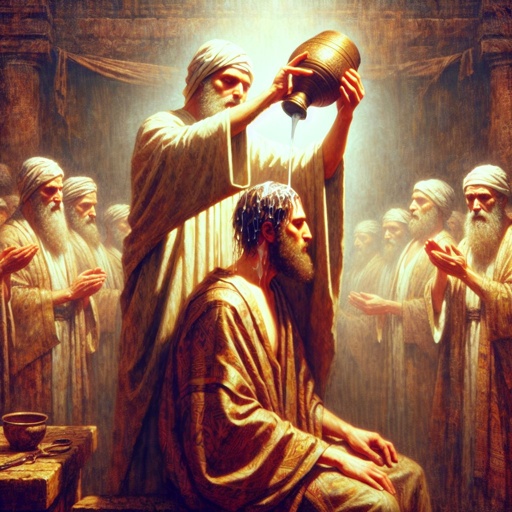
Leviticus 8:12 - "And he poured of the anointing oil upon Aaron's head, and anointed him, to sanctify him."

Leviticus 25:12 - "For it is the jubile; it shall be holy unto you: ye shall eat the increase thereof out of the field."

"And the LORD spake unto Moses, saying," - Leviticus 12:1

Leviticus 10:5 - "So they went near, and carried them in their coats out of the camp; as Moses had said."

Leviticus 18:12 - "Thou shalt not uncover the nakedness of thy father's sister: she is thy father's near kinswoman."

Leviticus 22:12 - "If the priest's daughter also be married unto a stranger, she may not eat of an offering of the holy things."

Leviticus 27:12 - "And the priest shall value it, whether it be good or bad: as thou valuest it, who art the priest, so shall it be."

Leviticus 14:5 - "And the priest shall command that one of the birds be killed in an earthen vessel over running water:"

Leviticus 11:5 - "And the coney, because he cheweth the cud, but divideth not the hoof; he is unclean unto you."

Leviticus 19:5 - "¶ And if ye offer a sacrifice of peace offerings unto the LORD, ye shall offer it at your own will."

Leviticus 2:12 - "¶ As for the oblation of the firstfruits, ye shall offer them unto the LORD: but they shall not be burnt on the altar for a sweet savour."

"¶ And the LORD spake unto Moses, saying," - Leviticus 5:14
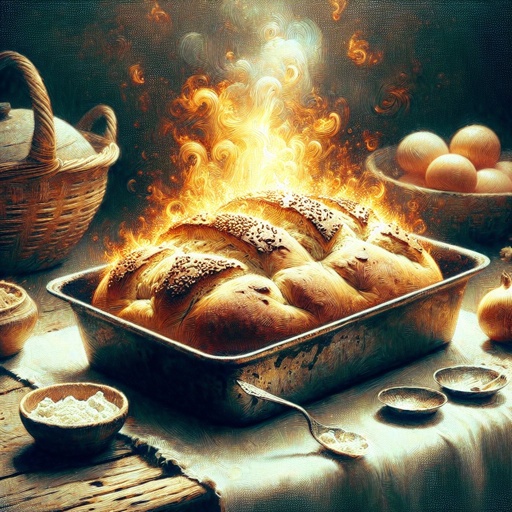
Leviticus 2:5 - "¶ And if thy oblation be a meat offering baken in a pan, it shall be of fine flour unleavened, mingled with oil."

Leviticus 7:5 - "And the priest shall burn them upon the altar for an offering made by fire unto the LORD: it is a trespass offering."