The Cleansing Touch: Understanding Leviticus 13:17
“And the priest shall see him: and, behold, if the plague be turned into white; then the priest shall pronounce him clean that hath the plague: he is clean.” — Leviticus 13:17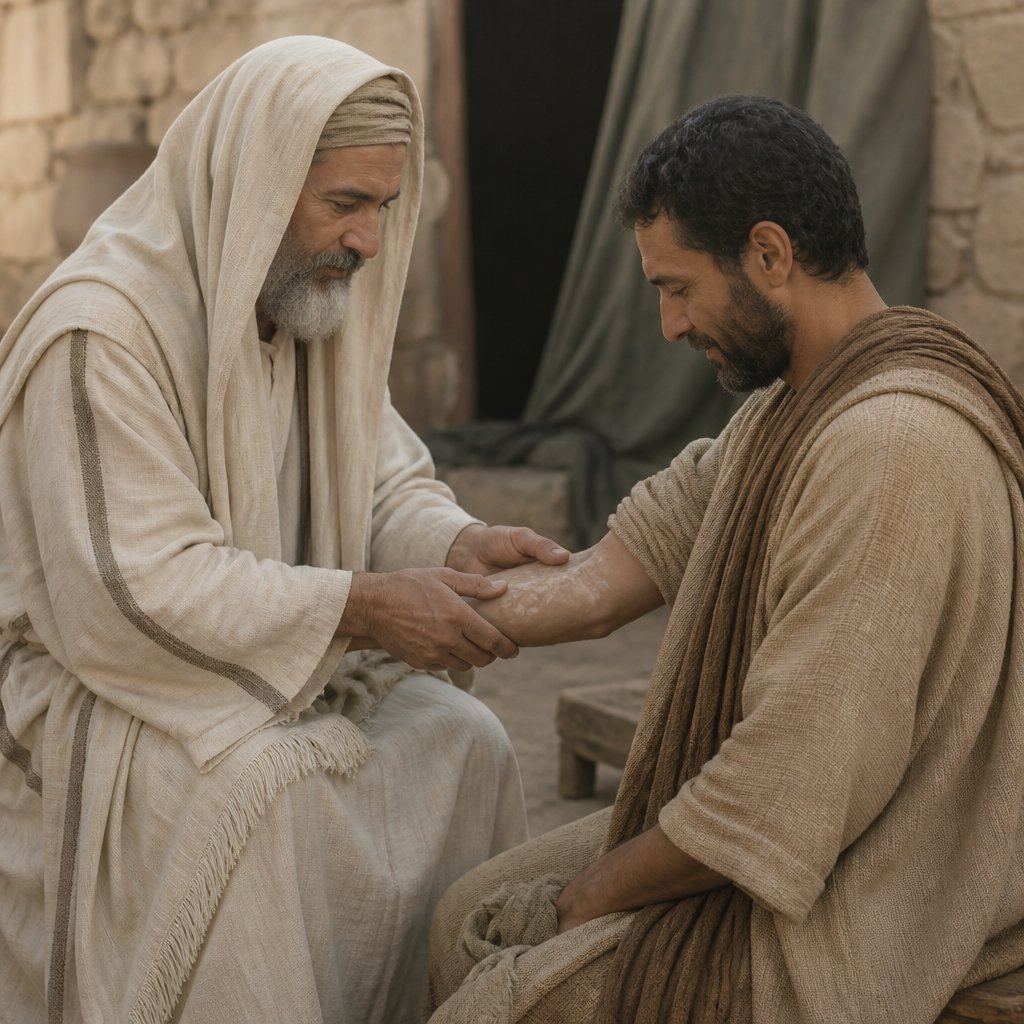
Leviticus 13:17 states, "And the priest shall see him: and, behold, if the plague be turned into white; then the priest shall pronounce him clean that hath the plague: he is clean." This passage, though nestled in the ancient laws concerning physical ailments and ceremonial cleanliness, offers profound insights into spiritual healing and the transformative power of divine grace.
To appreciate the depth of this verse, we must first understand the context in which it was written. The Israelites, as they journeyed through the wilderness, were tasked with maintaining not only their physical health but also their communal holiness. The priest was appointed as the mediator between God and His people, responsible for discerning the physical manifestations of spiritual conditions. Skin diseases, often considered more than just medical issues, symbolized sin and separation from God’s presence. The process of diagnosis, judgment, and eventual declaration of cleanliness was, therefore, not merely about physical health but about restoring one's position within the community of faith.
When the priest examines the afflicted individual, what he sees goes beyond the external symptoms; it reflects a journey through distress, isolation, and a longing for redemption. The phrase "if the plague be turned into white" alludes to a significant transformation. In ancient culture and biblical literature, white often symbolizes purity, holiness, and goodness. Thus, the turning of the plague into white signifies a breakthrough; it implies that what once was a source of shame and contamination has been redeemed.
In our lives today, we may grapple with our own 'plagues,' whether they be sin, guilt, trauma, or spiritual barrenness. Like the Israelites, we might experience periods of isolation—whether self-imposed or circumstantial—where we feel cut off from the fellowship of believers and even from the love of God. In those moments, we may wonder if healing or restoration is possible. But Leviticus 13:17 reminds us that transformation is within reach.
The priest’s role was critical because it speaks to the importance of community in matters of healing. No one should walk through their struggles alone. The biblical model suggests that acknowledging our 'plagues' within a community not only paves the way for healing but also fosters an environment where acceptance and grace are profoundly practiced. The priest, representative of God's authority, declares, "he is clean," thus affirming that God’s grace is powerful to transform lives.
This declaration can serve as an echo in our own experiences. When we come before God, acknowledging our failures and imperfections, He sees us through the lens of Christ’s sacrifice. Just as the leprous person eagerly awaits the priest’s judgment, we too await acceptance and cleansing through the blood of Jesus.
Moreover, the act of being declared "clean" suggests a new beginning. The individual is not merely healed but also restored to their community, invited back into relationships, worship, and purpose. In Christ, we find our identity as redeemed people, called to live in light and share that light with others.
The story doesn’t end with the priest's announcement. Like the healed leper, our response should be to share our testimonies of grace and transformation. We become vessels through which the work of Christ is made visible in a world still gripped by its own 'plagues.' As we reflect on Leviticus 13:17, let us embrace the sweet promise of God’s cleansing power.
Let us pray for eyes to see our ‘plagues’ and faith to believe in our transformation. May we, along with our community of believers, uphold one another as we journey toward healing, remembering that the ultimate healer, our Great High Priest, offers us not just cleanliness but complete restoration into the presence of God.
Get our apps


Artwork for Leviticus 13:17

Leviticus 13:17 - "And the priest shall see him: and, behold, if the plague be turned into white; then the priest shall pronounce him clean that hath the plague: he is clean."
"And the priest shall see him: and, behold, if the plague be turned into white; then the priest shall pronounce him clean that hath the plague: he is clean." - Leviticus 13:17
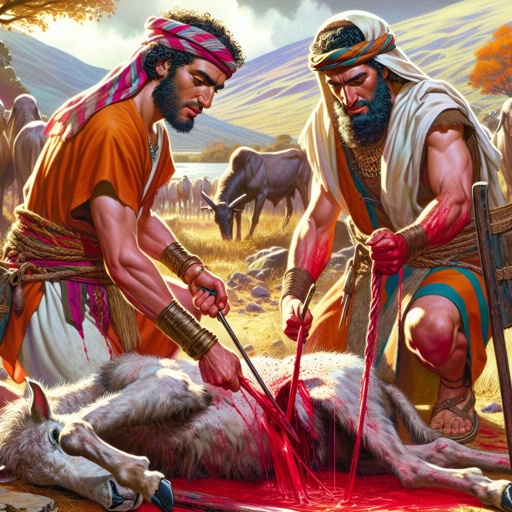
Leviticus 17:13 - "And whatsoever man there be of the children of Israel, or of the strangers that sojourn among you, which hunteth and catcheth any beast or fowl that may be eaten; he shall even pour out the blood thereof, and cover it with dust."

Leviticus 17:7

Leviticus 23:17-22

Leviticus 11:17 - "And the little owl, and the cormorant, and the great owl,"

Leviticus 22:17 - "¶ And the LORD spake unto Moses, saying,"

Leviticus 17:1 - "And the LORD spake unto Moses, saying,"

Leviticus 7:17 - "But the remainder of the flesh of the sacrifice on the third day shall be burnt with fire."

Leviticus 24:13 - "And the LORD spake unto Moses, saying,"

Leviticus 21:13 - "And he shall take a wife in her virginity."

Leviticus 13:1 - "And the LORD spake unto Moses and Aaron, saying,"

Leviticus 24:17 - "¶ And he that killeth any man shall surely be put to death."

Leviticus 13:35 - "But if the scall spread much in the skin after his cleansing;"

Leviticus 13:29 - "¶ If a man or woman have a plague upon the head or the beard;"

Leviticus 13:18 - "¶ The flesh also, in which, even in the skin thereof, was a boil, and is healed,"

Leviticus 13:14 - "But when raw flesh appeareth in him, he shall be unclean."

Leviticus 13:47 - "¶ The garment also that the plague of leprosy is in, whether it be a woollen garment, or a linen garment;"

Leviticus 13:9 - "¶ When the plague of leprosy is in a man, then he shall be brought unto the priest;"

Leviticus 17:3 - "What man soever there be of the house of Israel, that killeth an ox, or lamb, or goat, in the camp, or that killeth it out of the camp,"

Leviticus 15:17 - "And every garment, and every skin, whereon is the seed of copulation, shall be washed with water, and be unclean until the even."

Leviticus 13:22 - "And if it spread much abroad in the skin, then the priest shall pronounce him unclean: it is a plague."

Leviticus 25:13 - "In the year of this jubile ye shall return every man unto his possession."

Leviticus 6:13 - "The fire shall ever be burning upon the altar; it shall never go out."

"¶ And the LORD spake unto Moses, saying," - Leviticus 22:17

"And the LORD spake unto Moses, saying," - Leviticus 17:1

"And the little owl, and the cormorant, and the great owl," - Leviticus 11:17

Leviticus 27:17 - "If he sanctify his field from the year of jubile, according to thy estimation it shall stand."

Leviticus 17:16 - "But if he wash them not, nor bathe his flesh; then he shall bear his iniquity."

Genesis 17-13