The Deeper Reality of Leprosy: A Spiritual Reflection on Leviticus 13:25
“Then the priest shall look upon it: and, behold, if the hair in the bright spot be turned white, and it be in sight deeper than the skin; it is a leprosy broken out of the burning: wherefore the priest shall pronounce him unclean: it is the plague of leprosy.” — Leviticus 13:25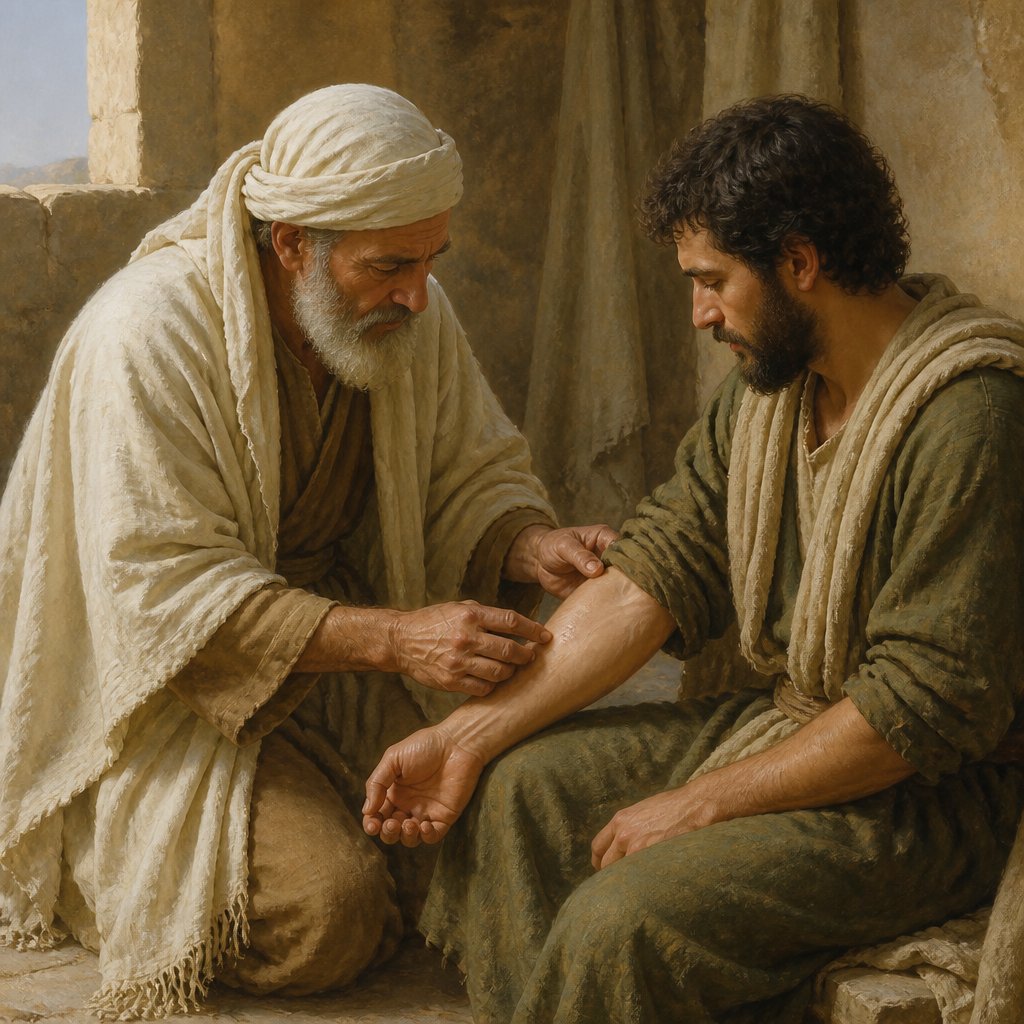
Leviticus 13:25 - "Then the priest shall look upon it: and, behold, if the hair in the bright spot be turned white, and it be in sight deeper than the skin; it is a leprosy broken out of the burning: wherefore the priest shall pronounce him unclean: it is the plague of leprosy."
In the ancient ceremonial laws outlined in Leviticus, we encounter some challenging and often perplexing verses. Among them, Leviticus 13:25 introduces us to the disturbing reality of leprosy and the spiritual implications it carries. As we reflect on this verse, we will explore what it teaches us about our inner spiritual condition and the need for divine intervention.
At first glance, this passage may seem remote, a mere relic of ancient rituals designed to maintain social order among the Israelites. However, a deeper dive into its meaning reveals profound truths that resonate with our spiritual lives today. In Israel's culture, leprosy was not merely a physical ailment; it was a symbolic representation of sin, separation, and isolation. The description of leprosy changing the color of hair and being deeper than the skin serves as a stark reminder that what often is seen on the surface can mask a deeper spiritual decay.
The role of the priest in this context is crucial. The priest was not just a mediator between God and the people; he was the one entrusted with discerning the physical and spiritual well-being of the community. When an individual presented with an apparent infection, it was the priest’s duty to examine their condition and pronounce judgment. The verbs in this verse, such as "look" and "behold," highlight the priest's careful observation, suggesting that diagnosis requires more than a cursory glance.
Similarly, in our spiritual journey, we are often compelled to take stock of our internal state. How easy it is to overlook the quiet encroachments of sin or the more insidious spiritual ailments that fester beneath our exterior. Just as the priest must examine the "bright spot" meticulously, we too must allow the Holy Spirit to shine His light into the dark recesses of our hearts.
The phrase "leprosy broken out of the burning" evokes a vivid image of something destructive and consuming. It brings to mind how our lives, if left unchecked, can be ravaged by the fires of sin—bitterness, anger, pride, and greed can spread unchecked like a plague. In a spiritual sense, the breaking out here might refer to how the evil present in our lives, if not acknowledged and addressed, will manifest openly. This is a reminder of the importance of accountability and community. Like the Israelites who brought their ailments to the priest, we too must bring our struggles into the light, seeking counsel, and healing from God and one another.
As believers, there exists a duality of our condition: the very real presence of sin in our lives that necessitates God's grace and the power of the Gospel that declares us clean. Jesus, the ultimate High Priest, does not overlook our healed and unhealed areas; instead, He invites us into a relationship where forgiveness, restoration, and cleansing occur. By accepting His grace and walking in His truth, we find hope. The unclean state pronounced by the priest can be reversed by the blood of Christ, who healed the leper (Matthew 8:1-3) and pronounced us clean through His sacrifice.
Therefore, let this verse inspire us to actively engage in self-examination, seeking the Lord's guidance in revealing the places where sin may still lurk. We may be reminded that healing is possible, not through our merit, but through the grace that only comes from God. As we submit our lives to Him and allow His presence to illuminate our darkened areas, we will find that He has already made a way for us to be clean, whole, and free from the plague of sin.
Get our apps


Artwork for Leviticus 13:25
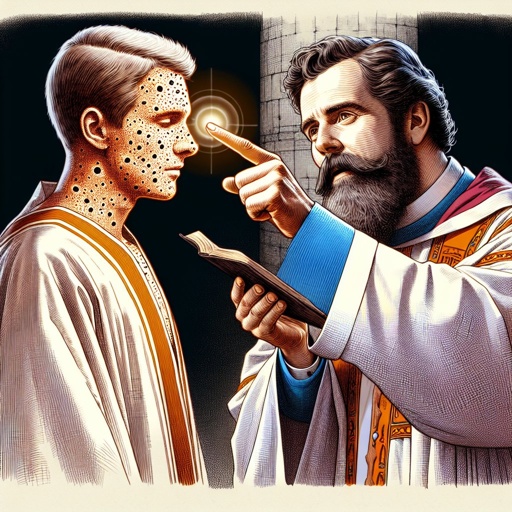
Leviticus 13:25 - "Then the priest shall look upon it: and, behold, if the hair in the bright spot be turned white, and it be in sight deeper than the skin; it is a leprosy broken out of the burning: wherefore the priest shall pronounce him unclean: it is the plague of leprosy."
"Then the priest shall look upon it: and, behold, if the hair in the bright spot be turned white, and it be in sight deeper than the skin; it is a leprosy broken out of the burning: wherefore the priest shall pronounce him unclean: it is the plague of leprosy." - Leviticus 13:25

Leviticus 25:13 - "In the year of this jubile ye shall return every man unto his possession."
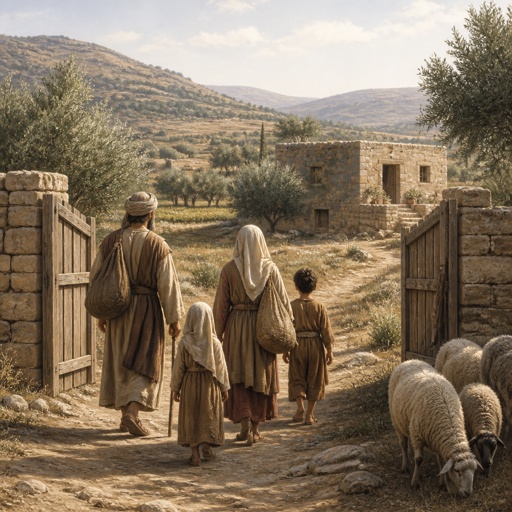
"In the year of this jubile ye shall return every man unto his possession." - Leviticus 25:13

Leviticus 25:26 - "And if the man have none to redeem it, and himself be able to redeem it;"

Leviticus 25:34 - "But the field of the suburbs of their cities may not be sold; for it is their perpetual possession."

Leviticus 25:1 - "And the LORD spake unto Moses in mount Sinai, saying,"

Leviticus 16:25 - "And the fat of the sin offering shall he burn upon the altar."

Leviticus 25:24 - "And in all the land of your possession ye shall grant a redemption for the land."

Leviticus 25:23 - "¶ The land shall not be sold for ever: for the land is mine; for ye are strangers and sojourners with me."

Leviticus 25:7 - "And for thy cattle, and for the beast that are in thy land, shall all the increase thereof be meat."
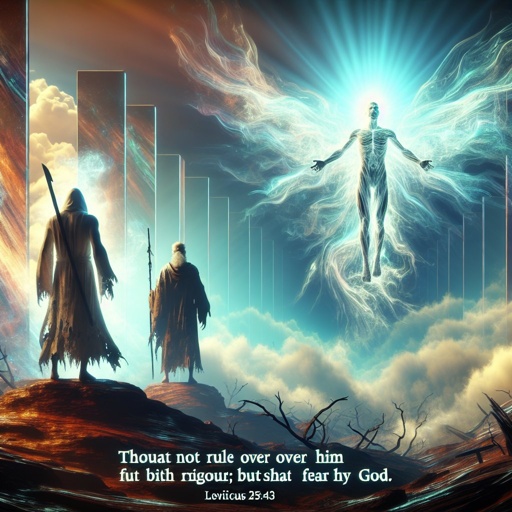
Leviticus 25:43 - "Thou shalt not rule over him with rigour; but shalt fear thy God."

Leviticus 25:32 - "Notwithstanding the cities of the Levites, and the houses of the cities of their possession, may the Levites redeem at any time."

Leviticus 27:25 - "And all thy estimations shall be according to the shekel of the sanctuary: twenty gerahs shall be the shekel."

Leviticus 25:25 - "¶ If thy brother be waxen poor, and hath sold away some of his possession, and if any of his kin come to redeem it, then shall he redeem that which his brother sold."

Leviticus 25:12 - "For it is the jubile; it shall be holy unto you: ye shall eat the increase thereof out of the field."

Leviticus 25:40 - "But as an hired servant, and as a sojourner, he shall be with thee, and shall serve thee unto the year of jubile:"

Cycle of sabbath rest year. Leviticus 25:1-7

Leviticus 24:13 - "And the LORD spake unto Moses, saying,"

Genesis 25-13

Leviticus 25:42 - "For they are my servants, which I brought forth out of the land of Egypt: they shall not be sold as bondmen."
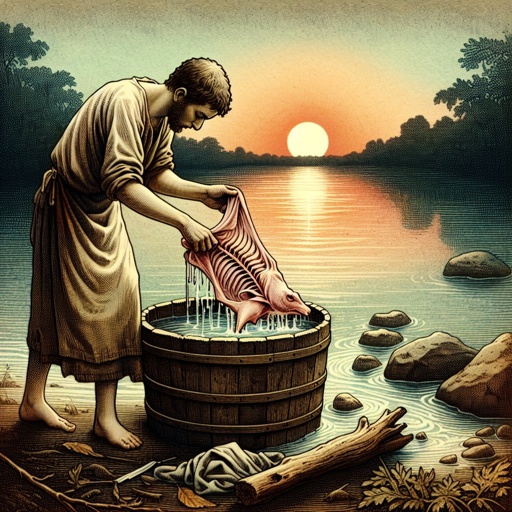
Leviticus 11:25 - "And whosoever beareth ought of the carcase of them shall wash his clothes, and be unclean until the even."

Leviticus 21:13 - "And he shall take a wife in her virginity."

Leviticus 13:1 - "And the LORD spake unto Moses and Aaron, saying,"

Leviticus 25:48 - "After that he is sold he may be redeemed again; one of his brethren may redeem him:"

Leviticus 25:36 - "Take thou no usury of him, or increase: but fear thy God; that thy brother may live with thee."

Leviticus 25:19 - "And the land shall yield her fruit, and ye shall eat your fill, and dwell therein in safety."

Leviticus 13:35 - "But if the scall spread much in the skin after his cleansing;"

Leviticus 25:21 - "Then I will command my blessing upon you in the sixth year, and it shall bring forth fruit for three years."

Leviticus 25:37 - "Thou shalt not give him thy money upon usury, nor lend him thy victuals for increase."