Bringing Our Leprosy Before the Priest
“When the plague of leprosy is in a man, then he shall be brought unto the priest;” — Leviticus 13:9
In Leviticus 13:9, we read, "When the plague of leprosy is in a man, then he shall be brought unto the priest." This verse is nestled within a larger discourse on the laws regarding leprosy, a condition that represented both physical ailment and spiritual uncleanness in ancient Israel. The sting of this command resonates strongly in our contemporary context—calling us to examine our spiritual lives and seeking restoration in Christ.
The term ‘leprosy’ in the Old Testament is used broadly, often referring to various skin diseases. Yet, leprosy held specific significance as it symbolized deeper spiritual truths. A person afflicted with leprosy faced not only the physical ramifications of their condition but also social isolation and spiritual impurity. In God’s economy, the priest served not only as a medical evaluator but as a spiritual guide. Thus, the act of bringing oneself or another to the priest becomes an act of faith, hope, and need for restoration.
Leprosy often crept in quietly; at first glance, it could go unnoticed until signs became apparent. Likewise, sin can infiltrate our lives subtly, obscured by normalcy until it blossoms into full view, wreaking havoc on our souls and relationships. The ailing individual, confronted with their affliction, was mandated to approach the priest—a significant step. It required humility, a willingness to expose the hidden ailment to another, which speaks volumes about our need for community and accountability.
In our spiritual walk, how many times do we try to hide our ‘leprous’ spots? We combat shame and fear, unwilling to bring our failings into the light. Yet God calls us to acknowledge our struggles, bringing them before Him, just as the afflicted brought their plague to the priest. In doing so, we must remember that Christ is our ultimate High Priest. Hebrews 4:14-16 reminds us, "Seeing then that we have a great high priest, that is passed into the heavens, Jesus the Son of God, let us hold fast our profession. For we have not an high priest which cannot be touched with the feeling of our infirmities; but was in all points tempted like as we are, yet without sin. Let us therefore come boldly unto the throne of grace, that we may obtain mercy, and find grace to help in time of need."
Bringing our leprosy before Christ means being honest about our vulnerabilities. It entails surrendering our struggles to the one who can heal not just our physical ailments but also our deepest spiritual wounds. Imagine the relief of being able to confess our sins and struggles openly, knowing that Christ does not recoil from us. He understands our pain, having walked among us, and is eager to offer grace and mercy.
Furthermore, the role of community in the healing process cannot be overstated. The priest served as the mediator, enforcing the law but also offering the hope of restoration. The New Testament teaches us the importance of walking together as a body of believers, encouraging and bearing each other's burdens (Galatians 6:2). Just as the leper could not diagnose himself but required the priest’s insight, we, too, need the wisdom of others in our spiritual journey.
Ultimately, Leviticus 13:9 challenges us to confront our matters of the heart, bringing them directly to the one who can pronounce us clean. Let us embrace the courage to seek help, whether from our church leaders or trusted friends, understanding that vulnerability leads to accountability and healing. Just as the leper brought their affliction to the priest, come to Christ today with your burdens and uncertainties. Praise God, when we approach Him, we find a thorough cleansing for our souls. In humbling ourselves before God and community, we partake in the transformative journey where the leprosy of sin is not only acknowledged but eradicated, leading us ultimately to wholeness.
Get our apps


Artwork for Leviticus 13:9

Leviticus 13:9 - "¶ When the plague of leprosy is in a man, then he shall be brought unto the priest;"

"¶ When the plague of leprosy is in a man, then he shall be brought unto the priest;" - Leviticus 13:9

Leviticus 9:13 - "And they presented the burnt offering unto him, with the pieces thereof, and the head: and he burnt them upon the altar."
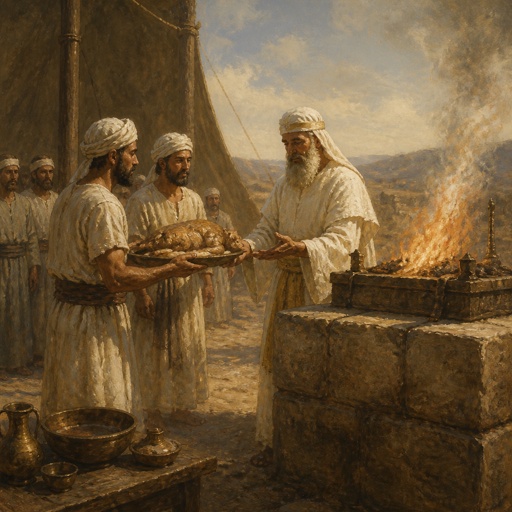
"And they presented the burnt offering unto him, with the pieces thereof, and the head: and he burnt them upon the altar." - Leviticus 9:13

Leviticus 24:13 - "And the LORD spake unto Moses, saying,"

Leviticus 21:13 - "And he shall take a wife in her virginity."

Leviticus 13:1 - "And the LORD spake unto Moses and Aaron, saying,"

Leviticus 23:9 - "¶ And the LORD spake unto Moses, saying,"

Leviticus 13:35 - "But if the scall spread much in the skin after his cleansing;"

Leviticus 13:29 - "¶ If a man or woman have a plague upon the head or the beard;"

Leviticus 9:16 - "And he brought the burnt offering, and offered it according to the manner."

Leviticus 13:18 - "¶ The flesh also, in which, even in the skin thereof, was a boil, and is healed,"

Leviticus 13:14 - "But when raw flesh appeareth in him, he shall be unclean."

Leviticus 9:11 - "And the flesh and the hide he burnt with fire without the camp."

Leviticus 13:47 - "¶ The garment also that the plague of leprosy is in, whether it be a woollen garment, or a linen garment;"

Leviticus 13:22 - "And if it spread much abroad in the skin, then the priest shall pronounce him unclean: it is a plague."

Leviticus 25:13 - "In the year of this jubile ye shall return every man unto his possession."

Leviticus 6:13 - "The fire shall ever be burning upon the altar; it shall never go out."

Leviticus 9:20 - "And they put the fat upon the breasts, and he burnt the fat upon the altar:"

Leviticus 13:19 - "And in the place of the boil there be a white rising, or a bright spot, white, and somewhat reddish, and it be shewed to the priest;"

Leviticus 9:9 - "And the sons of Aaron brought the blood unto him: and he dipped his finger in the blood, and put it upon the horns of the altar, and poured out the blood at the bottom of the altar:"

Leviticus 13:48 - "Whether it be in the warp, or woof; of linen, or of woollen; whether in a skin, or in any thing made of skin;"

Leviticus 13:50 - "And the priest shall look upon the plague, and shut up it that hath the plague seven days:"

Leviticus 15:9 - "And what saddle soever he rideth upon that hath the issue shall be unclean."

Leviticus 9:14 - "And he did wash the inwards and the legs, and burnt them upon the burnt offering on the altar."

Leviticus 9:8 - "¶ Aaron therefore went unto the altar, and slew the calf of the sin offering, which was for himself."

Leviticus 9:1 - "And it came to pass on the eighth day, that Moses called Aaron and his sons, and the elders of Israel;"

Leviticus 27:13 - "But if he will at all redeem it, then he shall add a fifth part thereof unto thy estimation."

Leviticus 13:38 - "¶ If a man also or a woman have in the skin of their flesh bright spots, even white bright spots;"

Leviticus 13:16 - "Or if the raw flesh turn again, and be changed unto white, he shall come unto the priest;"