The Law of Cleansing: Finding Hope in Unclean Places
“This is the law of him in whom is the plague of leprosy, whose hand is not able to get that which pertaineth to his cleansing.” — Leviticus 14:32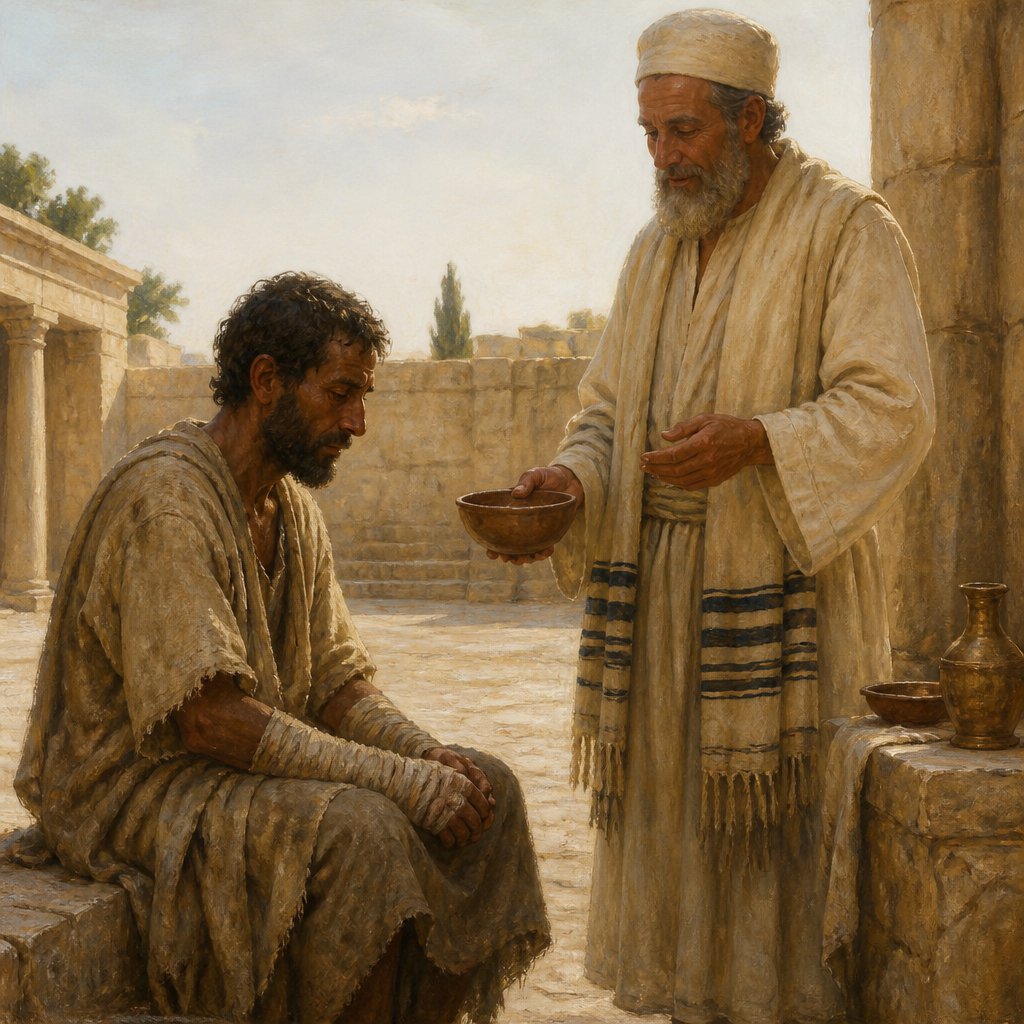
Leviticus 14:32 reads, "This is the law of him in whom is the plague of leprosy, whose hand is not able to get that which pertaineth to his cleansing." In this verse, we are drawn into the intricate laws that governed the lives of the Israelites, especially surrounding the debilitating disease of leprosy. To fully appreciate the depth of this scripture, we must grasp its context, not only historically but spiritually, as it echoes themes that transcend time and speak directly to our current human condition.
In the ancient world, leprosy was a dire condition, often associated with sin and punishment. Those afflicted were cast out from society, quarantined, and forced to live in isolation. This law describes the plight of someone who not only suffers from leprosy but also finds themselves in a situation where they cannot provide for their own cleansing. These poignant details lead us to contemplate the paradoxes of human experience—particularly the themes of isolation, helplessness, and the pursuit of holiness.
The verse opens up with the mention of "the law of him in whom is the plague of leprosy." Here, we cannot overlook how the law is centered on the afflicted individual. It reminds us that God is not indifferent to the suffering of His people. There is a structure of hope even in the seemingly hopeless circumstances. In these detailed laws concerning leprosy, God was affirming the intrinsic value of life, aiming to restore rather than merely condemn.
The phrase "whose hand is not able to get that which pertaineth to his cleansing" reveals the vulnerability of the afflicted. This situation is not only physical but deeply spiritual. How many times in our own lives do we encounter circumstances that cause us to feel profoundly helpless? We might grapple with personal struggles, sin, loss, or even a sense of profound unworthiness where it seems as though we cannot reach out and grasp what we need for cleansing and renewal.
In times of despair, it is crucial to understand that God’s laws and commandments are not merely regulations but pathways to restoration. Instead of presenting a cruel set of restrictions, they are opportunities for recovery and transformation. For the leprous individual in Leviticus, the prescribed actions for cleansing pointed to a communal act of recognition of grace, mercy, and the healing power of God. Likewise, in our struggles, acknowledgment of our uncleanliness—or sinfulness—is the first step towards receiving God’s restorative grace.
Furthermore, God’s intent in providing these laws goes beyond physical restoration. They serve as a reminder to the community regarding purity, the seriousness of sin, and the importance of caring for one another. Even those who seemed hopeless had provisions made for them. This poignantly highlights the essence of community—bearing one another’s burdens and providing for those who are unable to care for themselves. In a spiritual context, this verse speaks to the great hope we have in Christ, who engages with the outcast and restores dignity to the brokenhearted.
To apply this teaching to our lives, we must open ourselves to God's cleansing work. Are there areas in your life where you feel spiritually leprous, places where you sense you cannot reach God’s grace? Remember, cleansing is not solely dependent upon our own effort, but rather on God’s grace and provision. He has made a way for us, just as He provided laws for cleansing for those suffering from leprosy.
As we delve deeper into this scripture, let us reflect on how God desires to deal with our impurities, offering mercy and restoration in our desperate moments. Just as the law provided for the leper, God has provided for us through His Son, Jesus Christ, who touched the lepers and healed them. Let us lean into this law of cleansing, recognizing that no matter where we find ourselves, God longs for us to return to wholeness. Amen.
Get our apps


Artwork for Leviticus 14:32

Leviticus 14:32 - "This is the law of him in whom is the plague of leprosy, whose hand is not able to get that which pertaineth to his cleansing."
"This is the law of him in whom is the plague of leprosy, whose hand is not able to get that which pertaineth to his cleansing." - Leviticus 14:32

Leviticus 8:32 - "And that which remaineth of the flesh and of the bread shall ye burn with fire."

Leviticus 25:32 - "Notwithstanding the cities of the Levites, and the houses of the cities of their possession, may the Levites redeem at any time."

Leviticus 4:32 - "And if he bring a lamb for a sin offering, he shall bring it a female without blemish."

Leviticus 26:32 - "And I will bring the land into desolation: and your enemies which dwell therein shall be astonished at it."

Leviticus 14:51

Leviticus 7:32 - "And the right shoulder shall ye give unto the priest for an heave offering of the sacrifices of your peace offerings."

Leviticus 27:32 - "And concerning the tithe of the herd, or of the flock, even of whatsoever passeth under the rod, the tenth shall be holy unto the LORD."

Leviticus 14:55 - "And for the leprosy of a garment, and of a house,"

1 Corinthians 14:32 - "And the spirits of the prophets are subject to the prophets."

Leviticus 14:56 - "And for a rising, and for a scab, and for a bright spot:"

Leviticus 13:32 - "And in the seventh day the priest shall look on the plague: and, behold, if the scall spread not, and there be in it no yellow hair, and the scall be not in sight deeper than the skin;"

Numbers 14:32 - "But as for you, your carcases, they shall fall in this wilderness."

Matthew 14:32 - "And when they were come into the ship, the wind ceased."

Leviticus 14:1 - "And the LORD spake unto Moses, saying,"

Leviticus 11:14 - "And the vulture, and the kite after his kind;"

Leviticus 5:14 - "¶ And the LORD spake unto Moses, saying,"

Leviticus 19:32 - "¶ Thou shalt rise up before the hoary head, and honour the face of the old man, and fear thy God: I am the LORD."

Leviticus 22:32 - "Neither shall ye profane my holy name; but I will be hallowed among the children of Israel: I am the LORD which hallow you,"

Leviticus 14:54 - "This is the law for all manner of plague of leprosy, and scall,"

"And that which remaineth of the flesh and of the bread shall ye burn with fire." - Leviticus 8:32

Leviticus 26:14 - "¶ But if ye will not hearken unto me, and will not do all these commandments;"

Leviticus 14:33 - "¶ And the LORD spake unto Moses and unto Aaron, saying,"

Leviticus 15:32 - "This is the law of him that hath an issue, and of him whose seed goeth from him, and is defiled therewith;" The image should not depict explicit or offensive content but be symbolic.

Leviticus 14:57 - "To teach when it is unclean, and when it is clean: this is the law of leprosy."

"And for the leprosy of a garment, and of a house," - Leviticus 14:55

Exodus 32:14 - "And the LORD repented of the evil which he thought to do unto his people."

Proverbs 14:32 - "The wicked is driven away in his wickedness: but the righteous hath hope in his death."

Leviticus 13:14 - "But when raw flesh appeareth in him, he shall be unclean."