Cleansing Within and Without: A Deeper Look at Leviticus 14:47
“And he that lieth in the house shall wash his clothes; and he that eateth in the house shall wash his clothes.” — Leviticus 14:47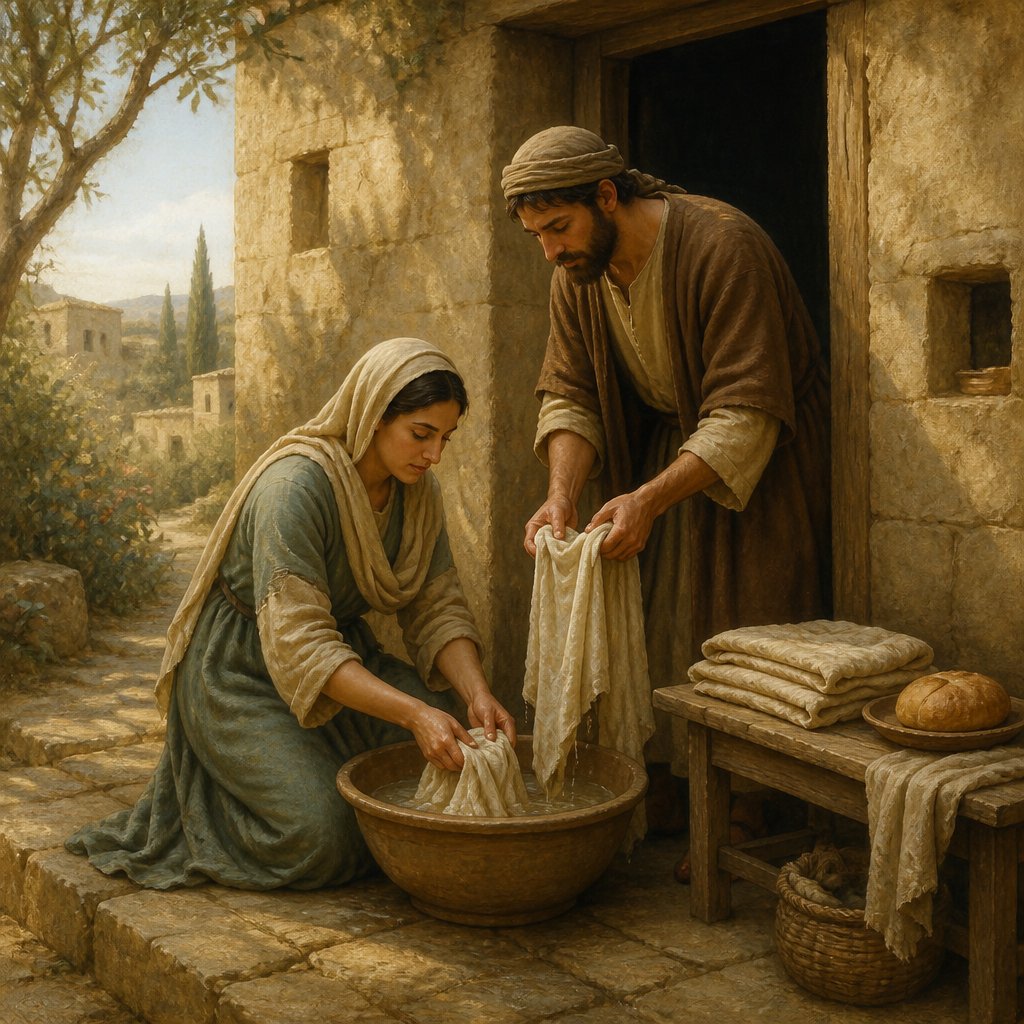
The book of Leviticus often presents challenges for modern readers, as its laws and regulations may seem far removed from our contemporary experience. Yet, the principles behind these laws are timeless and hold profound significance for our spiritual lives. Leviticus 14:47 states, "And he that lieth in the house shall wash his clothes; and he that eateth in the house shall wash his clothes" (KJV). This verse addresses the issue of ritual purity in ancient Israel and serves as a reminder of how spiritual and physical cleanliness are interconnected.
To understand the context of this verse, we must recognize that Leviticus deals heavily with themes of holiness, purity, and the condition of one’s heart before God. The chapter revolves around the diagnosis and cleansing from leprosy, a severe physical condition that also had profound communal and spiritual implications. The Israelites believed that physical ailments could be tied to spiritual uncleanliness, and therefore, those affected would require not only physical healing but also a restoration of their place within the community.
The act of washing one’s clothes signified more than mere hygiene; it represented a powerful metaphor for spiritual renewal. In the culture of ancient Israel, clothing was seen as an extension of one’s identity. To wash one’s garments was to participate in a process of purification, both externally and internally.
The command to wash reflects a deeper spiritual reality that we can relate to today. As believers in Christ, we are called to maintain a form of purity that transcends outward actions. In the New Testament, the Apostle Paul frequently speaks about the importance of holiness in our lives. For instance, in 2 Corinthians 7:1, he exhorts the church to cleanse themselves from all filthiness of the flesh and spirit, perfecting holiness in the fear of God.
This call to wash our garments in a spiritual sense invites us to consider what we allow into our lives. Just as the ancient Israelites were required to cleanse their clothes when exposed to potential contamination, we too must remain vigilant regarding the influences we allow to infiltrate our hearts and minds. The language we use, the company we keep, and the media we consume can all have a significant impact on our spiritual vitality and witness.
The act of washing ourselves symbolizes an ongoing process of sanctification—a dedication to seeking God's will and striving for purity in our thoughts, deeds, and intentions. It highlights the importance of accountability and the need for community in this journey. Often, we are not fully aware of the spiritual grime that can accumulate in our lives. Thus, engaging with spiritual mentors, church communities, and regular personal introspection is necessary to comprehend the depths of our need for God’s cleansing.
Moreover, the admonition to wash after sharing a meal within the house resonates with how we view fellowship and communion today. In a spiritual sense, sharing a meal represents intimate communion with others and with God. The challenge extends beyond the physical act of eating to the spiritual nourishment we take from our relationships and interactions. We are to be mindful of what we ‘consume’ relationally, spiritually, and emotionally. Does our fellowship bring us closer to God? Are our conversations saturating our hearts with grace, love, and truth, or are they sowing seeds of discord and negativity?
As we ponder the implications of Leviticus 14:47, let us ask ourselves: What do we need to wash away in our lives? What unhealthy patterns need cleansing through Christ’s transformative power? Every day brings opportunities for renewal, and each moment presents a choice to either become entangled in the impurities of this world or to engage in the redemptive work of Christ, who calls us to be holy as He is holy.
In closing, let us embrace the command to wash our clothes as a call to cultivate purity in all aspects of our lives. May we seek to reflect the light of Christ, ensuring that, like the Israelites, we are prepared to stand in the presence of God—clean and ready for His love and service.
Get our apps


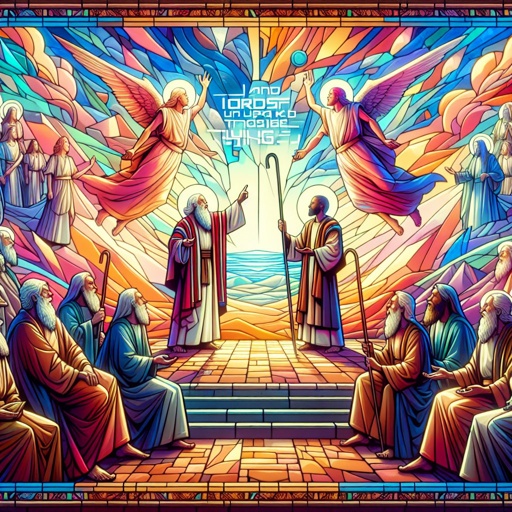
Artwork for Leviticus 14:47

Leviticus 14:47 - "And he that lieth in the house shall wash his clothes; and he that eateth in the house shall wash his clothes."
"And he that lieth in the house shall wash his clothes; and he that eateth in the house shall wash his clothes." - Leviticus 14:47

Leviticus 13:47 - "¶ The garment also that the plague of leprosy is in, whether it be a woollen garment, or a linen garment;"

Philemon 1:4-7

Leviticus 11:47 - "To make a difference between the unclean and the clean, and between the beast that may be eaten and the beast that may not be eaten."
Leviticus 25:47 - "¶ And if a sojourner or stranger wax rich by thee, and thy brother that dwelleth by him wax poor, and sell himself unto the stranger or sojourner by thee, or to the stock of the stranger's family:"

"¶ The garment also that the plague of leprosy is in, whether it be a woollen garment, or a linen garment;" - Leviticus 13:47

Mark 14:47 - "And one of them that stood by drew a sword, and smote a servant of the high priest, and cut off his ear."

Leviticus 14:51

Genesis 47:14 - "And Joseph gathered up all the money that was found in the land of Egypt, and in the land of Canaan, for the corn which they bought: and Joseph brought the money into Pharaoh's house."
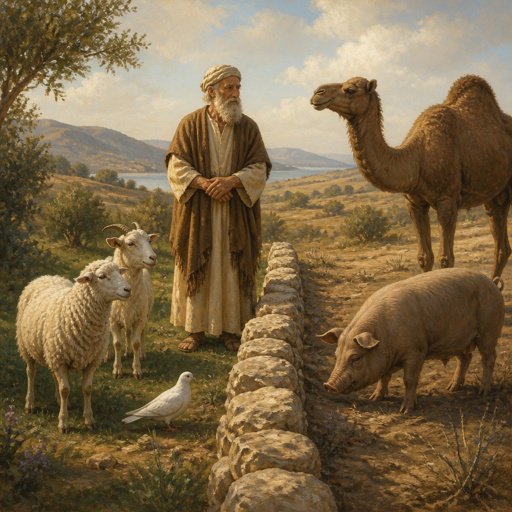
"To make a difference between the unclean and the clean, and between the beast that may be eaten and the beast that may not be eaten." - Leviticus 11:47

Leviticus 14:55 - "And for the leprosy of a garment, and of a house,"

Leviticus 14:56 - "And for a rising, and for a scab, and for a bright spot:"

Leviticus 14:1 - "And the LORD spake unto Moses, saying,"

Leviticus 11:14 - "And the vulture, and the kite after his kind;"
Leviticus 5:14 - "¶ And the LORD spake unto Moses, saying,"

Isaiah 47:14 - "Behold, they shall be as stubble; the fire shall burn them; they shall not deliver themselves from the power of the flame: there shall not be a coal to warm at, nor fire to sit before it."

Leviticus 14:54 - "This is the law for all manner of plague of leprosy, and scall,"

Leviticus 26:14 - "¶ But if ye will not hearken unto me, and will not do all these commandments;"

Leviticus 14:33 - "¶ And the LORD spake unto Moses and unto Aaron, saying,"

Ezekiel 47:14 - "And ye shall inherit it, one as well as another: concerning the which I lifted up mine hand to give it unto your fathers: and this land shall fall unto you for inheritance."

Leviticus 14:57 - "To teach when it is unclean, and when it is clean: this is the law of leprosy."

"And for the leprosy of a garment, and of a house," - Leviticus 14:55

Leviticus 13:14 - "But when raw flesh appeareth in him, he shall be unclean."

Leviticus 14:26 - "And the priest shall pour of the oil into the palm of his own left hand:"

Leviticus 14:30 - "And he shall offer the one of the turtledoves, or of the young pigeons, such as he can get;"

"And for a rising, and for a scab, and for a bright spot:" - Leviticus 14:56

Leviticus 14:50 - "And he shall kill the one of the birds in an earthen vessel over running water:"

Leviticus 9:14 - "And he did wash the inwards and the legs, and burnt them upon the burnt offering on the altar."

Leviticus 14:5 - "And the priest shall command that one of the birds be killed in an earthen vessel over running water:"