Alone in the Holy Place: A Journey of Atonement
“And there shall be no man in the tabernacle of the congregation when he goeth in to make an atonement in the holy place, until he come out, and have made an atonement for himself, and for his household, and for all the congregation of Israel.” — Leviticus 16:17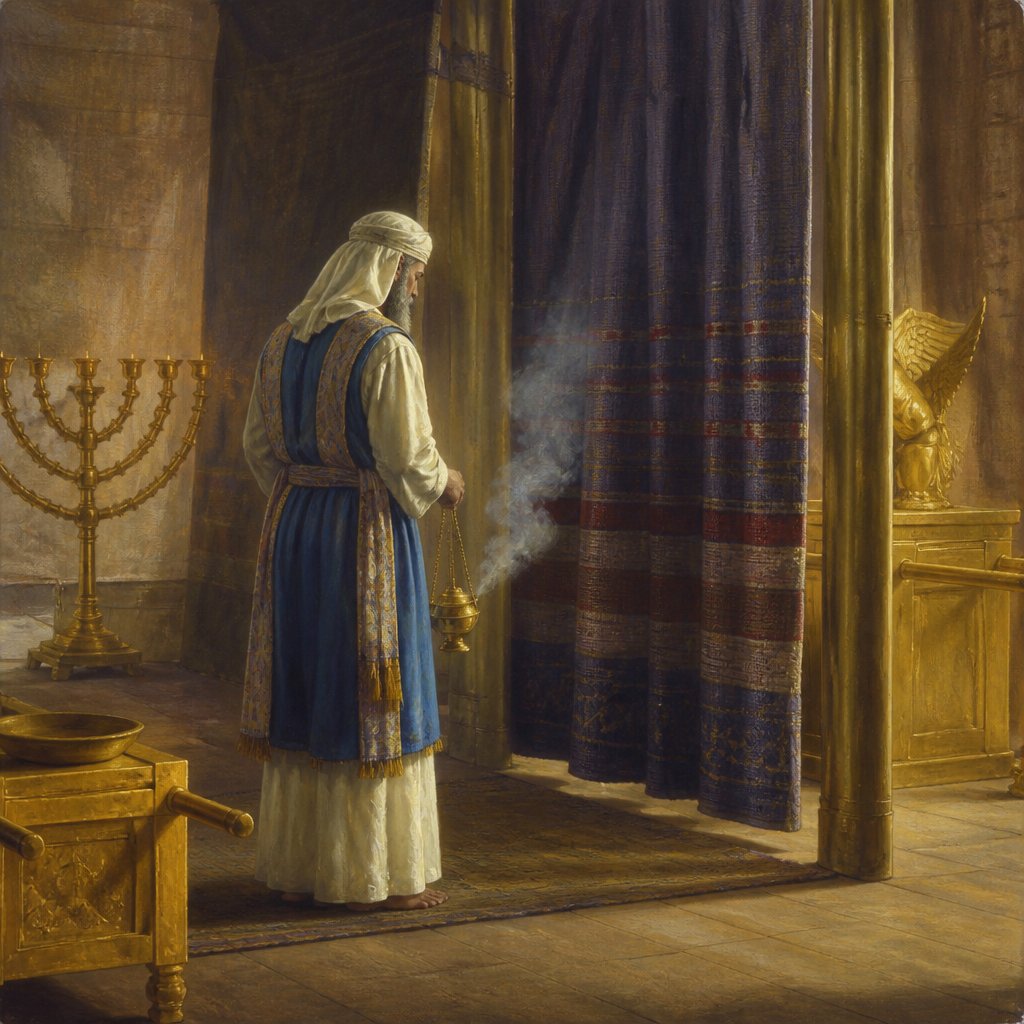
Leviticus 16:17 clearly states: "And there shall be no man in the tabernacle of the congregation when he goeth in to make an atonement in the holy place, until he come out, and have made an atonement for himself, and for his household, and for all the congregation of Israel." This powerful verse invites us into the depth of the sacrificial system established under the Mosaic Law, revealing profound truths about atonement, holiness, and our relationship with God.
The context of Leviticus 16 describes Yom Kippur, the Day of Atonement, one of the holiest days in the Jewish calendar. It was on this day that the high priest entered the Holy of Holies to make atonement for the sins of the people. The isolation of the high priest during this holy act is significant. No one was allowed in the tabernacle while he was making atonement, emphasizing the seriousness and weightiness of the moment. The space was sacred, charged with the presence of God, and only the high priest, after undergoing a rigorous preparation process, could enter.
The isolation of the high priest serves as a powerful metaphor for our personal journeys toward spiritual renewal. Just as he had to enter the holy place alone, away from distraction and the bustle of communal life, so too must we engage in our sacred encounters with God in solitude. In our lives filled with noise and distractions, we often miss the opportunity to experience true atonement and reconciliation with our Creator. It is in the quiet moments that we can hear God’s voice calling us to confess, repent, and be renewed.
The requirement for the high priest to atone for himself first is a vital lesson in humility and responsibility. Before he could bear the burden of others’ sins—the households and the whole congregation of Israel—he had to address his own. This action reminds us that we, too, must examine our hearts before seeking to intercede for others. In Matthew 7:5, Jesus emphasizes this point: "And why beholdest thou the mote that is in thy brother's eye, but considerest not the beam that is in thine own eye?" God desires that we come to Him with clean hands and pure hearts, acknowledging our shortcomings and vulnerabilities.
As we reflect on this verse, we can draw parallels with our lives today. The New Testament reveals that Jesus becomes our ultimate high priest. Through His sacrifice, He has made atonement not only for His sins but for ours, allowing us the unique privilege to approach God directly (Hebrews 4:16). However, this does not negate the importance of personal repentance and reconciliation. Like the high priest, we need to engage in a process of atonement; we must not take for granted the privilege of being in God's presence.
Moreover, the communal aspect of atonement in this passage shows God’s heart towards community. Our relationship with God is intertwined with our relationships with others. As the high priest made atonement for himself, his household, and the congregation, we too are called to lift each other in prayer and bear one another’s burdens (Galatians 6:2). While individual atonement is essential, our journey does not stop there; we must seek to intercede for those around us—our families, friends, and communities.
Finally, we recognize the hope found in atonement. The ceremony was not just a somber acknowledgment of sin; it was also an act of faith in God’s holiness and grace. As we come before the Lord in solitude and repentance, we find that He is a God who forgives and renews. Let us enter His presence—not with dread, but with hope, knowing that He has made a way for us to be reconciled to Him.
In conclusion, Leviticus 16:17 challenges us to embrace moments of solitude for personal atonement and growth while remembering that we are not just recipients of grace but vessels of it for others. May we approach the Holy Place with reverence, knowing that in our isolation, we find connection to the Divine and a call to love and serve those around us.
Get our apps


Artwork for Leviticus 16:17

Leviticus 16:17 - "And there shall be no man in the tabernacle of the congregation when he goeth in to make an atonement in the holy place, until he come out, and have made an atonement for himself, and for his household, and for all the congregation of Israel."
"And there shall be no man in the tabernacle of the congregation when he goeth in to make an atonement in the holy place, until he come out, and have made an atonement for himself, and for his household, and for all the congregation of Israel." - Leviticus 16:17

Leviticus 17:16 - "But if he wash them not, nor bathe his flesh; then he shall bear his iniquity."
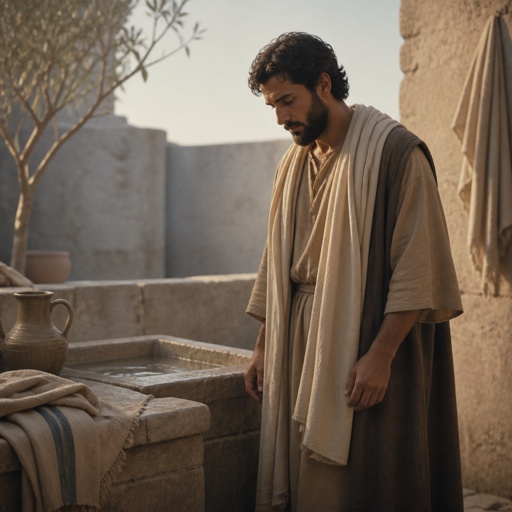
"But if he wash them not, nor bathe his flesh; then he shall bear his iniquity." - Leviticus 17:16

Leviticus 17:7

Leviticus 16:8

Leviticus 23:17-22

Leviticus 11:17 - "And the little owl, and the cormorant, and the great owl,"

Leviticus 22:17 - "¶ And the LORD spake unto Moses, saying,"

leviticus 16:7-10

Leviticus 17:1 - "And the LORD spake unto Moses, saying,"

Leviticus 21:16 - "¶ And the LORD spake unto Moses, saying,"

Leviticus 7:17 - "But the remainder of the flesh of the sacrifice on the third day shall be burnt with fire."

Leviticus 9:16 - "And he brought the burnt offering, and offered it according to the manner."

Leviticus 24:17 - "¶ And he that killeth any man shall surely be put to death."

Leviticus 4:16 - "And the priest that is anointed shall bring of the bullock's blood to the tabernacle of the congregation:"

Leviticus 11:16 - "And the owl, and the night hawk, and the cuckow, and the hawk after his kind,"

Leviticus 16:25 - "And the fat of the sin offering shall he burn upon the altar."

Galatians 5:16-17

Galatians 5:16-17

1 corinthians 3:16-17

1 corinthians 3:16-17

1 corinthians 3:16-17

Leviticus 18:16 - "Thou shalt not uncover the nakedness of thy brother's wife: it is thy brother's nakedness."

Genesis 17-16

Romans 16:17

Romans 16:17

Acts 16:17

Romans 16:17

Leviticus 17:3 - "What man soever there be of the house of Israel, that killeth an ox, or lamb, or goat, in the camp, or that killeth it out of the camp,"