Sacrifices of Worship: Bringing Our Offerings to the Lord
“To the end that the children of Israel may bring their sacrifices, which they offer in the open field, even that they may bring them unto the LORD, unto the door of the tabernacle of the congregation, unto the priest, and offer them for peace offerings unto the LORD.” — Leviticus 17:5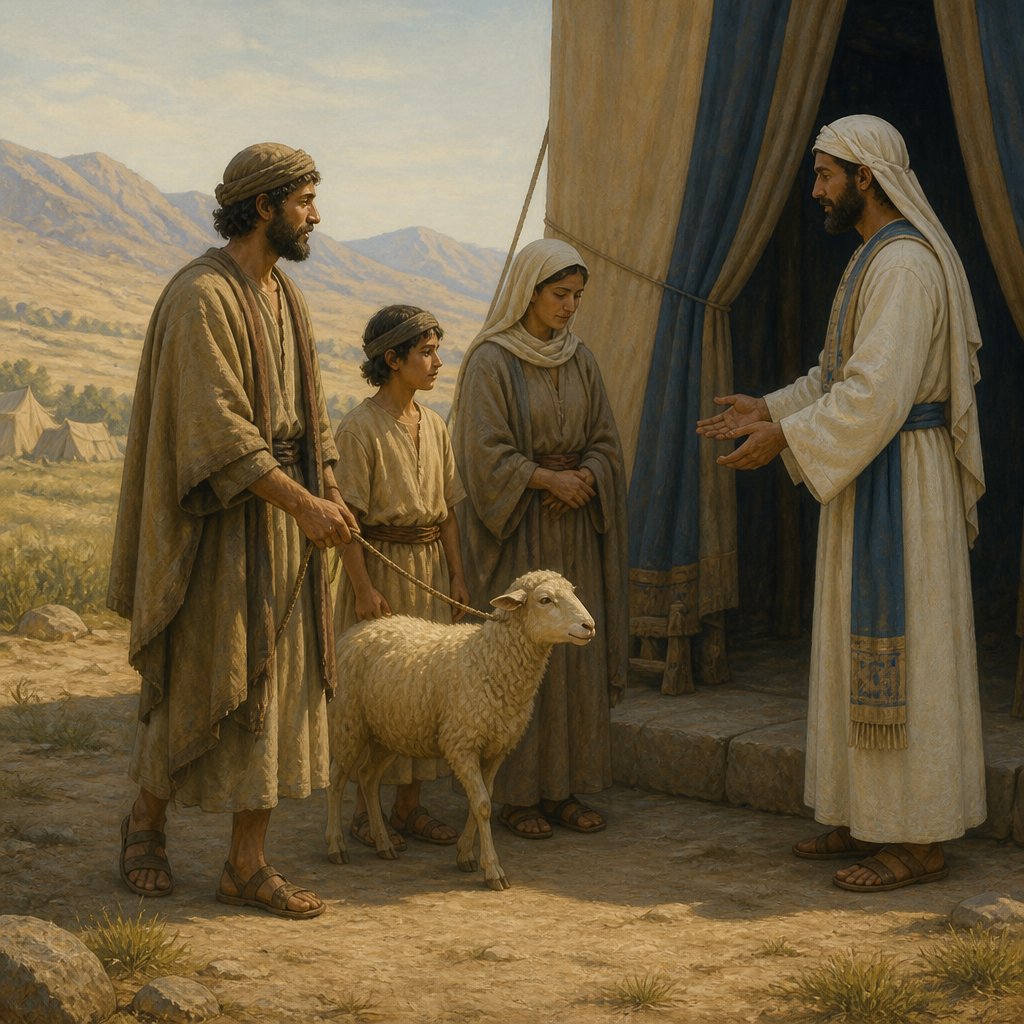
In Leviticus 17:5, we find a profound directive that speaks to the heart of worship and community in the context of ancient Israel. The verse states, "To the end that the children of Israel may bring their sacrifices, which they offer in the open field, even that they may bring them unto the LORD, unto the door of the tabernacle of the congregation, unto the priest, and offer them for peace offerings unto the LORD."
This passage encapsulates a crucial aspect of how the Israelites were to approach their relationship with God through sacrificial offerings, emphasizing a communal responsibility that transcended individual practice. Let us journey deeper into the meaning behind this scripture and explore its relevance in our lives today.
### Understanding the Sacrifice
Sacrifices in the Old Testament served multiple purposes: they were acts of atonement, expressions of gratitude, and symbols of peace and communion with God. The specific reference to bringing these sacrifices "unto the LORD, unto the door of the tabernacle of the congregation" indicates a shift from the informal locations of previous offerings—like the open fields—to a central, sacred place. This movement symbolizes the desire for a deeper relationship with God, moving worship into the communal sphere where it can be shared and supported by the community of faith.
In our contemporary context, the challenge lies in how we view our offerings to God. While we no longer offer animal sacrifices, our acts of worship, service, and devotion can act as modern-day sacrifices. When we come together in worship, Bible study, or acts of service, we are still bringing our ‘sacrifices’ to the door of the tabernacle, asking to engage with the divine in the midst of community.
### Reflecting on Peace Offerings
The peace offerings mentioned in the verse were unique as they represented fellowship with God. It was an occasion for the offerer to celebrate communion and gratitude—not just for reconciliation with God, but for the blessings of life itself. As Christians, we understand that our peace offering is fulfilled in Christ. Ephesians 2:14 tells us, "For he is our peace, who hath made both one, and hath broken down the middle wall of partition between us." Therefore, our offerings of worship should reflect peace, unity, and gratitude for the relationship we have through Christ.
### Bringing Our Offerings
As we reflect on this passage, we must consider how we bring our own offerings to God. Often, life can become so busy and demanding that our personal sacrifices of time, resources, and heartfelt worship can drift to the periphery. We may offer our worship in isolated settings or neglect to engage in the communal aspect of faith altogether. Yet, God calls us—just as he called the children of Israel—to bring our offerings to Him in community.
Imagine the rich tapestry of worship when each member of the community brings their unique offerings—testimonies, praises, songs, prayers, and even their struggles—all to honor the Lord. In doing so, we cultivate an atmosphere of gratitude and peace, reflecting the very essence of peace offerings mentioned in our verse.
### A Call to Unity and Service
Furthermore, part of bringing our offerings involves our attitudes and relationships with one another. Are we at peace with our brothers and sisters in Christ? Recall the words of Matthew 5:23-24, where Jesus calls us to reconcile with our brother before bringing our gift to the altar. This reveals that our offerings are not merely physical acts but are deeply tied to our relational dynamics.
In conclusion, the directive in Leviticus 17:5 reminds us that our faith journey is not a solitary endeavor. We are a community, called to support one another in our offerings to the Lord. Let us strive to bring our sacrifices—our worship, our praises, our grievances—to the communal door of worship. In doing so, we offer true peace offerings unto the Lord, strengthening both our relationship with Him and with one another. As we gather, laden with our offerings, may we seek unity, peace, and the authentic presence of God among us.
Get our apps


Artwork for Leviticus 17:5
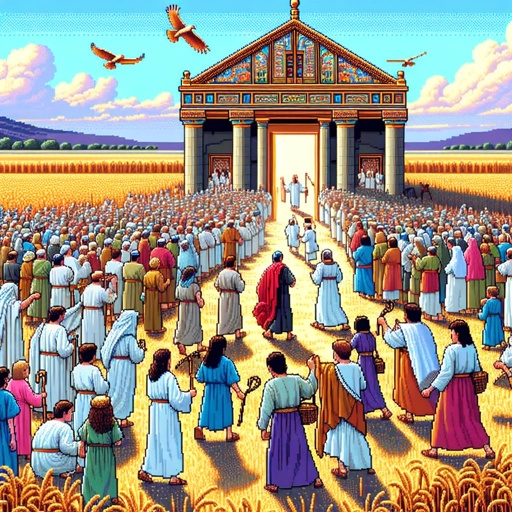
Leviticus 17:5 - "To the end that the children of Israel may bring their sacrifices, which they offer in the open field, even that they may bring them unto the LORD, unto the door of the tabernacle of the congregation, unto the priest, and offer them for peace offerings unto the LORD."
"To the end that the children of Israel may bring their sacrifices, which they offer in the open field, even that they may bring them unto the LORD, unto the door of the tabernacle of the congregation, unto the priest, and offer them for peace offerings unto the LORD." - Leviticus 17:5

Leviticus 5:17 - "¶ And if a soul sin, and commit any of these things which are forbidden to be done by the commandments of the LORD; though he wist it not, yet is he guilty, and shall bear his iniquity."

Leviticus 17:7

Leviticus 23:17-22

Leviticus 11:17 - "And the little owl, and the cormorant, and the great owl,"

Leviticus 22:17 - "¶ And the LORD spake unto Moses, saying,"

Leviticus 17:1 - "And the LORD spake unto Moses, saying,"

Leviticus 7:17 - "But the remainder of the flesh of the sacrifice on the third day shall be burnt with fire."

Leviticus 24:17 - "¶ And he that killeth any man shall surely be put to death."
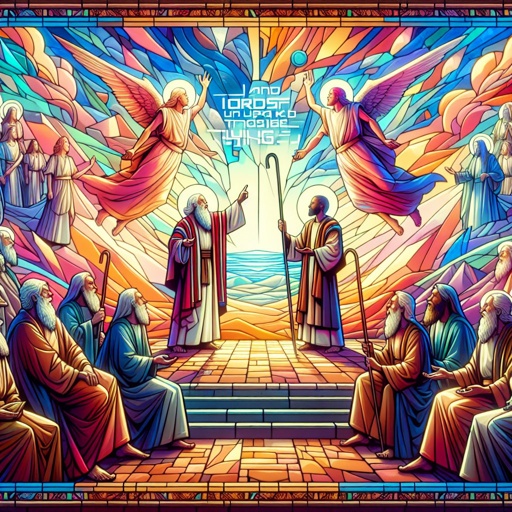
Leviticus 5:14 - "¶ And the LORD spake unto Moses, saying,"

Leviticus 5:5 - "And it shall be, when he shall be guilty in one of these things, that he shall confess that he hath sinned in that thing:"

Leviticus 23:5 - "In the fourteenth day of the first month at even is the LORD'S passover."

Leviticus 15:17 - "And every garment, and every skin, whereon is the seed of copulation, shall be washed with water, and be unclean until the even."

Leviticus 17:3 - "What man soever there be of the house of Israel, that killeth an ox, or lamb, or goat, in the camp, or that killeth it out of the camp,"

Leviticus 5:19 - "It is a trespass offering: he hath certainly trespassed against the LORD."

Leviticus 27:17 - "If he sanctify his field from the year of jubile, according to thy estimation it shall stand."

Leviticus 17:16 - "But if he wash them not, nor bathe his flesh; then he shall bear his iniquity."

"¶ And the LORD spake unto Moses, saying," - Leviticus 22:17

"And the LORD spake unto Moses, saying," - Leviticus 17:1

"And the little owl, and the cormorant, and the great owl," - Leviticus 11:17

Galatians 5:16-17

Galatians 5:16-17

Leviticus 9:17 - "And he brought the meat offering, and took an handful thereof, and burnt it upon the altar, beside the burnt sacrifice of the morning."

Leviticus 8:5 - "And Moses said unto the congregation, This is the thing which the LORD commanded to be done."
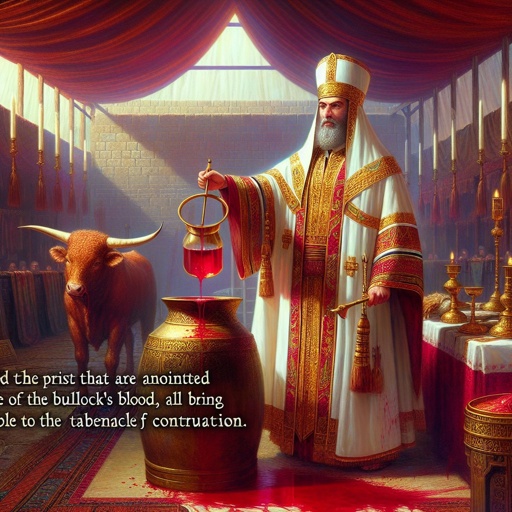
Leviticus 4:5 - "And the priest that is anointed shall take of the bullock's blood, and bring it to the tabernacle of the congregation:"
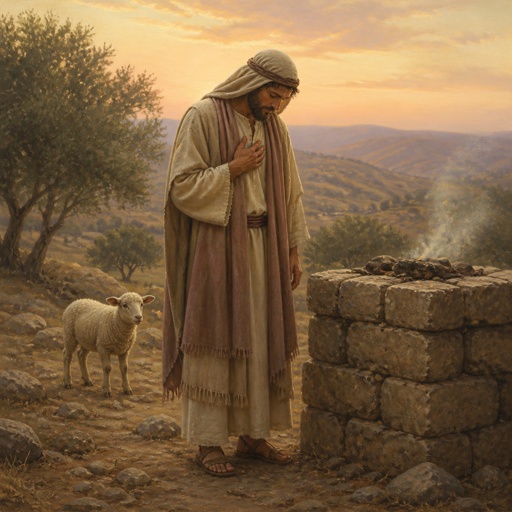
"¶ And if a soul sin, and commit any of these things which are forbidden to be done by the commandments of the LORD; though he wist it not, yet is he guilty, and shall bear his iniquity." - Leviticus 5:17

Leviticus 8:17 - "But the bullock, and his hide, his flesh, and his dung, he burnt with fire without the camp; as the LORD commanded Moses."

Leviticus 4:17 - "And the priest shall dip his finger in some of the blood, and sprinkle it seven times before the LORD, even before the vail."

Genesis 17:5