The Cry of the Land: A Devotional Reflection on Leviticus 18:25
“And the land is defiled: therefore I do visit the iniquity thereof upon it, and the land itself vomiteth out her inhabitants.” — Leviticus 18:25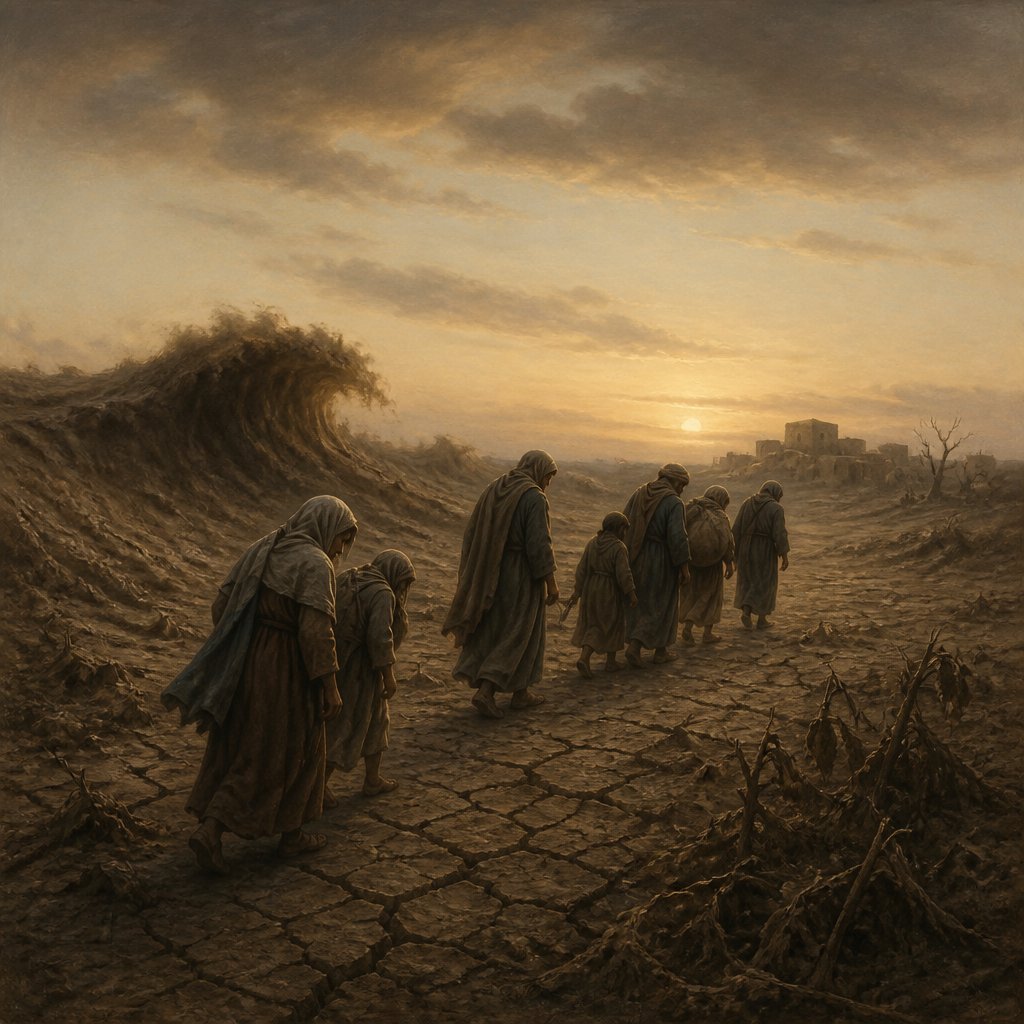
Leviticus 18:25 states, "And the land is defiled: therefore I do visit the iniquity thereof upon it, and the land itself vomiteth out her inhabitants." This verse speaks to a profound truth about the relationship between humanity, morality, and the physical world we inhabit. It exposes a sobering reality: the moral decay of a society can have catastrophic implications for the land itself. This passage serves as a stark reminder of the consequences of sin—not just on individuals, but on entire communities and landscapes.
The context of Leviticus chapters 18 to 20 outlines the laws given by God to the Israelites, instructing them on how to live pure and holy lives distinct from the surrounding nations. The sins detailed here—such as sexual immorality, idolatry, and injustice—are not merely personal failures, but societal toxins that corrupt the very land where these activities take place. The Old Testament often portrays land as a living entity that can be affected by human actions. As stewards of God’s creation, humanity has a responsibility to cultivate righteousness, which in turn allows the land to flourish.
The phrase "the land is defiled" suggests a deep, intrinsic connection between our behaviors and the health of our environment. Sin creates a moral filth that does not just isolate us from God but also harms the ecological and social systems around us. As we engage in practices contrary to God’s will, the consequences ripple through nature, leading to desolation, division, and displacement. The image of the land "vomiting out her inhabitants" is a dramatic illustration of divine judgment. It portrays a land so burdened by human sin that it can no longer sustain the people who inhabit it. It evokes the imagery of a living body reacting violently to harmful substances, which reveals the severity of spiritual corruption.
Reflecting on this verse, one can draw parallels to modern society. As we look across the world today, we see issues like environmental degradation, social injustice, and rampant immorality. These are not isolated problems but indicators of a deeper spiritual ailment. Much like the Israelites, we are called to examine our own hearts and societal practices. What are we defiling our land with? What systemic injustices and moral compromises are causing the earth to grieve in view of God’s holiness?
Moreover, God’s warning through Leviticus prompts a response. The promise of restoration is always intertwined with the call for repentance. God does not desire to cast away His people; rather, He seeks to bring them back into right relationship with Him. This divine longing is evident throughout Scripture, culminating in the redemptive work of Jesus Christ, who came to restore both humanity and creation itself. When we confess and turn from our sins, not only do we heal our relationship with God, but we also begin to heal the land and communities that have been affected by our actions.
In application, let us take time to consider our contributions to collective sinfulness—both individually and as a community. It may mean advocating for justice, loving our neighbors actively, and promoting environmental stewardship. God invites us into a covenantal relationship that is not only personal but deeply communal and ecological. In a world yearning for healing, we must be the light that promotes righteousness, restorative living, and ecological awareness.
In closing, let us meditate on Leviticus 18:25 not as a passage of doom, but as a catalyst for reflective living. May we remember the gravity of our choices and their broader implications. Let us strive to live lives that honor God, ensuring that we cultivate a land free from the stains of sin. Healing begins with humility, repentance, and a commitment to living in a manner consistent with God’s commands, leading to the flourishing of both people and place.
Get our apps


Artwork for Leviticus 18:25

Leviticus 18:25 - "And the land is defiled: therefore I do visit the iniquity thereof upon it, and the land itself vomiteth out her inhabitants."
"And the land is defiled: therefore I do visit the iniquity thereof upon it, and the land itself vomiteth out her inhabitants." - Leviticus 18:25

Leviticus 25:18 - "¶ Wherefore ye shall do my statutes, and keep my judgments, and do them; and ye shall dwell in the land in safety."
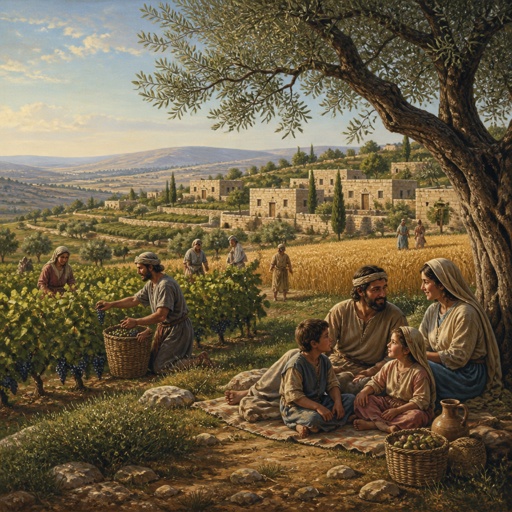
"¶ Wherefore ye shall do my statutes, and keep my judgments, and do them; and ye shall dwell in the land in safety." - Leviticus 25:18

Leviticus 25:26 - "And if the man have none to redeem it, and himself be able to redeem it;"

Leviticus 25:34 - "But the field of the suburbs of their cities may not be sold; for it is their perpetual possession."

Leviticus 25:1 - "And the LORD spake unto Moses in mount Sinai, saying,"

Leviticus 16:25 - "And the fat of the sin offering shall he burn upon the altar."

Leviticus 11:18 - "And the swan, and the pelican, and the gier eagle,"

John 18:25

Genesis 18-25

Genesis 18:25

Leviticus 25:24 - "And in all the land of your possession ye shall grant a redemption for the land."

Leviticus 18:1 - "And the LORD spake unto Moses, saying,"

Genesis 25-18

Leviticus 25:13 - "In the year of this jubile ye shall return every man unto his possession."

Leviticus 25:23 - "¶ The land shall not be sold for ever: for the land is mine; for ye are strangers and sojourners with me."

Leviticus 25:7 - "And for thy cattle, and for the beast that are in thy land, shall all the increase thereof be meat."

Leviticus 18:22 - "Thou shalt not lie with mankind, as with womankind: it is abomination."
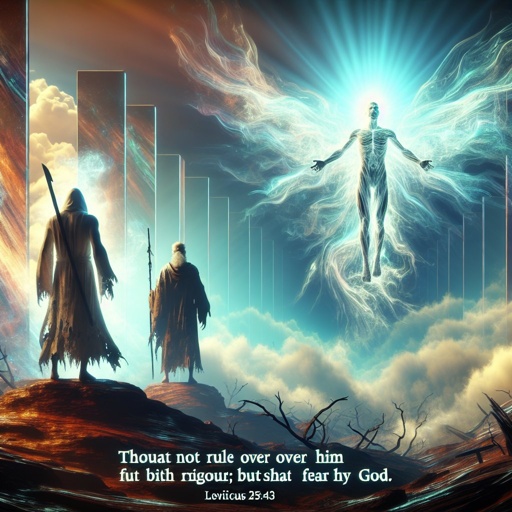
Leviticus 25:43 - "Thou shalt not rule over him with rigour; but shalt fear thy God."

Leviticus 25:32 - "Notwithstanding the cities of the Levites, and the houses of the cities of their possession, may the Levites redeem at any time."

Leviticus 27:25 - "And all thy estimations shall be according to the shekel of the sanctuary: twenty gerahs shall be the shekel."

Leviticus 25:25 - "¶ If thy brother be waxen poor, and hath sold away some of his possession, and if any of his kin come to redeem it, then shall he redeem that which his brother sold."

Joshua 18:25 - "Gibeon, and Ramah, and Beeroth,"

Leviticus 25:12 - "For it is the jubile; it shall be holy unto you: ye shall eat the increase thereof out of the field."

Leviticus 25:40 - "But as an hired servant, and as a sojourner, he shall be with thee, and shall serve thee unto the year of jubile:"

Cycle of sabbath rest year. Leviticus 25:1-7

Leviticus 18:18 - "Neither shalt thou take a wife to her sister, to vex her, to uncover her nakedness, beside the other in her life time."

Leviticus 13:18 - "¶ The flesh also, in which, even in the skin thereof, was a boil, and is healed,"

Leviticus 25:42 - "For they are my servants, which I brought forth out of the land of Egypt: they shall not be sold as bondmen."