Gleaning Grace: Leaving Space for Others
"And thou shalt not glean thy vineyard, neither shalt thou gather every grape of thy vineyard; thou shalt leave them for the poor and stranger: I am the LORD your God." - Leviticus 19:10
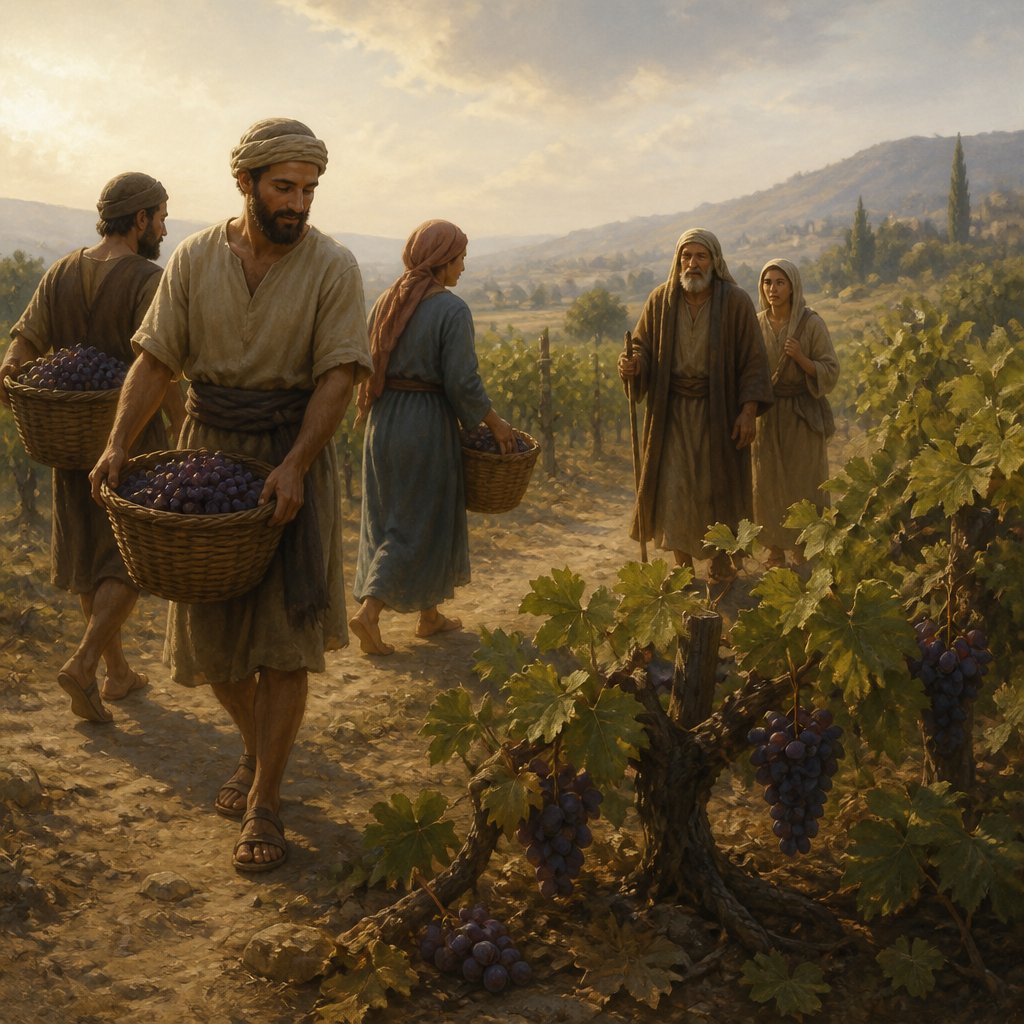
In the book of Leviticus, God provides His people with crucial guidelines not only for worship but also for social justice and compassion in their daily lives. Specifically, Leviticus 19:10 states, "And thou shalt not glean thy vineyard, neither shalt thou gather every grape of thy vineyard; thou shalt leave them for the poor and stranger: I am the LORD your God." This verse reveals an extraordinary principle—God’s call for us to be generous and to create space for those who are less fortunate.
The command not to glean fully speaks to the heart of God's economy of grace. Originally given to the Israelites, these instructions were not merely agricultural advice; they carried a deeply rooted spiritual significance. In a society where resources could easily be hoarded and where neglecting the poor could lead to their marginalization, God’s directive was revolutionary. He invites the wealthy landowners to observe a rhythm of generosity, ensuring that their fields would not only sustain their families but also provide sustenance for those in need.
The act of leaving behind the gleanings in the vineyard served as a tangible expression of God's character. Throughout the Scriptures, we see a recurring theme: God is a giver who cares deeply for the marginalized. He identifies Himself as the Lord—an acknowledgment of His sovereign authority and underlying purpose for justice and compassion. When He states, "I am the LORD your God," He reinforces the point that our actions should reflect His nature.
In today's world, the significant disparity between wealth and poverty persists. Many are struggling daily to meet their basic needs. The call to leave the gleanings can translate into modern practices of generosity, philanthropy, and social justice. It challenges us to consider how we can extend grace and support to those around us. For example, when we evaluate our personal resources—our time, finances, talents, and even our emotional availability—how can we intentionally leave space for those in need? Are there opportunities to serve in our communities, to volunteer, or to share excess resources we may have?
Moreover, the command to leave some grapes for the poor and stranger also carries a lesson about humility and surrendering our sense of entitlement. In a culture that often glorifies self-sufficiency and independence, God calls us to recognize that everything we have is a blessing—a gift that is meant to be shared. Gleaning teaches us to be mindful of our blessings and reminds us that we are stewards of what we possess, rather than owners who have the exclusive right over our resources.
Additionally, the directive to leave some of the yields for others cultivates a communal spirit, breaking the isolation that wealth can impose. It encourages relationship and fosters a sense of community, reminding us that we are all part of a larger family. By sharing with the poor and the stranger, we invite them into our lives, promoting unity and demonstrating the love of Christ that transcends societal boundaries.
In the act of leaving, we become agents of hope and restoration. Imagine a community where the fruits of our labor are shared freely—where the vulnerable feel seen, acknowledged, and cared for. Picture how the love of God can transform lives when we choose to let others partake in the abundance we have received. Such an ethos reflects the heart of the Gospel, where Jesus Himself, though rich in glory, became poor for our sakes (2 Corinthians 8:9).
Ultimately, Leviticus 19:10 invites us to examine our own hearts and lifestyles. Are we generous stewards willing to share the harvest of our lives? Each act of leaving behind our abundance becomes a silent prayer—a declaration of trust in God’s provision and a testimony of His love in action. Let us not forget that as we care for the least of these, we are serving Christ Himself (Matthew 25:40). Let us glean the lessons of grace and generosity, becoming conduits of God’s compassion in a world desperately in need of hope.
Want to reflect more on Leviticus 19:10?
Continue your spiritual journey with Bible Chat — an AI-powered tool for exploring God's Word through conversation. Ask questions, discover connections, and deepen your understanding.
Get Our Apps


Leviticus 19:10 Artwork

Leviticus 19:10 - "And thou shalt not glean thy vineyard, neither shalt thou gather every grape of thy vineyard; thou shalt leave them for the poor and stranger: I am the LORD your God."
"And thou shalt not glean thy vineyard, neither shalt thou gather every grape of thy vineyard; thou shalt leave them for the poor and stranger: I am the LORD your God." - Leviticus 19:10

Leviticus 10:19 - "And Aaron said unto Moses, Behold, this day have they offered their sin offering and their burnt offering before the LORD; and such things have befallen me: and if I had eaten the sin offering to day, should it have been accepted in the sight of the LORD?"

Leviticus 21:19 - "Or a man that is brokenfooted, or brokenhanded,"

Leviticus 6:19 - "¶ And the LORD spake unto Moses, saying,"

Leviticus 19:1 - "And the LORD spake unto Moses, saying,"

Leviticus 10:10 - "And that ye may put difference between holy and unholy, and between unclean and clean;"

Leviticus 11:19 - "And the stork, the heron after her kind, and the lapwing, and the bat."

Leviticus 19:7 - "And if it be eaten at all on the third day, it is abominable; it shall not be accepted."

leviticus 16:7-10

"Or a man that is brokenfooted, or brokenhanded," - Leviticus 21:19

Leviticus 5:19 - "It is a trespass offering: he hath certainly trespassed against the LORD."

Leviticus 19:35 - "¶ Ye shall do no unrighteousness in judgment, in meteyard, in weight, or in measure."

Leviticus 10:20 - "And when Moses heard that, he was content."

Leviticus 10:8 - "¶ And the LORD spake unto Aaron, saying,"

Leviticus 8:19 - "And he killed it; and Moses sprinkled the blood upon the altar round about."

Leviticus 19:33 - "¶ And if a stranger sojourn with thee in your land, ye shall not vex him."

Leviticus 19:11 - "¶ Ye shall not steal, neither deal falsely, neither lie one to another."

Leviticus 19:24 - "But in the fourth year all the fruit thereof shall be holy to praise the LORD withal."

Leviticus 13:19 - "And in the place of the boil there be a white rising, or a bright spot, white, and somewhat reddish, and it be shewed to the priest;"

Leviticus 22:19 - "Ye shall offer at your own will a male without blemish, of the beeves, of the sheep, or of the goats."

Leviticus 9:19 - "And the fat of the bullock and of the ram, the rump, and that which covereth the inwards, and the kidneys, and the caul above the liver:"

Leviticus 4:19 - "And he shall take all his fat from him, and burn it upon the altar."

Leviticus 19:30 - "¶ Ye shall keep my sabbaths, and reverence my sanctuary: I am the LORD."

Leviticus 19:5 - "¶ And if ye offer a sacrifice of peace offerings unto the LORD, ye shall offer it at your own will."

Leviticus 24:19 - "And if a man cause a blemish in his neighbour; as he hath done, so shall it be done to him;"

"And the LORD spake unto Moses, saying," - Leviticus 19:1

"¶ And the LORD spake unto Moses, saying," - Leviticus 6:19

Luke 10:18-19

Luke 10:18-19