The Call to Love: A Deeper Understanding of Leviticus 19:17
“Thou shalt not hate thy brother in thine heart: thou shalt in any wise rebuke thy neighbour, and not suffer sin upon him.” — Leviticus 19:17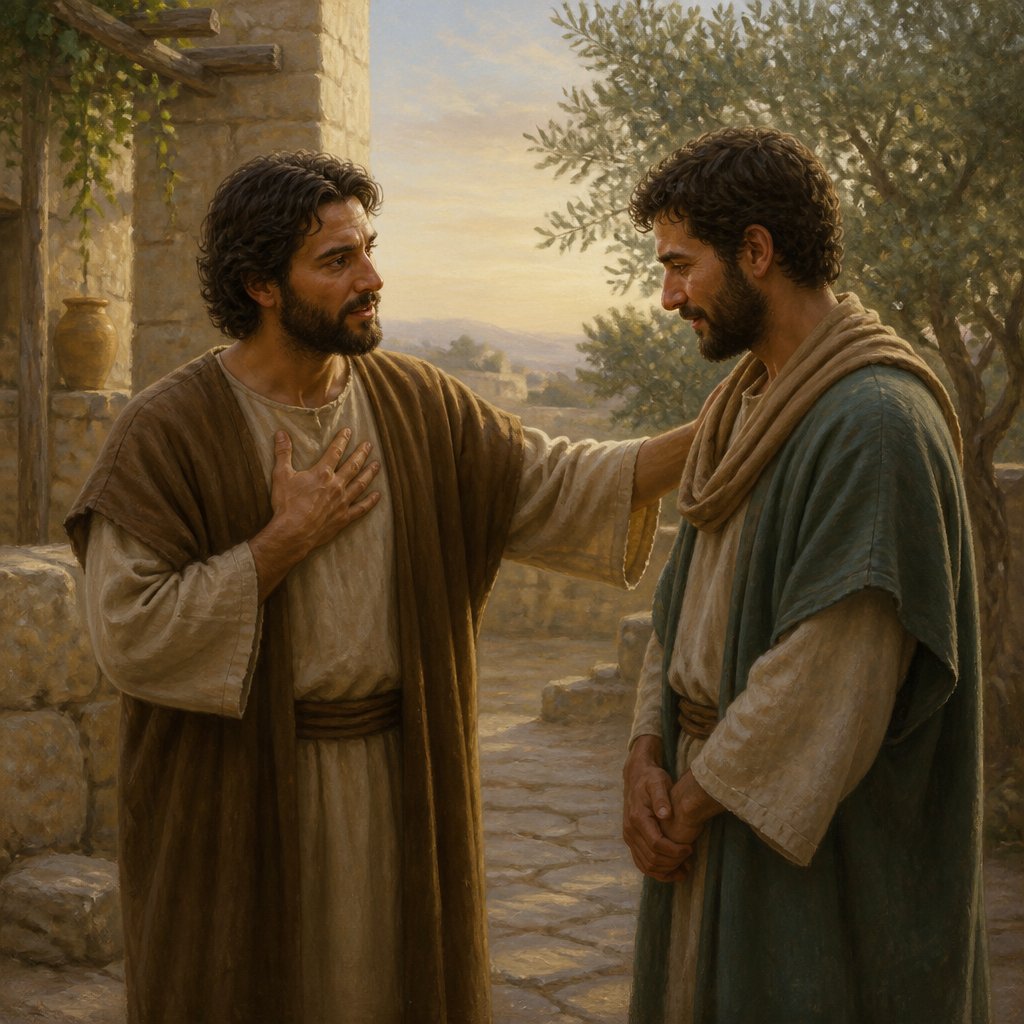
In a world filled with division, misunderstanding, and animosity, the call to love and to hold one another accountable cannot be overstated. Leviticus 19:17 from the King James Version reads: "Thou shalt not hate thy brother in thine heart: thou shalt in any wise rebuke thy neighbour, and not suffer sin upon him." This passage encapsulates the essence of how we should navigate relationships—both with love and an unwavering commitment to righteousness.
First and foremost, we are instructed not to harbor hatred in our hearts. This directive serves not just as a guideline for behavior but as an acknowledgment of what takes place within us. Hatred often begins as a seed—sowed by pride, misunderstandings, or past grievances. Over time, if unchecked, it can take root and bear bitter fruit. As followers of Christ, we are reminded that our hearts, the wellspring of our thoughts and emotions, must be safeguarded against such negativity. Jesus reaffirmed this teaching in Matthew 5:21-22, stating that harboring anger is akin to murder in God's eyes. Thus, we are prompted to closely examine our emotions and attitudes towards others, especially our brothers and sisters.
The call not to hate but to rebuke our neighbor— as stated in this verse—may initially feel paradoxical. Rebuke often carries a tone of harshness and judgment. However, in the biblical context, it is an expression of love rather than disdain. The Hebrew word for rebuke implies a correction aimed at an improvement rather than condemnation. This means that while we are to stand against sin—both within ourselves and in others—our motivation must always be rooted in love.
Paul echoes this sentiment in Galatians 6:1, where he instructs us to "restore such an one in the spirit of meekness. " When a brother or sister struggles with sin, our approach must be gentle and considerate, always focusing on restoration rather than isolation. We remind ourselves that we are all capable of wandering off the path and that our response when we see a fellow believer faltering should be infused with grace.
Moreover, the second part of the verse, "and not suffer sin upon him," serves as a profound call to action. It reflects our responsibility toward one another in the community of faith. To suffer sin implies allowing it to fester without intervention. In many ways, to remain silent in the face of sin is to collude with it, to bear witness and say nothing when a correction is composed in love is a dereliction of our duty as brothers and sisters in Christ. Our accountability to one another is a sign of true love, as it shows that we are invested in each other’s spiritual well-being.
This passage encourages us to step out of our comfort zones, for rebuke, when done with love, can often be counter-cultural. Society may tell us to mind our own business, not to get involved, and to let others fight their own battles. However, as Christians, we have the obligation to lovingly intervene if someone's actions can lead to spiritual death or distance from God.
Even so, we must wrestle with how we approach this task—how to strike the perfect balance between truth and love. To rebuke without loving deeply degrades our motivation; to love without accountability does not fulfill our obligation within the family of God. Our approach should be that of a physician—the painful surgery may save a life, but it must be performed with care and compassion.
In conclusion, Leviticus 19:17 teaches us that love and accountability are two sides of the same coin. A vibrant Christian community thrives not just on grace and acceptance but on a commitment to the truth of God’s Word. As we strive to obey this commandment, let’s do so with hearts tuned to the love of Christ, ever ready to support, correct, and uplift one another in our spiritual journeys.
Get our apps


Artwork for Leviticus 19:17

Leviticus 19:17 - "¶ Thou shalt not hate thy brother in thine heart: thou shalt in any wise rebuke thy neighbour, and not suffer sin upon him."
"¶ Thou shalt not hate thy brother in thine heart: thou shalt in any wise rebuke thy neighbour, and not suffer sin upon him." - Leviticus 19:17

Leviticus 17:7

Leviticus 21:19 - "Or a man that is brokenfooted, or brokenhanded,"

Leviticus 23:17-22

Leviticus 11:17 - "And the little owl, and the cormorant, and the great owl,"

Leviticus 22:17 - "¶ And the LORD spake unto Moses, saying,"

Leviticus 6:19 - "¶ And the LORD spake unto Moses, saying,"

Leviticus 19:1 - "And the LORD spake unto Moses, saying,"

Leviticus 17:1 - "And the LORD spake unto Moses, saying,"

Leviticus 11:19 - "And the stork, the heron after her kind, and the lapwing, and the bat."

Leviticus 19:7 - "And if it be eaten at all on the third day, it is abominable; it shall not be accepted."

Leviticus 7:17 - "But the remainder of the flesh of the sacrifice on the third day shall be burnt with fire."

"Or a man that is brokenfooted, or brokenhanded," - Leviticus 21:19

Leviticus 5:19 - "It is a trespass offering: he hath certainly trespassed against the LORD."

Leviticus 19:35 - "¶ Ye shall do no unrighteousness in judgment, in meteyard, in weight, or in measure."

Luke 10:17-19

Luke 10:17-19

Leviticus 24:17 - "¶ And he that killeth any man shall surely be put to death."

Leviticus 8:19 - "And he killed it; and Moses sprinkled the blood upon the altar round about."

Leviticus 19:33 - "¶ And if a stranger sojourn with thee in your land, ye shall not vex him."

Genesis 17-19

Genesis 19-17

Leviticus 19:11 - "¶ Ye shall not steal, neither deal falsely, neither lie one to another."

Leviticus 19:24 - "But in the fourth year all the fruit thereof shall be holy to praise the LORD withal."

Leviticus 13:19 - "And in the place of the boil there be a white rising, or a bright spot, white, and somewhat reddish, and it be shewed to the priest;"

Leviticus 22:19 - "Ye shall offer at your own will a male without blemish, of the beeves, of the sheep, or of the goats."

Leviticus 9:19 - "And the fat of the bullock and of the ram, the rump, and that which covereth the inwards, and the kidneys, and the caul above the liver:"

Leviticus 4:19 - "And he shall take all his fat from him, and burn it upon the altar."

Leviticus 19:30 - "¶ Ye shall keep my sabbaths, and reverence my sanctuary: I am the LORD."