The Weight of Consecration: Understanding Our Relationship with the Holy
“Therefore every one that eateth it shall bear his iniquity, because he hath profaned the hallowed thing of the LORD: and that soul shall be cut off from among his people.” — Leviticus 19:8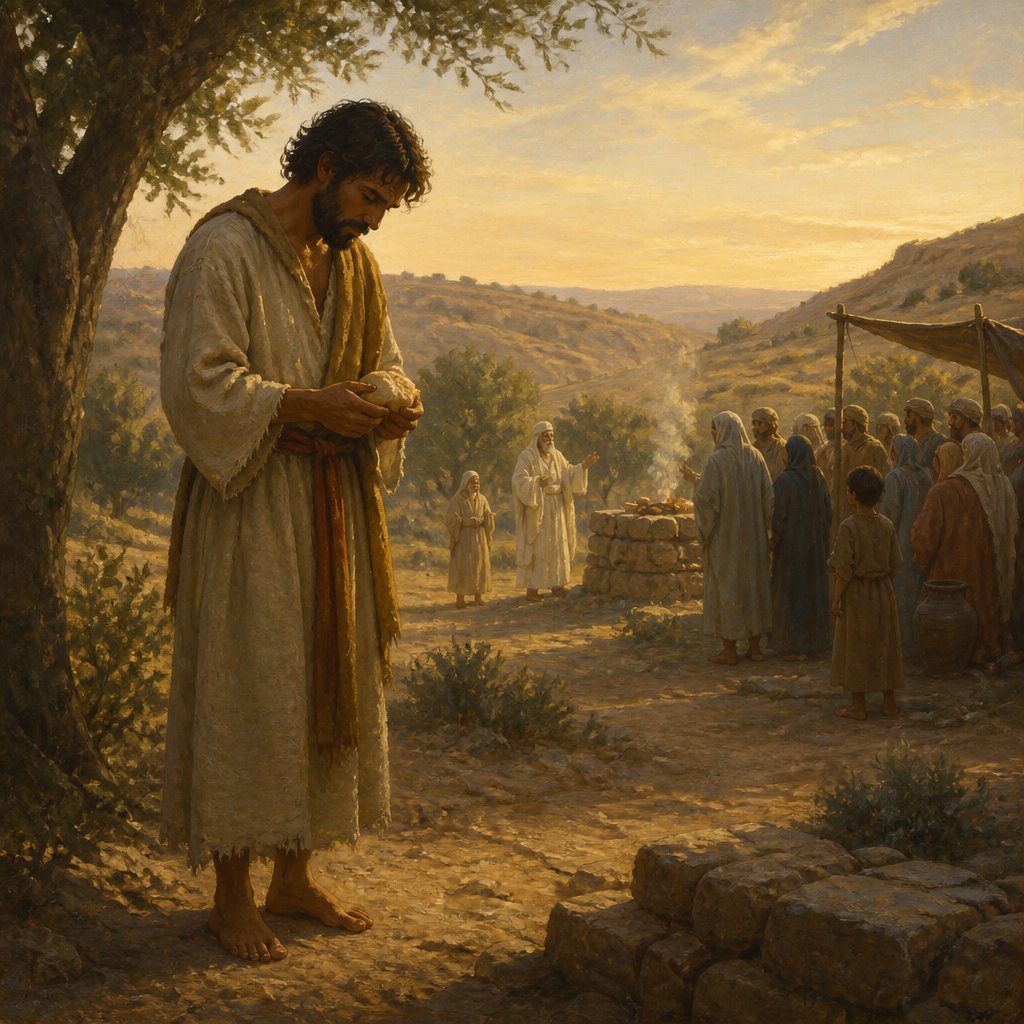
Leviticus 19:8 states, "Therefore every one that eateth it shall bear his iniquity, because he hath profaned the hallowed thing of the LORD: and that soul shall be cut off from among his people." At first glance, the verse might seem archaic and remote, buried in the weighty rules and regulations of the Old Testament. Yet, beneath its stern warning lies profound truths that resonate deeply with our lives today.
The context of Leviticus takes us to a time when the Israelites were navigating their identity as a chosen people. The laws given to them were not merely arbitrary edicts but were deeply rooted in the relationship between God and His people. They were a means of instruction on how to live in accordance with holiness and reverence towards God. The idea of something being "hallowed" indicates its profound sacredness. When something is hallowed, it is set apart for God's purposes. Thus, to profane that which is hallowed is to bring disgrace and disrespect to the divine order.
This verse speaks specifically about bearing iniquity, suggesting a personal responsibility for one’s actions and their repercussions. When the Israelites consumed that which was consecrated, they did not merely break a rule; they engaged in an act that symbolized a deeper rupture in their relationship with God. In a spiritual sense, this touches on how we approach the holy elements of our faith. The act of eating was not just physical but also spiritual, representing communion and fellowship with God and His aims.
In our modern Christian practice, we may not face the same ritualistic laws, but we are consistently required to reflect on the sacredness of our covenant relationship with God. Paul refers to this in 1 Corinthians 11:27-29, where he warns about partaking in the Lord's Supper unworthily: "Wherefore whosoever shall eat this bread, and drink this cup of the Lord, unworthily, shall be guilty of the body and blood of the Lord." Paul highlights the seriousness of how we regard the holy elements and our participation in communion.
To "bear his iniquity" means that personal responsibility cannot be escaped. The choices we make, the things we partake in, have weight. They impact not only our relationship with God but also our community, as relationships in faith are meant to reflect God's holiness to the world. When we act with disregard for what is sacred, we don't merely affect ourselves; we affect the body of believers around us. The consequence of being "cut off from among his people" serves as a grave reminder of what is at stake – our estrangement from community and ultimately from God Himself.
In this light, we are beckoned to examine our lives closely. What are the elements of our faith that we treat as common or insignificant? Have we profaned that which is holy by our actions, our thoughts, or our neglect? Lurking within our routines may be habits and practices that veil our appreciation for the divine. This does not only apply to ceremonial aspects like communion but also in how we speak of our faith, how we treat our bodies as temples, and how we live out the commands and love of God.
However, there is hope. Just as the Israelites had the opportunity to repent and realign themselves with God's commands, we too can come back into fellowship with the Lord through Christ. The Gospel assures us that while our iniquities are many, His grace abounds. We can reconnect with holiness, understanding that the weight of our sins can be lifted. Each day offers a new opportunity to sanctify the common into the sacred, to recognize the holy around us, and to live accordingly.
In conclusion, as we meditate on Leviticus 19:8, let it serve as both a warning and an invitation. A warning to take seriously the sacred nature of our faith and the communal responsibility to uphold it. An invitation to embrace grace and recommit ourselves to live in a manner worthy of the calling we have received. Let us approach the holy with reverence, continually seeking to align our lives with God’s purpose.
Get our apps


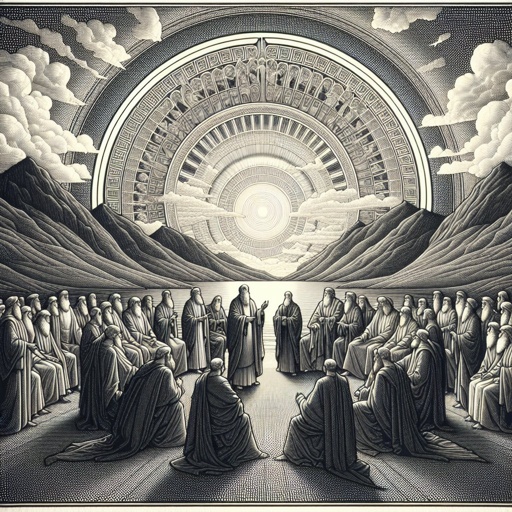
Artwork for Leviticus 19:8

Leviticus 19:8 - "Therefore every one that eateth it shall bear his iniquity, because he hath profaned the hallowed thing of the LORD: and that soul shall be cut off from among his people."
"Therefore every one that eateth it shall bear his iniquity, because he hath profaned the hallowed thing of the LORD: and that soul shall be cut off from among his people." - Leviticus 19:8

Leviticus 8:19 - "And he killed it; and Moses sprinkled the blood upon the altar round about."
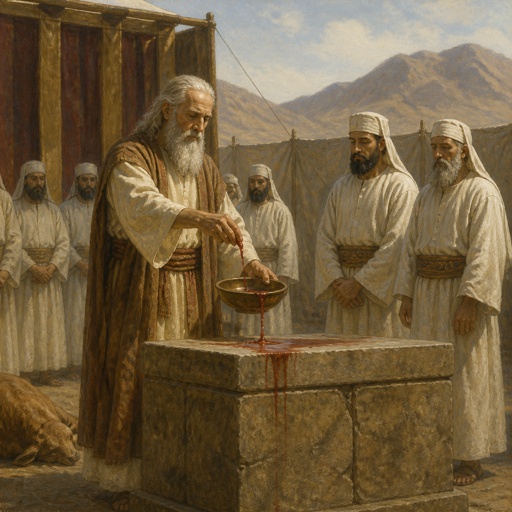
"And he killed it; and Moses sprinkled the blood upon the altar round about." - Leviticus 8:19

Leviticus 21:19 - "Or a man that is brokenfooted, or brokenhanded,"

Leviticus 16:8

Leviticus 6:19 - "¶ And the LORD spake unto Moses, saying,"

Leviticus 19:1 - "And the LORD spake unto Moses, saying,"

Leviticus 8:30

Leviticus 11:19 - "And the stork, the heron after her kind, and the lapwing, and the bat."

Leviticus 19:7 - "And if it be eaten at all on the third day, it is abominable; it shall not be accepted."
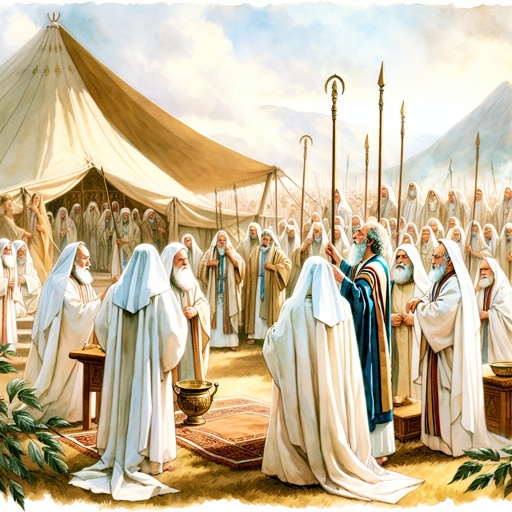
Leviticus 8:1-12

Leviticus 8:8 - "And he put the breastplate upon him: also he put in the breastplate the Urim and the Thummim."

"Or a man that is brokenfooted, or brokenhanded," - Leviticus 21:19

Leviticus 5:19 - "It is a trespass offering: he hath certainly trespassed against the LORD."

Leviticus 19:35 - "¶ Ye shall do no unrighteousness in judgment, in meteyard, in weight, or in measure."

Leviticus 6:8 - "¶ And the LORD spake unto Moses, saying,"
Leviticus 10:8 - "¶ And the LORD spake unto Aaron, saying,"

Leviticus 19:33 - "¶ And if a stranger sojourn with thee in your land, ye shall not vex him."

Leviticus 8:1 - "And the LORD spake unto Moses, saying,"

Leviticus 19:11 - "¶ Ye shall not steal, neither deal falsely, neither lie one to another."

Leviticus 19:24 - "But in the fourth year all the fruit thereof shall be holy to praise the LORD withal."

Leviticus 13:19 - "And in the place of the boil there be a white rising, or a bright spot, white, and somewhat reddish, and it be shewed to the priest;"

Leviticus 22:19 - "Ye shall offer at your own will a male without blemish, of the beeves, of the sheep, or of the goats."

Leviticus 9:19 - "And the fat of the bullock and of the ram, the rump, and that which covereth the inwards, and the kidneys, and the caul above the liver:"

Leviticus 4:19 - "And he shall take all his fat from him, and burn it upon the altar."

Leviticus 19:30 - "¶ Ye shall keep my sabbaths, and reverence my sanctuary: I am the LORD."

Leviticus 8:32 - "And that which remaineth of the flesh and of the bread shall ye burn with fire."

Leviticus 19:5 - "¶ And if ye offer a sacrifice of peace offerings unto the LORD, ye shall offer it at your own will."

Leviticus 24:19 - "And if a man cause a blemish in his neighbour; as he hath done, so shall it be done to him;"