The Northward Offering: An Invitation to True Sacrifice
“And he shall kill it on the side of the altar northward before the LORD: and the priests, Aaron’s sons, shall sprinkle his blood round about upon the altar.” — Leviticus 1:11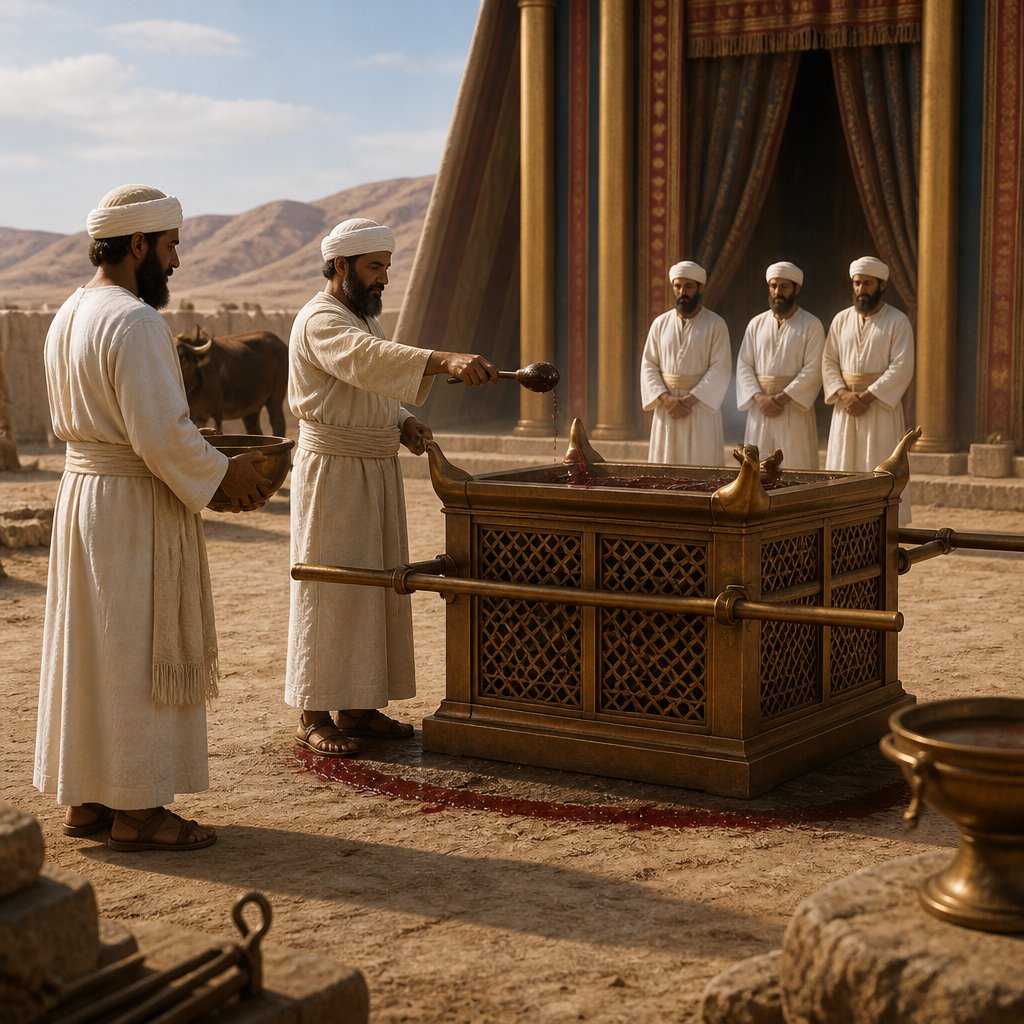
Leviticus 1:11 reads, "And he shall kill it on the side of the altar northward before the LORD: and the priests, Aaron's sons, shall sprinkle his blood round about upon the altar." This commandment, given to Moses regarding the burnt offerings, is one that may appear archaic to the modern reader. It emphasizes the vital relationship between divine worship, sacrifice, and the significance of blood, all of which culminate in understanding our need for forgiveness, restoration, and intimacy with God.
In ancient Israel, sacrifices were not merely rituals; they were necessary acts of obedience and devotion to God. Each offering pointed towards deeper spiritual truths that transcend time and culture. When one approaches the sacrificial system described in Leviticus, one must consider the historical context—the Israelites were a people having just escaped slavery in Egypt. God was establishing a covenant relationship with them, and central to this relationship was the necessity of atonement for sin. The instructions detailed in Leviticus serve to show the people's acknowledgment of their shortcomings and their need for divine mercy.
The phrase, "on the side of the altar northward before the LORD," holds particular significance within the sacrificial framework. The direction of the altar signals a sacred moment; the North symbolizes the place of the offering, a deliberate decision to bring their sacrifice before God, acknowledging His holiness and reign. This aspect invites reflection on our own lives: where do we place our offerings? In the modern world, sacrifice might manifest as time, resources, or emotional energy devoted to honoring God, and we must actively choose to bring these elements northward—directly toward the altar of our hearts.
Moreover, the act of killing the animal—a life surrendered to God—signifies a profound truth about genuine sacrifice. It calls for a commitment that is not superficial but rooted in embracing our own vulnerabilities. The sacrifice reminds us that true worship involves giving up something of value, echoing Jesus’s call to take up our cross daily. Are we ready to lay down our desires, ambitions, or pride to seek a deeper communion with God? As we offer ourselves, like the animal offered up in the sacrificial system, we are invited to surrender fully, acknowledging that life is no longer our own but belongs to the Creator.
As the priests sprinkle the blood around the altar, they enact a powerful symbol—a visible representation of atonement. Blood in the biblical context carries significant weight; it speaks of life, sacrifice, and redemption. For the Israelites, the shedding of blood was their means of reconciling with God, showing that sins could not merely be overlooked but required a price. This points to the ultimate sacrifice of Christ, the Lamb of God, whose blood cleanses our sins once and for all (1 John 1:7). Each time we reflect on these Old Testament sacrifices, we are reminded of the gravity of sin and the enormity of grace. While we do not practice animal sacrifices today, the principle remains: our life demands a response to God’s grace.
Ultimately, Leviticus 1:11 invites us into a rhythm of life lived in worship and recognition of our need for God. It challenges us to consider how we view and engage in worship. This moment in history serves as a precursor to the ultimate sacrifice made on our behalf. As we reflect on this verse, may we be inspired to bring our lives before God, sprinkling the blood of Christ over our transgressions and approaching Him with a heart of humility, gratitude, and yearning for His presence. In doing so, we welcome transformation and ensure that our sacrifices remain central to our walk of faith as we strive to catch the vision of true devotion.
Get our apps


Artwork for Leviticus 1:11

Leviticus 1:11 - "And he shall kill it on the side of the altar northward before the LORD: and the priests, Aaron's sons, shall sprinkle his blood round about upon the altar."
"And he shall kill it on the side of the altar northward before the LORD: and the priests, Aaron's sons, shall sprinkle his blood round about upon the altar." - Leviticus 1:11

Leviticus 11:1 - "And the LORD spake unto Moses and to Aaron, saying unto them,"

Acts 1:1-11

Leviticus 1:1 - "And the LORD called unto Moses, and spake unto him out of the tabernacle of the congregation, saying,"

Acts 1:1-11
Leviticus 11:22
"And the LORD spake unto Moses and to Aaron, saying unto them," - Leviticus 11:1

Revelation 1:11

Isaiah 11:1
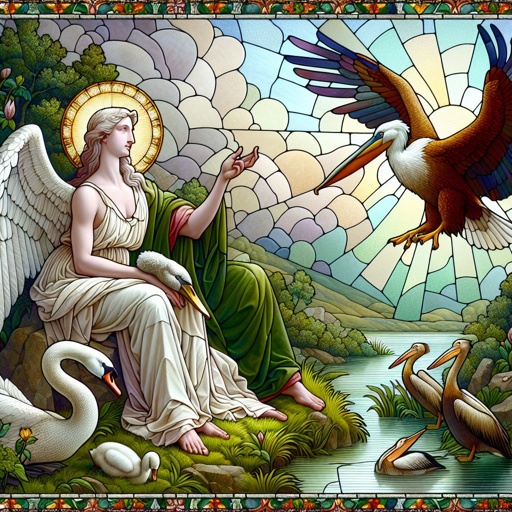
Leviticus 11:18 - "And the swan, and the pelican, and the gier eagle,"
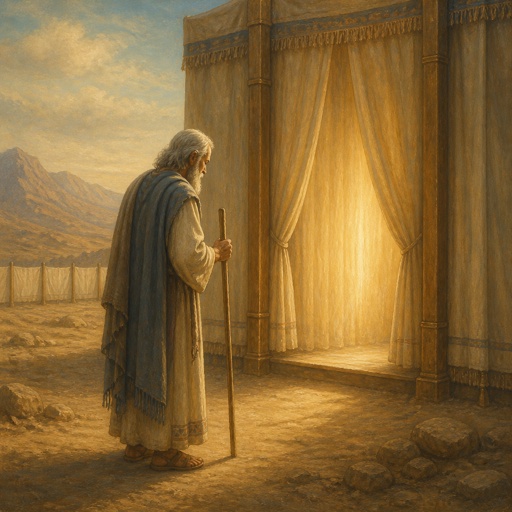
"And the LORD called unto Moses, and spake unto him out of the tabernacle of the congregation, saying," - Leviticus 1:1

Revelation 1:11
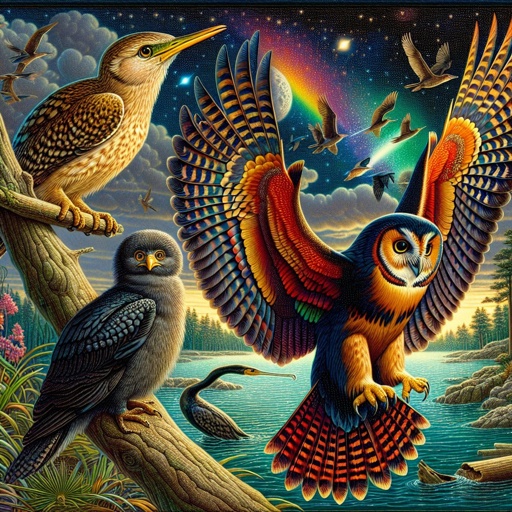
Leviticus 11:17 - "And the little owl, and the cormorant, and the great owl,"

Leviticus 11:14 - "And the vulture, and the kite after his kind;"
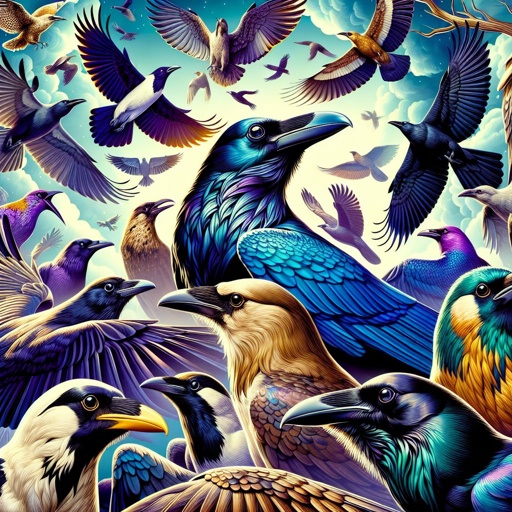
Leviticus 11:15 - "Every raven after his kind;"

Nehemiah 11:1-19

Leviticus 11:30 - "And the ferret, and the chameleon, and the lizard, and the snail, and the mole."

Leviticus 11:19 - "And the stork, the heron after her kind, and the lapwing, and the bat."

Leviticus 9:11 - "And the flesh and the hide he burnt with fire without the camp."

Leviticus 11:16 - "And the owl, and the night hawk, and the cuckow, and the hawk after his kind,"

Leviticus 11:41 - "And every creeping thing that creepeth upon the earth shall be an abomination; it shall not be eaten."

Leviticus 19:11 - "¶ Ye shall not steal, neither deal falsely, neither lie one to another."

Leviticus 7:11 - "And this is the law of the sacrifice of peace offerings, which he shall offer unto the LORD."

Levítico 1:1–17

"And the swan, and the pelican, and the gier eagle," - Leviticus 11:18

Leviticus 11:12 - "Whatsoever hath no fins nor scales in the waters, that shall be an abomination unto you."

Leviticus 11:8 - "Of their flesh shall ye not eat, and their carcase shall ye not touch; they are unclean to you."

Leviticus 26:11 - "And I will set my tabernacle among you: and my soul shall not abhor you."

Leviticus 3:11 - "And the priest shall burn it upon the altar: it is the food of the offering made by fire unto the LORD."