A Living Sacrifice: Lessons from Leviticus 1:12
“And he shall cut it into his pieces, with his head and his fat: and the priest shall lay them in order on the wood that is on the fire which is upon the altar:” — Leviticus 1:12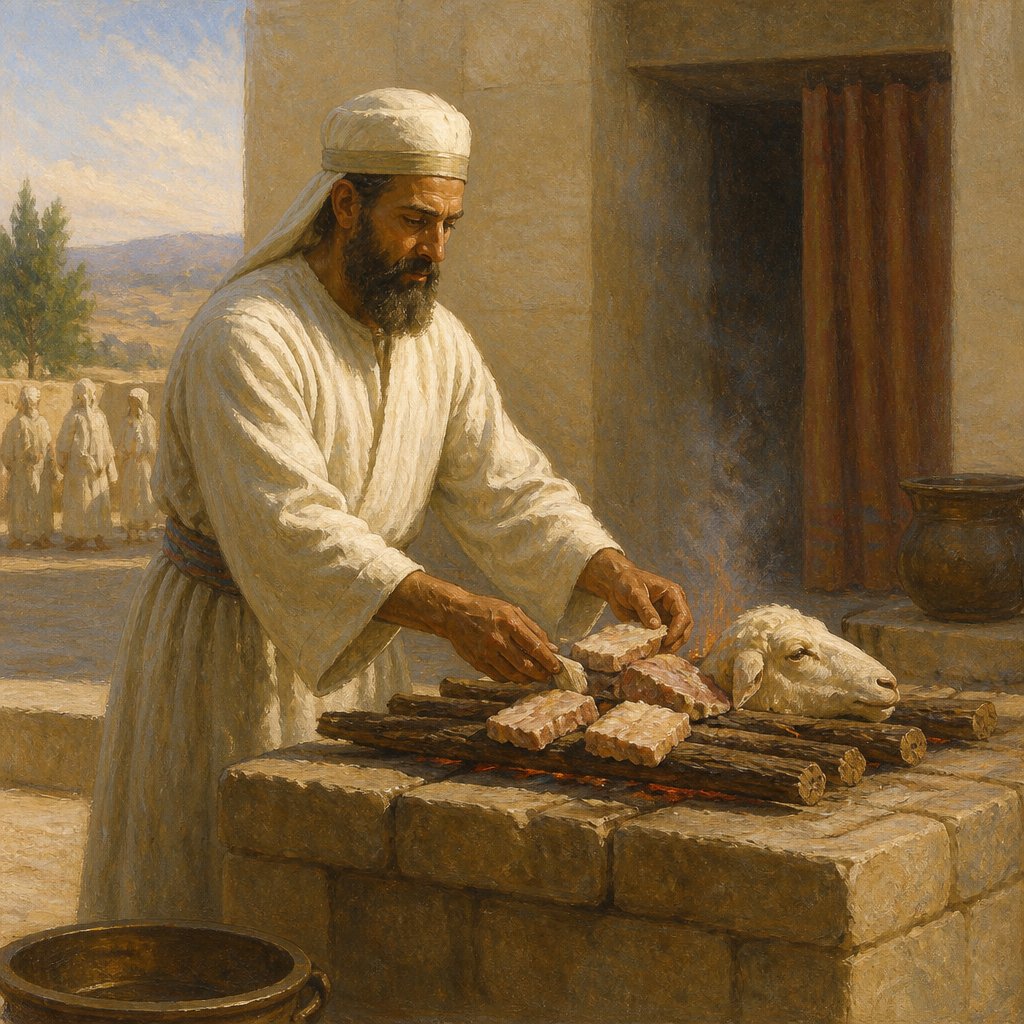
In the solemn words of Leviticus 1:12 (KJV), "And he shall cut it into his pieces, with his head and his fat: and the priest shall lay them in order on the wood that is on the fire which is upon the altar," we are drawn into a vivid depiction of ancient sacrificial practices that hold profound spiritual significance even today. The book of Leviticus, often perceived as a collection of tedious laws and rituals, serves as a divine blueprint illustrating God's holiness and the serious nature of atonement for sin.
As we reflect on this verse, it is essential to understand the context of sacrifice in the Old Testament. Sacrifices were not merely cultural rituals; they represented the cost of sin and the need for redemption. In this specific instance, the cutting of the animal into pieces symbolizes the terrible reality of atonement—the violent separation caused by sin. Sin cuts away at the divine relationship, leading to death, as stated, "For the wages of sin is death" (Romans 6:23). Here, the act of cutting the sacrifices into pieces transforms into a metaphor for examining our own lives. Are there areas in our hearts or actions that require cutting away so that we can come into a more profound communion with the Lord?
In a world that often emphasizes superficial appearances, the sacrifice requires a raw honesty—a willingness to bring our brokenness before God. The priest laying the pieces in order on the altar indicates a meticulous process, reflecting the seriousness with which God approaches sin. It is not enough to offer something to God; we must offer it correctly and with a heart aligned to His will. This profound dedication also points us back to the ultimate sacrifice: Jesus Christ, the Lamb of God, who was broken and shed His blood for our sins once and for all.
When we consider the imagery of the wood on the fire and the altar, we are reminded that God requires ultimate surrender. In Romans 12:1-2, we are called to present our bodies as a living sacrifice, holy and acceptable to God. This act of surrender, much like the ancient sacrifices, demands our totality—our ambitions, our fears, our aspirations—all laid bare before the Lord. The fire signifies purification; it is in the heat of trials where our faith is refined. In the light of that fire, we may find ourselves cut into pieces metaphorically as we undertake the hard work of transformation—strengthened in the process, albeit discomforting.
Moreover, the "head and fat" of the sacrifice represent the entirety of the offering. The head symbolizes authority and thought, while the fat represents the best portions, the richness of life that is usually reserved for the most special offerings. God calls forth not just any offering but the best we have to give. Similarly, we’re asked to submit our thoughts and desires fully to Him, laying aside pride and self-will. This total submission invites the presence of the Holy Spirit to lead us into deeper truths and greater freedom.
Let us not overlook the fundamental role of the priest in this passage; he stands as a mediator between the offerer and God. Today, we have our High Priest, Jesus Christ, who continually intercedes for us. By recognizing our shortcomings and the need for redemption, we can approach the throne of grace with confidence. We can allow Him to address those fragmented pieces in our lives, trusting Him to reshape us into beautiful instruments for His purposes.
As we meditate on Leviticus 1:12, let us allow the structure of ancient sacrifice to challenge our understanding of worship. May we strive to be living sacrifices, wholly surrendered to God, allowing Him to cut away the unnecessary pieces in our lives while offering Him our best. In this, we find not only our purpose but also an extraordinary communion with the Creator.
Get our apps


Artwork for Leviticus 1:12

Leviticus 1:12 - "And he shall cut it into his pieces, with his head and his fat: and the priest shall lay them in order on the wood that is on the fire which is upon the altar:" respectful, symbolic bible verse art
"And he shall cut it into his pieces, with his head and his fat: and the priest shall lay them in order on the wood that is on the fire which is upon the altar:" - Leviticus 1:12
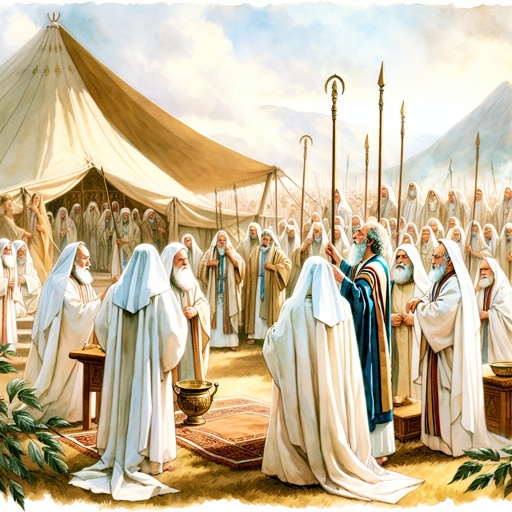
Leviticus 8:1-12

Leviticus 12:1 - "And the LORD spake unto Moses, saying,"

"And the LORD spake unto Moses, saying," - Leviticus 12:1

Leviticus 1:2 - "Speak unto the children of Israel, and say unto them, If any man of you bring an offering unto the LORD, ye shall bring your offering of the cattle, even of the herd, and of the flock."

Leviticus 12:3 - "And in the eighth day the flesh of his foreskin shall be circumcised."

Leviticus 24:12 - "And they put him in ward, that the mind of the LORD might be shewed them."

Leviticus 3:12 - "¶ And if his offering be a goat, then he shall offer it before the LORD."

Hosea 1:2-11;2:14;3:5

Leviticus 26:12 - "And I will walk among you, and will be your God, and ye shall be my people."

Leviticus 11:12 - "Whatsoever hath no fins nor scales in the waters, that shall be an abomination unto you."
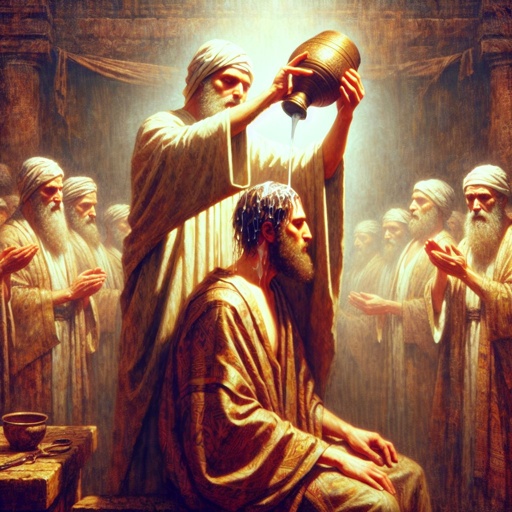
Leviticus 8:12 - "And he poured of the anointing oil upon Aaron's head, and anointed him, to sanctify him."

Leviticus 25:12 - "For it is the jubile; it shall be holy unto you: ye shall eat the increase thereof out of the field."

Leviticus 18:12 - "Thou shalt not uncover the nakedness of thy father's sister: she is thy father's near kinswoman."

Leviticus 22:12 - "If the priest's daughter also be married unto a stranger, she may not eat of an offering of the holy things."

Leviticus 27:12 - "And the priest shall value it, whether it be good or bad: as thou valuest it, who art the priest, so shall it be."

Leviticus 2:12 - "¶ As for the oblation of the firstfruits, ye shall offer them unto the LORD: but they shall not be burnt on the altar for a sweet savour."

Leviticus 23:21

Leviticus 14:51

Leviticus 23:21

Leviticus 23:20

Leviticus 23:21

Leviticus 15:12 - "And the vessel of earth, that he toucheth which hath the issue, shall be broken: and every vessel of wood shall be rinsed in water."

Leviticus 23:21

Leviticus 23:21

Leviticus 23:21

Leviticus 19:12 - "¶ And ye shall not swear by my name falsely, neither shalt thou profane the name of thy God: I am the LORD."

Leviticus 9:12 - "And he slew the burnt offering; and Aaron's sons presented unto him the blood, which he sprinkled round about upon the altar."

"And in the eighth day the flesh of his foreskin shall be circumcised." - Leviticus 12:3