The Return to Father’s House: A Reflection on Leviticus 22:13
"But if the priest's daughter be a widow, or divorced, and have no child, and is returned unto her father's house, as in her youth, she shall eat of her father's meat: but there shall no stranger eat thereof." - Leviticus 22:13
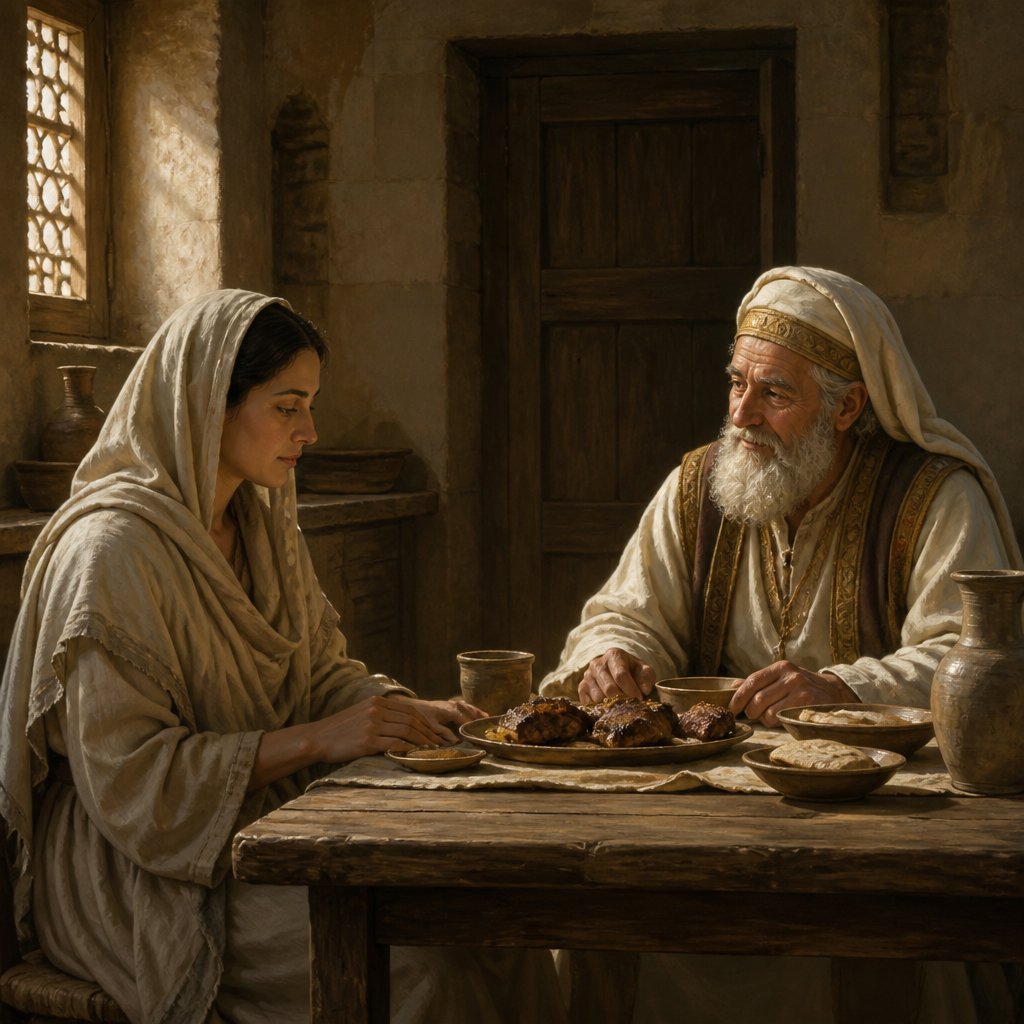
In the Old Testament, the book of Leviticus gives us profound insights into God’s holiness, the sanctity of the priesthood, and the roles that various individuals play within the community of faith. One verse that encapsulates profound spiritual truths is Leviticus 22:13, which states:
"But if the priest's daughter be a widow, or divorced, and have no child, and is returned unto her father's house, as in her youth, she shall eat of her father's meat: but there shall no stranger eat thereof." (KJV)
This verse, while seemingly straightforward in its instruction, holds rich layers of meaning that illuminate aspects of God's character and His divine order.
First, let us consider the context of the priest's daughter. In the Israelite community, priests had the unique privilege of leading the people in worship and making offerings to God. Their households were set apart and were given dedicated roles in the spiritual life of the nation. In many ways, being a priest’s daughter bestowed honor, but it also came with significant expectations and constraints. In the event that this daughter became a widow or divorced, the cultural ramifications were profound. Such a status could lead to isolation and a loss of identity. However, the provision for her to return to her father's house is an act of grace and mercy.
The phrase "returned unto her father's house, as in her youth" speaks to redemption and renewal. It reminds us that no matter the circumstances that lead us away from our roots, we can always return home. Our God is one of new beginnings, where past mistakes or unfortunate events do not define us, but rather, His love does. This can resonate deeply with anyone who has faced hardship or loss. To know we can return to a place of safety and acceptance, especially within the family of faith, is foundational to the Christian experience. In a world that is often harsh and filled with judgment, God’s heart is always to welcome back the wayward, offering both sustenance and restoration.
In this context, the phrase "she shall eat of her father's meat" symbolizes a deeper spiritual truth: the nourishment that comes from being rooted in one's heritage and faith. The priest’s daughter, upon her return, participates in the covenant blessings bestowed upon her father. There is a beauty in belonging to a legacy of faith, where one can partake in the spiritual provisions and sustenance that their family has cultivated. We, too, are invited into this heritage through Christ. Romans 8:17 echoes this sentiment, stating, "And if children, then heirs; heirs of God, and joint heirs with Christ; if so be that we suffer with him, that we may be also glorified together" (KJV).
Moreover, the restriction that “no stranger eat thereof” serves to underline the sacredness of the provisions of God. There is an exclusivity to the fellowship and nourishment that arises from belonging to the family of God. This is not intended to be elitist but instead highlights the intimate relationship God desires with His people. We are reminded that the blessings of God are specifically for those who are His. In John 10:27, Jesus says, "My sheep hear my voice, and I know them, and they follow me” (KJV). The invitation to partake in the "meat" symbolizes a closeness to God and His provisions that are reserved for those who belong to Him.
In a personal sense, this verse encourages us to reflect on our own journeys. It prompts us to consider how we respond in times of great change or loss. Are we quick to seek our Heavenly Father, to return to Him? Are we willing to accept grace and embrace the familial relationship He offers? Just as the priest’s daughter had the opportunity to reclaim her identity and nourishment in her father’s house, we, too, can find solace and strength in returning to God’s loving embrace.
In conclusion, Leviticus 22:13 beckons us to appreciate the rich layers of belonging and provision that come from being in a relationship with God. No matter where we’ve been or what circumstances may have estranged us, we are invited back into the fold where we can eat of our Father’s blessings and be nourished by His love.
Want to reflect more on Leviticus 22:13?
Continue your spiritual journey with Bible Chat — an AI-powered tool for exploring God's Word through conversation. Ask questions, discover connections, and deepen your understanding.
Get Our Apps


Leviticus 22:13 Artwork

Leviticus 22:13 - "But if the priest's daughter be a widow, or divorced, and have no child, and is returned unto her father's house, as in her youth, she shall eat of her father's meat: but there shall no stranger eat thereof."
"But if the priest's daughter be a widow, or divorced, and have no child, and is returned unto her father's house, as in her youth, she shall eat of her father's meat: but there shall no stranger eat thereof." - Leviticus 22:13

Leviticus 13:22 - "And if it spread much abroad in the skin, then the priest shall pronounce him unclean: it is a plague."
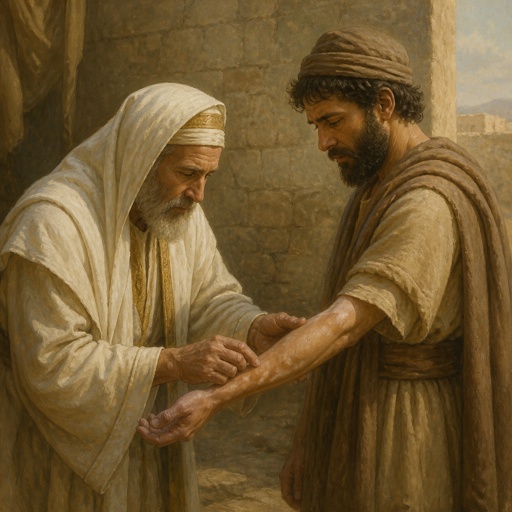
"And if it spread much abroad in the skin, then the priest shall pronounce him unclean: it is a plague." - Leviticus 13:22
Leviticus 11:22

Leviticus 23:15-22

Leviticus 23:17-22

Leviticus 22:17 - "¶ And the LORD spake unto Moses, saying,"

Leviticus 7:22 - "¶ And the LORD spake unto Moses, saying,"

Leviticus 22:1 - "And the LORD spake unto Moses, saying,"

Leviticus 22:26 - "¶ And the LORD spake unto Moses, saying,"

Leviticus 18:22 - "Thou shalt not lie with mankind, as with womankind: it is abomination."

Leviticus 20:22-26 simple picture

Picture to summarize Leviticus 20:22-26

Leviticus 24:13 - "And the LORD spake unto Moses, saying,"

Leviticus 22:20 - "But whatsoever hath a blemish, that shall ye not offer: for it shall not be acceptable for you."

Leviticus 21:13 - "And he shall take a wife in her virginity."

Leviticus 13:1 - "And the LORD spake unto Moses and Aaron, saying,"

Leviticus 21:22 - "He shall eat the bread of his God, both of the most holy, and of the holy."

Leviticus 22:33 - "That brought you out of the land of Egypt, to be your God: I am the LORD."

Leviticus 22:29 - "And when ye will offer a sacrifice of thanksgiving unto the LORD, offer it at your own will."

Leviticus 22:15 - "And they shall not profane the holy things of the children of Israel, which they offer unto the LORD;"

Leviticus 13:35 - "But if the scall spread much in the skin after his cleansing;"

Leviticus 22:22 - "Blind, or broken, or maimed, or having a wen, or scurvy, or scabbed, ye shall not offer these unto the LORD, nor make an offering by fire of them upon the altar unto the LORD."

Leviticus 13:29 - "¶ If a man or woman have a plague upon the head or the beard;"

Leviticus 22:19 - "Ye shall offer at your own will a male without blemish, of the beeves, of the sheep, or of the goats."

Leviticus 22:31 - "Therefore shall ye keep my commandments, and do them: I am the LORD."

Leviticus 22:28 - "And whether it be cow or ewe, ye shall not kill it and her young both in one day."

Leviticus 13:18 - "¶ The flesh also, in which, even in the skin thereof, was a boil, and is healed,"

Leviticus 13:14 - "But when raw flesh appeareth in him, he shall be unclean."