The Cost of Carelessness: Understanding Sacredness in Our Worship
“And if a man eat of the holy thing unwittingly, then he shall put the fifth part thereof unto it, and shall give it unto the priest with the holy thing.” — Leviticus 22:14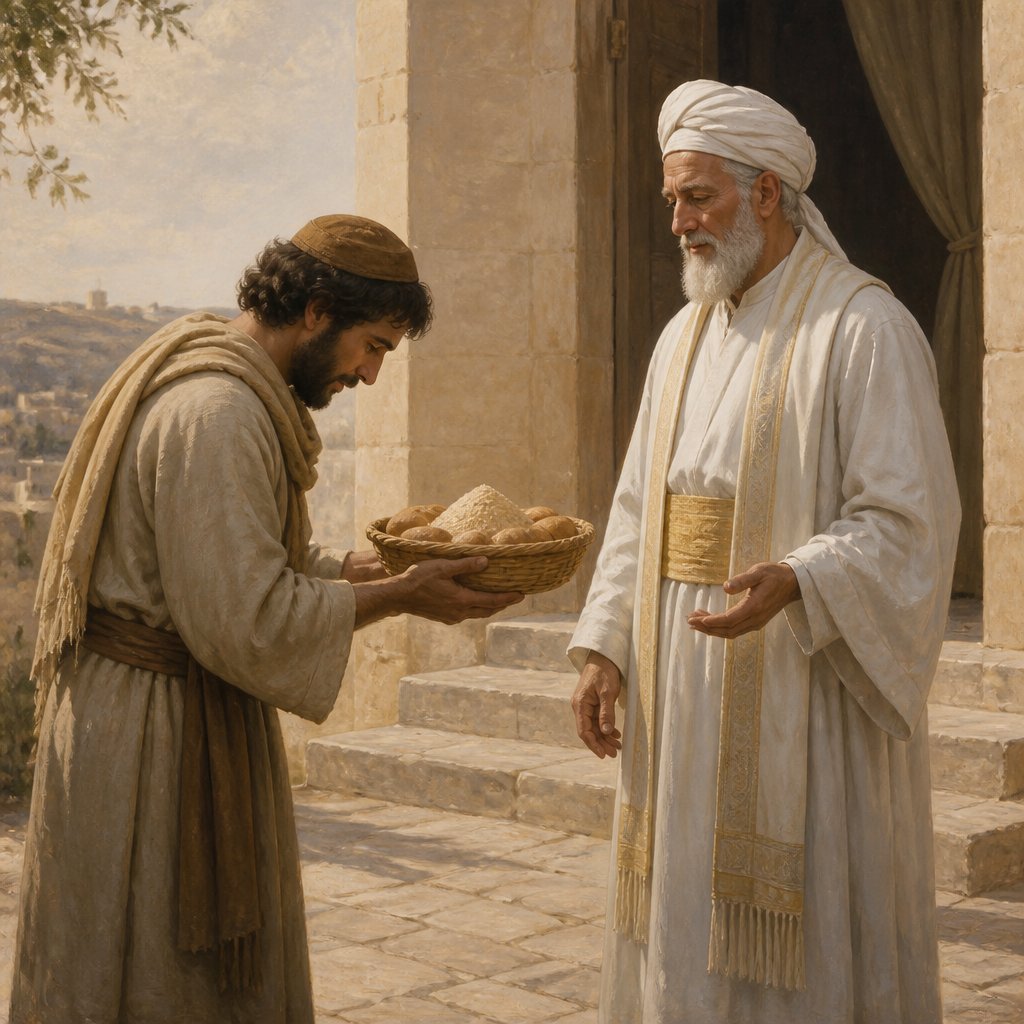
As we reflect on Leviticus 22:14, we encounter various themes and lessons that play a significant role in the spiritual discipline of approaching God. The King James Version (KJV) renders the scripture, "And if a man eat of the holy thing unwittingly, then he shall put the fifth part thereof unto it, and shall give it unto the priest with the holy thing." This verse holds profound implications for our relationship with the sacred and serves as a powerful reminder of the care we must exercise in our spiritual lives.
To contextualize this verse, we must understand what constitutes a "holy thing" within the Israelite framework. In the sacrificial system of ancient Israel, offerings became a tangible expression of devotion, gratitude, and atonement before God. The holy offerings were set apart by God, meant to symbolize moments of grace, a communion between humanity and divinity. When one unwittingly consumed these holy offerings, it represented not just a mistake but a failure to honor the sacredness that God placed on these rituals.
The phrase "eating unwittingly" points to the reality that we may sometimes engage with God’s sacred provisions without the full awareness of their significance. It is not uncommon to find ourselves in spiritual slumber, taking for granted the gifts of grace offered to us—scripture, worship, sacramental life—without realizing the depth of honor and reverence they demand.
The act of restitution, where one is required to give a fifth part of the holy thing back to the priest, suggests that God calls us not only to recognize our failings but to rectify them. The requirement to repay a fifth part indicates that carelessness has measurable consequences. Sin, in this case, is not merely a violation; it is a disruption of God’s order, a challenge against the sacredness God established. We are reminded that our relationship with God is both a gift and a responsibility.
This teaching echoes throughout the New Testament. Jesus often taught about the integrity of our actions and the intentions of our hearts by saying, "For where your treasure is, there will your heart be also" (Matthew 6:21 KJV). Where we place our attention—whether on holy things or earthly pursuits—reflects our understanding of what is valuable and what ultimately leads us closer to God.
Moreover, we should consider the role of the priest mentioned in this verse. The priests acted as mediators between God and His people, responsible for guiding worship and ensuring that the sacredness of offerings was preserved. In today's context, while we may not have Levitical priests, we have spiritual leaders, teachers, and communities holding us accountable. They, along with the Holy Spirit, serve to remind us of the value and weight of worship, urging us to treat our interactions with God as sacred.
In practical terms, how can we incorporate the essence of Leviticus 22:14 into our lives? It begins with an attitude of awareness and reverence in our daily encounters with God. As we read scripture, pray, and engage in worship, let us do so with an understanding of their profundity and significance. Are we approaching these acts with care, or are we casual and dismissive?
Moreover, we should strive for a community that fosters accountability in our worship practices. If we err, how do we seek restoration? Like those who were mandated to bring restitution to the priest, we must seek spiritual redress through confession, repentance, and a commitment to honor God above all.
Ultimately, Leviticus 22:14 teaches us that with privilege comes responsibility. As we navigate our faith, let us keep in mind the sacredness of our relationship with God. Let this verse resonate within us, prompting a mindful and honor-filled approach to how we live out our faith, interact with holy things, and serve others in the love of Christ.
Get our apps


Artwork for Leviticus 22:14

Leviticus 22:14 - "¶ And if a man eat of the holy thing unwittingly, then he shall put the fifth part thereof unto it, and shall give it unto the priest with the holy thing."
"¶ And if a man eat of the holy thing unwittingly, then he shall put the fifth part thereof unto it, and shall give it unto the priest with the holy thing." - Leviticus 22:14

Leviticus 14:22 - "And two turtledoves, or two young pigeons, such as he is able to get; and the one shall be a sin offering, and the other a burnt offering."
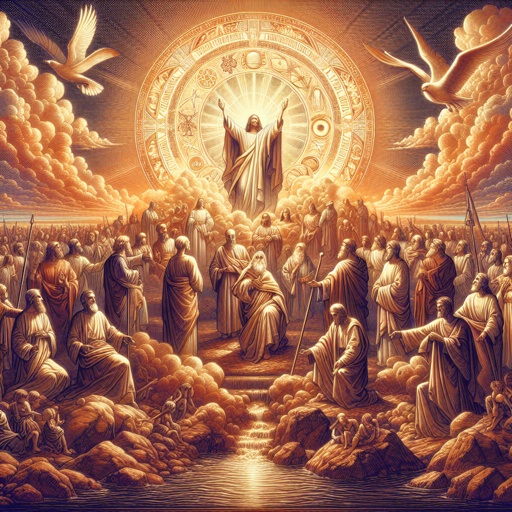
Leviticus 11:22

Leviticus 23:15-22

Leviticus 23:17-22

Leviticus 14:51
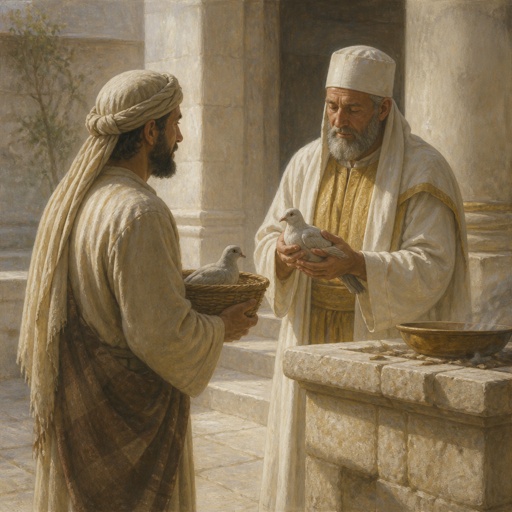
"And two turtledoves, or two young pigeons, such as he is able to get; and the one shall be a sin offering, and the other a burnt offering." - Leviticus 14:22

Leviticus 22:17 - "¶ And the LORD spake unto Moses, saying,"

Leviticus 7:22 - "¶ And the LORD spake unto Moses, saying,"

Leviticus 22:1 - "And the LORD spake unto Moses, saying,"

Leviticus 22:26 - "¶ And the LORD spake unto Moses, saying,"

Leviticus 18:22 - "Thou shalt not lie with mankind, as with womankind: it is abomination."

Leviticus 14:55 - "And for the leprosy of a garment, and of a house,"

Leviticus 14:56 - "And for a rising, and for a scab, and for a bright spot:"

Leviticus 20:22-26 simple picture

Picture to summarize Leviticus 20:22-26

Leviticus 14:1 - "And the LORD spake unto Moses, saying,"

Leviticus 11:14 - "And the vulture, and the kite after his kind;"
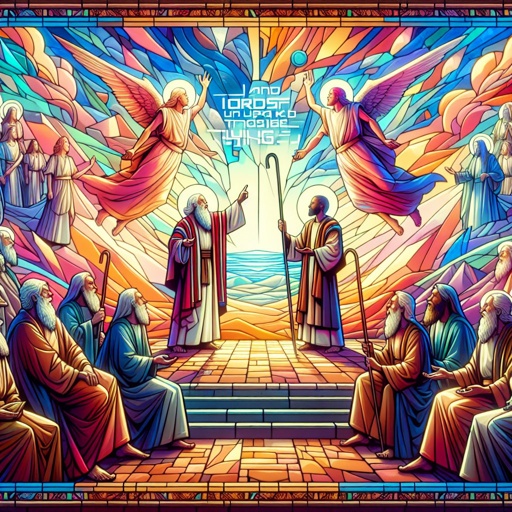
Leviticus 5:14 - "¶ And the LORD spake unto Moses, saying,"

Leviticus 14:54 - "This is the law for all manner of plague of leprosy, and scall,"

Leviticus 22:20 - "But whatsoever hath a blemish, that shall ye not offer: for it shall not be acceptable for you."

Leviticus 13:22 - "And if it spread much abroad in the skin, then the priest shall pronounce him unclean: it is a plague."

Leviticus 21:22 - "He shall eat the bread of his God, both of the most holy, and of the holy."

Leviticus 26:14 - "¶ But if ye will not hearken unto me, and will not do all these commandments;"

Leviticus 14:33 - "¶ And the LORD spake unto Moses and unto Aaron, saying,"

Leviticus 22:33 - "That brought you out of the land of Egypt, to be your God: I am the LORD."

Leviticus 22:29 - "And when ye will offer a sacrifice of thanksgiving unto the LORD, offer it at your own will."

Leviticus 22:15 - "And they shall not profane the holy things of the children of Israel, which they offer unto the LORD;"

Leviticus 22:22 - "Blind, or broken, or maimed, or having a wen, or scurvy, or scabbed, ye shall not offer these unto the LORD, nor make an offering by fire of them upon the altar unto the LORD."